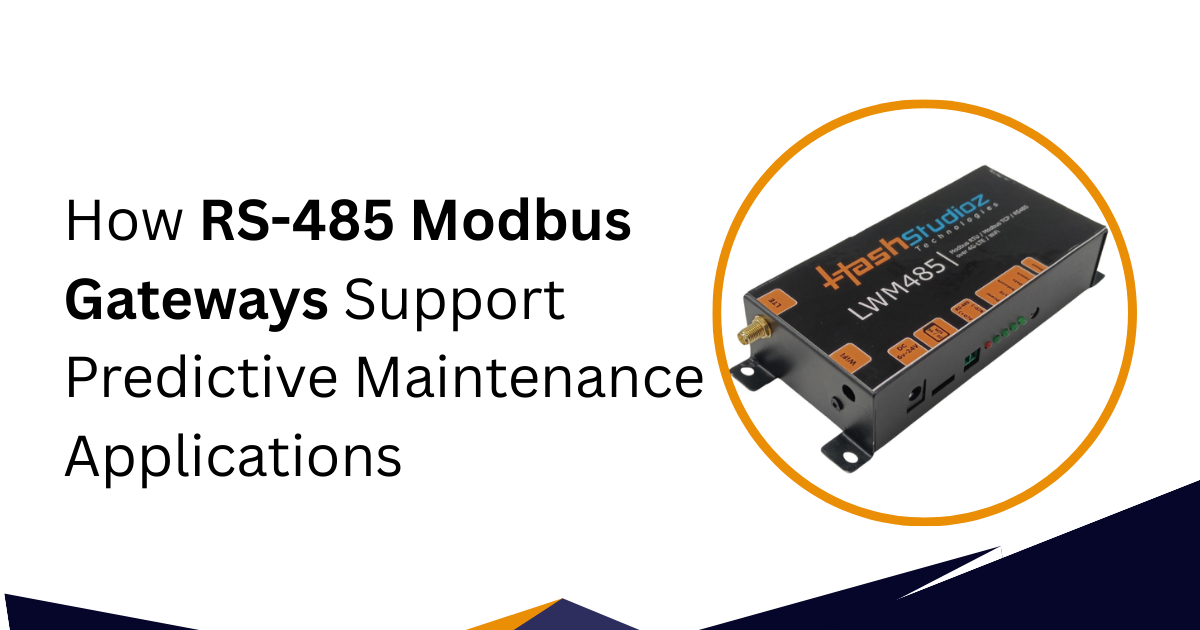
Industrial systems rely on machines that must run without failure. Even a short breakdown can cause delays, safety risks, and financial losses. According to industry studies, unplanned downtime costs manufacturers nearly $50 billion every year worldwide. Another report shows that predictive maintenance can reduce maintenance costs by 10–40% and lower downtime by up to 50%.
Predictive maintenance depends on accurate data from machines. Many industrial assets still use serial communication. This is where an RS-485 Modbus Gateway plays a critical role. It connects legacy equipment to modern monitoring systems. It helps teams collect data early and act before failure occurs.
Understanding Predictive Maintenance
Predictive maintenance focuses on early detection. Systems monitor equipment health in real time. Teams fix issues before machines stop working.
How Predictive Maintenance Works
Predictive maintenance systems rely on three main steps:
- Data collection from machines
- Data analysis to detect patterns
- Action before failure happens.
Sensors collect values like temperature, vibration, voltage, and current. Software analyzes trends over time. Alerts trigger when readings move outside normal ranges.
This approach differs from scheduled maintenance. Scheduled checks happen at fixed times. Predictive systems respond to actual equipment conditions.
What Is RS-485 and Modbus Protocol
To understand gateways, you must first understand RS-485 and Modbus.
RS-485 Communication Basics
RS-485 is a serial communication standard. Industries use it because it works well in harsh environments.
Key characteristics include:
- Long cable distance supports up to 1200 meters
- Noise resistance due to differential signaling
- Support for multiple devices on one bus
Factories, power plants, and building systems still depend on RS-485 devices.
Modbus Protocol Overview
Modbus is a simple communication protocol. It follows a master-slave or client-server model.
Modbus defines how data moves between devices. It does not define physical wiring. Modbus RTU commonly runs over RS-485.
Each device has registers. These registers store sensor values, status flags, and counters.
What Is an RS-485 Modbus Gateway
An RS-485 Modbus Gateway acts as a translator. It connects RS-485 Modbus devices to Ethernet, cellular, or cloud systems.
The gateway collects serial data. It converts that data into IP-based formats. These formats work with modern platforms.
Core Functions of an RS-485 Modbus Gateway
An RS-485 Modbus Gateway performs several technical tasks:
- Polls Modbus registers from devices.
- Converts serial data to TCP/IP or MQTT
- Buffers data during network loss
- Sends data to servers or cloud systems
Without a gateway, legacy machines stay isolated.
Why RS-485 Modbus Gateways Matter for Predictive Maintenance
Predictive maintenance needs continuous data. Many older machines cannot connect directly to modern systems.
RS-485 Modbus Gateways solve this problem.
1. Connecting Legacy Equipment
Factories still operate motors, pumps, and drives installed decades ago. Replacing them costs time and money.
A gateway allows these machines to join predictive systems without replacement.
2. Continuous Data Flow
Gateways collect data at regular intervals. They ensure monitoring systems receive fresh readings.
This steady flow supports trend analysis and early fault detection.
Data Flow Architecture in Predictive Maintenance
Understanding data flow explains the gateway’s importance.
Step 1: Sensor Data Collection
Sensors connect to PLCs or controllers using RS-485 Modbus RTU. Devices store values in registers.
Step 2: Gateway Polling
The RS-485 Modbus Gateway polls registers based on configured schedules. It reads values like:
- Motor temperature
- Bearing vibration
- Energy consumption
- Operating hours
Step 3: Protocol Conversion
The gateway converts serial data into network-friendly formats such as:
- Modbus TCP
- HTTP
- MQTT
- OPC UA
Step 4: Data Transmission
Converted data moves to:
- On-premise servers
- SCADA systems
- Cloud analytics platforms
Step 5: Predictive Analysis
Software analyzes trends. It detects abnormal behavior. Maintenance teams receive alerts early.
Key Gateway Features That Support Predictive Maintenance
Not all gateways work the same. Certain features matter more for predictive maintenance.
1. High Polling Accuracy
Gateways must poll devices accurately. Missed data reduces analysis quality. Configurable polling intervals help balance network load and data freshness.
2. Data Buffering
Network outages happen. Gateways with local storage protect data. They store readings temporarily and send them once connectivity returns.
3. Time Stamping
Accurate time stamps matter. Predictive systems rely on trend alignment. Gateways assign time stamps when reading data. This ensures correct analysis.
4. Edge Processing
Some gateways support local rules. They can detect threshold breaches.
This allows faster alerts even before data reaches the cloud.
Role of RS-485 Modbus Gateway in Vibration Monitoring
Vibration analysis plays a major role in predictive maintenance.
1. How Vibration Data Helps
Changes in vibration patterns indicate mechanical issues. Common causes include:
- Bearing wear
- Shaft misalignment
- Loose components
2. Gateway Support for Vibration Sensors
Vibration sensors connect to RS-485 controllers. The gateway reads vibration values. Analytics systems track vibration trends over time. Early changes trigger inspection.
This reduces catastrophic failures.
Temperature and Thermal Monitoring Use Cases
Temperature is often the first hint that a problem is starting. Motors and drives always produce some heat, so small changes are normal. But when the temperature keeps climbing, it usually points to overload or insulation wear. Gateways read these temperature values again and again during operation. Over time, the software compares current readings with older ones. When the difference grows, teams get an early warning. This gives them time to act before a motor burns out.
Power and Energy Monitoring for Maintenance
Power and energy data often give early signs of equipment stress. When the current starts rising or the voltage becomes unstable, it usually means something is not right. In many cases, the cause links to motor winding problems, phase imbalance, or added mechanical resistance inside the machine. An RS-485 Modbus Gateway collects this energy data from meters and drives and sends it to monitoring systems. Over time, this data helps predictive models spot patterns and flag issues before a failure occurs.
Integration with Predictive Maintenance Platforms
Gateways must integrate with analysis tools.
1. SCADA and On-Premise Systems
Many plants use SCADA systems. Gateways send data directly to SCADA servers. Operators view dashboards and alarms in real time.
2. Cloud-Based Analytics Platforms
Modern predictive maintenance uses cloud analytics.
Gateways send data to platforms that apply machine learning models. These systems scale easily across sites.
Security Considerations in Predictive Maintenance Systems
Connecting legacy devices introduces security risks.
1. Common Security Challenges
- Unauthorized access to gateways
- Exposure of serial devices to networks
- Plain text data transmission
2. Gateway Security Features
Good gateways support:
- User authentication
- Network firewalls
- Encrypted communication channels
- Access logging
These measures protect equipment data and operations.
Reliability and Redundancy
Predictive maintenance depends on reliable data.
1. Redundant Network Support
Some gateways support dual Ethernet or cellular backup. This ensures data delivery during network failures.
2. Industrial-Grade Design
Gateways operate in harsh environments. Industrial models support:
- Wide temperature ranges
- Electrical noise resistance
- Stable power inputs
This ensures long-term operation.
Real-World Example: Manufacturing Plant
A manufacturing plant uses older CNC machines. Each machine connects via RS-485.
Problem: Machines failed without warning. Downtime affected production schedules.
Solution: The plant installed RS-485 Modbus Gateways. Gateways sent motor and vibration data to a cloud platform.
Results
- Early fault detection improved
- Downtime dropped by 35%
- Maintenance planning became proactive
Real-World Example: Water Treatment Facility
Water pumps operate continuously.
Problem: Pump failures caused service interruptions.
Solution: Gateways collected motor current and temperature data. Analytics detected overload patterns.
Results
- Pump failures reduced
- Energy usage optimized
- Maintenance costs lowered
Deployment Best Practices
Proper planning improves results.
1. Device Mapping
Document Modbus register maps. Know which registers matter.
2. Polling Strategy
Avoid over-polling. Balance network traffic and data needs.
3. Data Validation
Check values during early deployment. Validate sensor accuracy.
3. Staff Training
Teams must understand alerts and dashboards.
Challenges and Limitations
Gateways help connect old and new systems, but they are not a perfect fix. Like any technical solution, they come with limits that teams need to understand early.
1. Bandwidth Constraints
RS-485 was designed long before modern networks. It works reliably, but it is not fast. Even with a gateway in place, the serial side still runs at limited speeds. If too many devices share the same bus, data polling can slow down. This means updates may arrive later than expected. Gateways cannot change this behavior. Teams must plan polling intervals carefully to avoid delays.
2. Data Quality Issues
Predictive maintenance depends on clean data. If sensors are poorly calibrated or installed incorrectly, the data will be misleading. A gateway will still pass that data forward, even if it is wrong. Over time, bad readings can confuse analytics systems and reduce trust in alerts. Regular sensor checks and validation remain important, even after gateways are installed.
3. Integration Complexity
Legacy systems are rarely uniform. Devices may use different register maps, data formats, or communication settings. This often requires custom configuration during setup. In some cases, documentation is missing or outdated. Engineers may need to test and adjust settings on site. While gateways support many devices, integration still takes planning and technical effort.
Future Trends in Predictive Maintenance and Gateways
Industrial systems continue to evolve.
1. Edge Analytics Growth
Gateways will handle more processing locally.
2. AI Integration
Predictive models will improve accuracy.
3. Standardization
Industrial protocols continue to mature. RS-485 Modbus Gateways will remain important as long as legacy devices operate.
Conclusion
Predictive maintenance depends on data. Many industrial machines still rely on RS-485 Modbus communication. An RS-485 Modbus Gateway bridges the gap between old equipment and modern analytics platforms. It enables data collection, remote monitoring, and early fault detection. From motors to pumps, gateways support safer operations and lower maintenance costs. They allow industries to extend equipment life without full replacement. As industries adopt smarter maintenance strategies, RS-485 Modbus Gateways will remain a critical link between the past and the future.