
Digital marketing is not just about getting traffic to your website. Many businesses invest in SEO, Google Ads, and social media but still struggle to generate leads or sales. The main reason is that they focus only on one part of the customer journey. A full-funnel digital marketing strategy helps you guide users from awareness to conversion in a structured and effective way.
This article explains how to build a full-funnel strategy that actually converts, using simple language and practical steps that work for businesses of all sizes.
What Is a Full-Funnel Digital Marketing Strategy?
A full-funnel strategy covers every stage of the buyer’s journey, from the moment someone discovers your brand to the moment they become a customer and even after that.
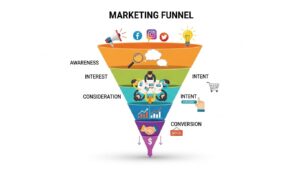
The marketing funnel is usually divided into three main stages:
- Top of Funnel (TOFU) – Awareness
- Middle of Funnel (MOFU) – Consideration
- Bottom of Funnel (BOFU) – Conversion
Some marketers also add a fourth stage:
- Retention & Loyalty – Repeat customers
Each stage needs a different message, content type, and marketing channel.
Why a Full-Funnel Approach Is Important
Most users do not buy on their first visit. They research, compare, and think before making a decision. If your marketing only focuses on selling, you lose potential customers early.
A full-funnel approach helps attract the right audience, educate them, build trust, and convert them at the right time. It also reduces wasted ad spend and increases the lifetime value of customers. Businesses that use full-funnel strategies see more consistent and long-term growth.
Top of Funnel: Building Awareness
The top of the funnel is where users discover your brand for the first time. At this stage, they are searching for information or solutions to a problem. They are not ready to buy, so your goal should be education, not selling.
SEO plays a major role here. Blog posts, guides, and educational content help bring organic traffic to your website. Social media, YouTube, and display ads also help increase visibility. Content should answer common questions, explain problems, and offer useful insights. When users find helpful information, they begin to trust your brand.
Middle of Funnel: Creating Trust and Interest
In the middle of the funnel, users are aware of their problem and are comparing different solutions. This is where trust becomes very important. Your goal is to show why your solution is the right choice.
Content such as case studies, comparison articles, email sequences, and free tools works well at this stage. Retargeting ads help you stay in front of users who have already visited your website. Email marketing is also powerful for sharing value-based content and building long-term relationships. Instead of pushing sales, focus on showing expertise and real results.
Bottom of Funnel: Driving Conversions
The bottom of the funnel is where users are ready to take action. They may want to book a consultation, request a quote, or make a purchase. At this stage, your messaging should be clear, confident, and focused on results.
High-intent Google Search Ads, optimized landing pages, and strong service pages work best here. Your pages should clearly explain what you offer, how it helps, and why users should choose you. Testimonials, reviews, and trust signals help remove doubts. A simple and clear call-to-action makes it easier for users to convert.
Retention Stage: Turning Customers into Loyal Clients
A full-funnel strategy does not end after conversion. Retaining customers is just as important as acquiring new ones. Loyal customers are more likely to buy again and recommend your business to others.
Email marketing plays a big role in retention. Regular updates, useful tips, and exclusive offers help keep your brand in the customer’s mind. Retargeting ads can also promote additional services or upgrades. When customers feel valued, they stay longer and contribute more to your business growth.
The Role of SEO in a Full-Funnel Strategy
SEO supports every stage of the funnel. Informational blog posts attract awareness-level users, comparison content helps in the consideration stage, and service pages drive conversions. Internal linking between these pages helps guide users through the funnel naturally.
By focusing on search intent and topical authority, SEO creates a strong foundation for long-term traffic and lead generation. When combined with paid ads, SEO becomes even more powerful.
How Google Ads Support the Funnel
Google Ads are powerful when used strategically:
- Awareness: Display & YouTube Ads
- Consideration: Remarketing & Performance Max
- Conversion: Search Ads with high-intent keywords
PPC Tips
- Separate campaigns by funnel stage
- Use different messaging for each stage
- Track conversions properly
- Test landing pages regularly
Avoid running only sales-focused ads. That increases cost and lowers ROI.
Tracking and Measuring Funnel Performance
Tracking is essential to understand what is working and what needs improvement. Different stages require different metrics. Traffic and engagement matter at the awareness stage, while leads and conversions matter more at the bottom of the funnel.
Tools like Google Analytics, Google Tag Manager, and proper conversion tracking help you measure results accurately. Data-driven decisions allow you to improve weak areas of the funnel and scale successful campaigns.
Common Full-Funnel Mistakes to Avoid
- Focusing only on sales
- Ignoring remarketing
- Sending all traffic to one page
- Not tracking conversions properly
- Using the same message for every audience
Fixing these mistakes can instantly improve performance.
Final Thoughts
A full-funnel digital marketing strategy helps businesses attract the right audience, build trust, and convert users at the right time. By combining SEO, Google Ads, content marketing, and retention strategies, you can create a marketing system that delivers consistent and predictable results.
Instead of focusing only on traffic or sales, focus on the entire journey. When each funnel stage is optimized, your digital marketing efforts become more effective and profitable.