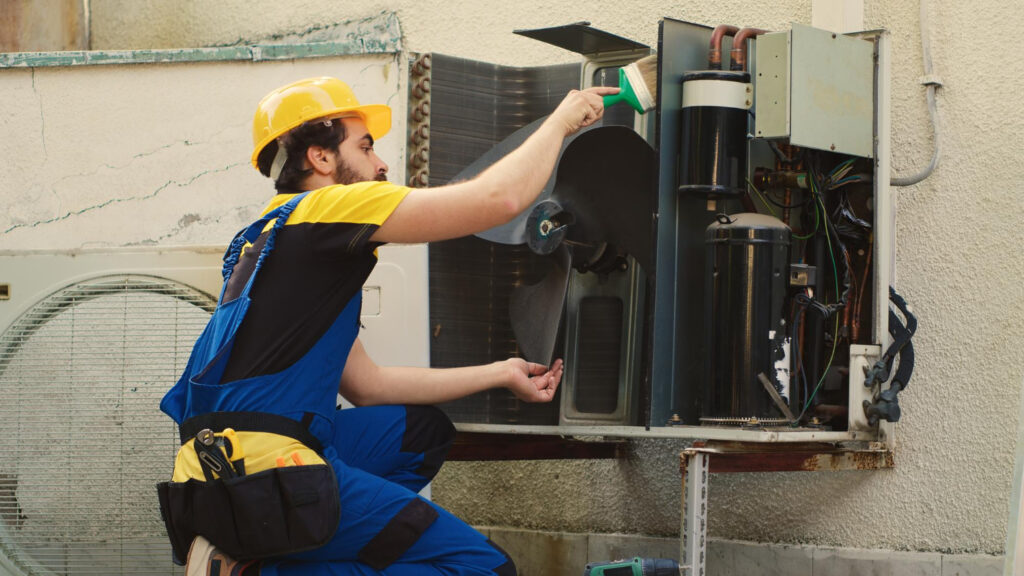
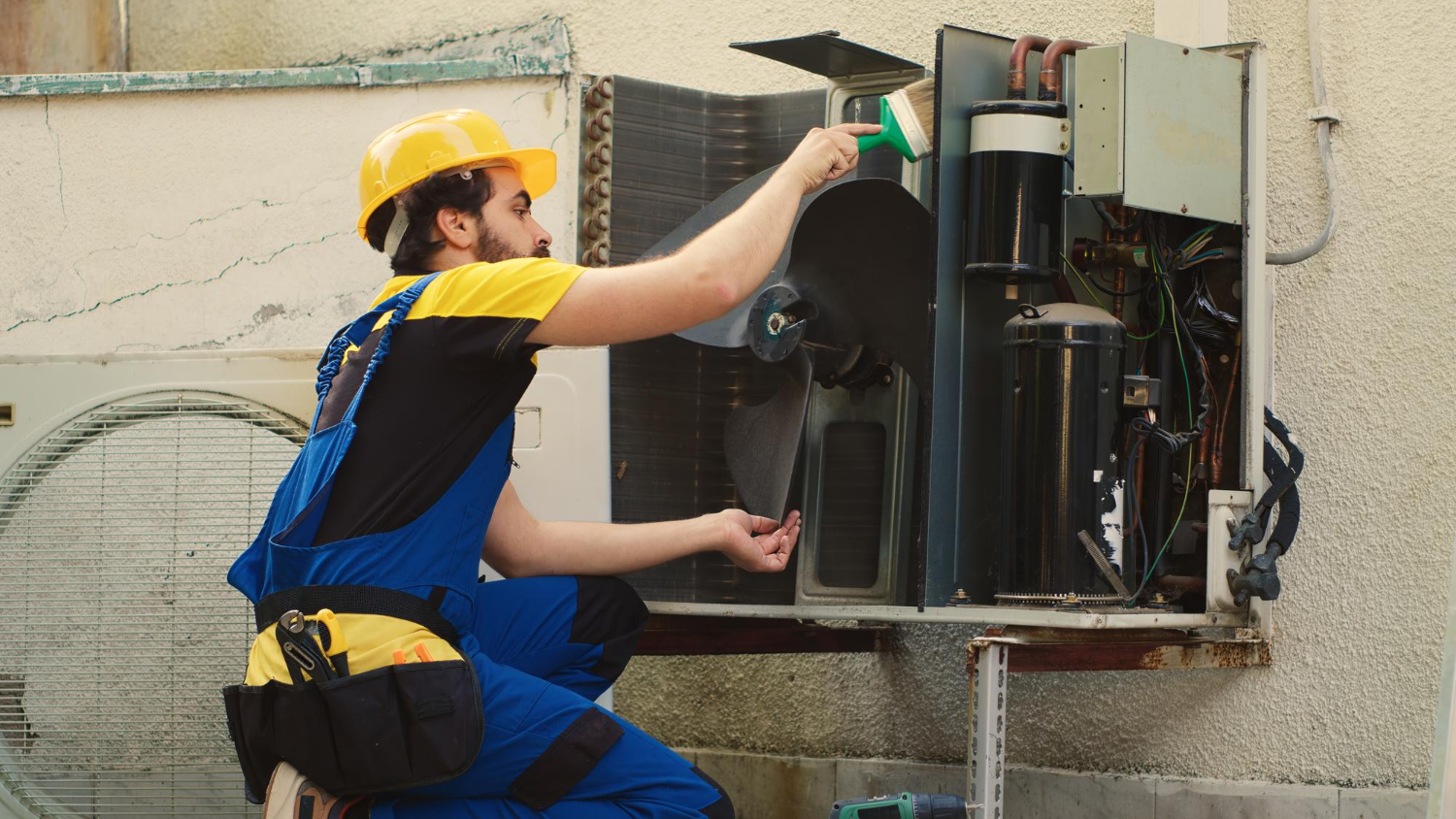
Picking up the best HVAC in India depends on various factors such as building size, usage patterns, long-term energy goals, location, climate zone, and budget. To clearly understand which HVAC solution will be best for the Dedusting Tunnel, we have mentioned the top systems according to their maintenance requirements, energy charges and performance in the Indian climate.
What are the various types of HVAC in India?
- Window
It is perfect for low budgets and small rooms. But these machines are inefficient in humid temperatures. You might have to struggle due to humidity in the rainy seasons, with no or restricted control.
But window ACs are the best choice when the budget is in question. They are easier to install, affordable, and work perfectly for the small commercial or residential rooms. On the other hand, window ACs are not energy-efficient machines and can add to the electricity bill easily. Thus, if you are looking for something for a restricted or short-term use, window ACs are ideal, but if you want long-term savings, it is best to avoid them.
- Centralized Evaporative HVAC
An evaporative cooling solution is an energy-efficient and smart solution for dry and hot temperatures. It naturally cools down the air, creating a comfortable space with no high energy consumption like conventional air conditioners. Since the system can add moisture to the air, it is perfect for dry weather, as it comes with a backup alternative in the monsoon season.
The biggest advantage of centralized evaporative HVAC is its efficiency, as it consumes almost 80% less energy in comparison to the inverter split ACs.It is best for rooms up to 500 sq. ft., which can be your commercial center, office, home, or Dedusting Tunnel. Centralized evaporative HVAC in India offers a perfect balance between efficiency and upfront cost, and is highly economical in performance.
- Inverter and Non-inverter split HVAC system
Non-inverter HVAC systems perform adequately and consume more energy, but inverter models are far more suitable for the Indian climate. The compressors have variable speed, which can manage their cooling as per the load. These HVAC in India offer extended compressor life, enhanced humidity control, and 20% to 30% energy savings. They are perfect for small commercial and medium-sized residential use. A non-inverter split HVAC system has a low price, but its frequent start-stop performance can result in higher energy consumption.
- Solar ACs
Solar-powered air conditioners significantly decrease the usage of grid electricity and other operational costs. While there is a high investment for the machines initially, these HVAC in India deliver outstanding cooling and long-term ROI in the high solar exposure areas. If you are planning to do business or stay in one place for more than 16 years, then these machines can be the best choice. With net metering and government subsidies, you might have zero power consumption charges.
- VRV or VRF HVAC systems
VRV or VRF systems offer accurate temperature control, energy efficiency, and better humidity management. These units are perfect to install in hospitals, offices, a dedusting tunnel, large commercial buildings, and hotels, where the number of occupants greatly varies for the entire day. When it is a question of control and efficiency, VRF or VRV systems offer the best performance. You can control the cooling output as per the real-time demands with no unnecessary energy consumption. Over time, long service lifespan, optimal maintenance, and lower electricity bills can justify their higher price range.
FAQ
Is humidity control a vital feature in the HVAC system?
The type of HVAC system is primarily based on the application and region type. In hot and dry regions, centralized evaporative cooling is highly energy efficient. Near the coastal and humid areas, VRF or inverter split HVAC in India is best due to its superior control over humidity. For massive commercial infrastructure with a dedusting tunnel, chilled water systems are perfect as they provide long-term savings and optimal scalability and efficiency.
Closing Thoughts
India has different climate zones like hot-humid, temperature, coastal and hot-dry. Thus, the performance of the HVAC solutions also differs accordingly. Seasonal extremes such as humid monsoons, cold winters and scorching summers are common. That is why it is necessary to implement climate-responsive HVAC in India to maintain a comfortable environment.