
Warehouses in Uganda are changing fast. As manufacturing, retail distribution, agriculture processing, and logistics continue to expand, businesses are under real pressure to move goods faster, safer, and at a lower cost. Manual handling and outdated transport methods that once worked for smaller operations are now becoming productivity bottlenecks. This shift is driving interest in modern towing vehicles that can handle internal transport more efficiently and reliably.
Today, many warehouse managers are actively researching smarter material movement solutions and evaluating towing trucks and tugger trains suppliers in uganda as part of their long-term growth strategy. These systems are no longer limited to large multinational facilities; they are increasingly practical for medium-sized operations looking to streamline workflows, reduce labor strain, and improve turnaround times. Understanding how towing vehicles improve productivity is the first step toward making better operational decisions.
The Productivity Challenge in Ugandan Warehouses
Warehousing in Uganda faces a unique mix of challenges. Rapid urban growth, rising demand for consumer goods, and increasing regional trade have pushed facilities to handle higher volumes without always upgrading infrastructure at the same pace. Many warehouses still rely heavily on forklifts or manual carts, which can slow down operations when distances are long or loads are frequent.
Another issue is congestion. Forklifts moving back and forth for single loads often create traffic inside narrow aisles, increasing the risk of accidents and delays. Workers also experience fatigue when repetitive transport tasks consume a large part of their shifts. Over time, these inefficiencies add up, affecting order accuracy, delivery timelines, and overall operating costs.
Modern towing vehicles address these problems by enabling continuous, organized material flow. Instead of moving one load at a time, multiple carts can be transported together, improving efficiency without increasing complexity.

Understanding Modern Towing Vehicles
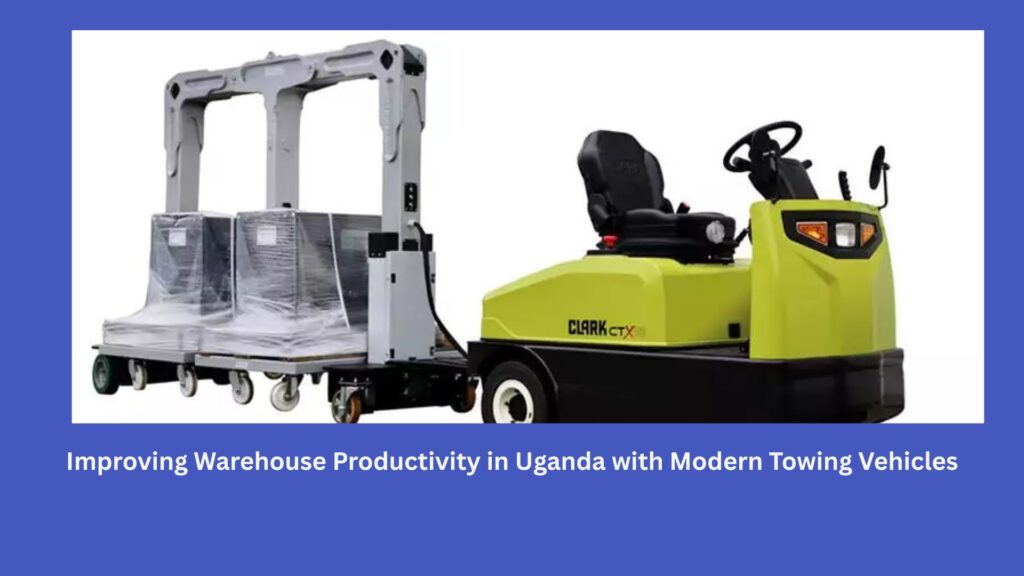
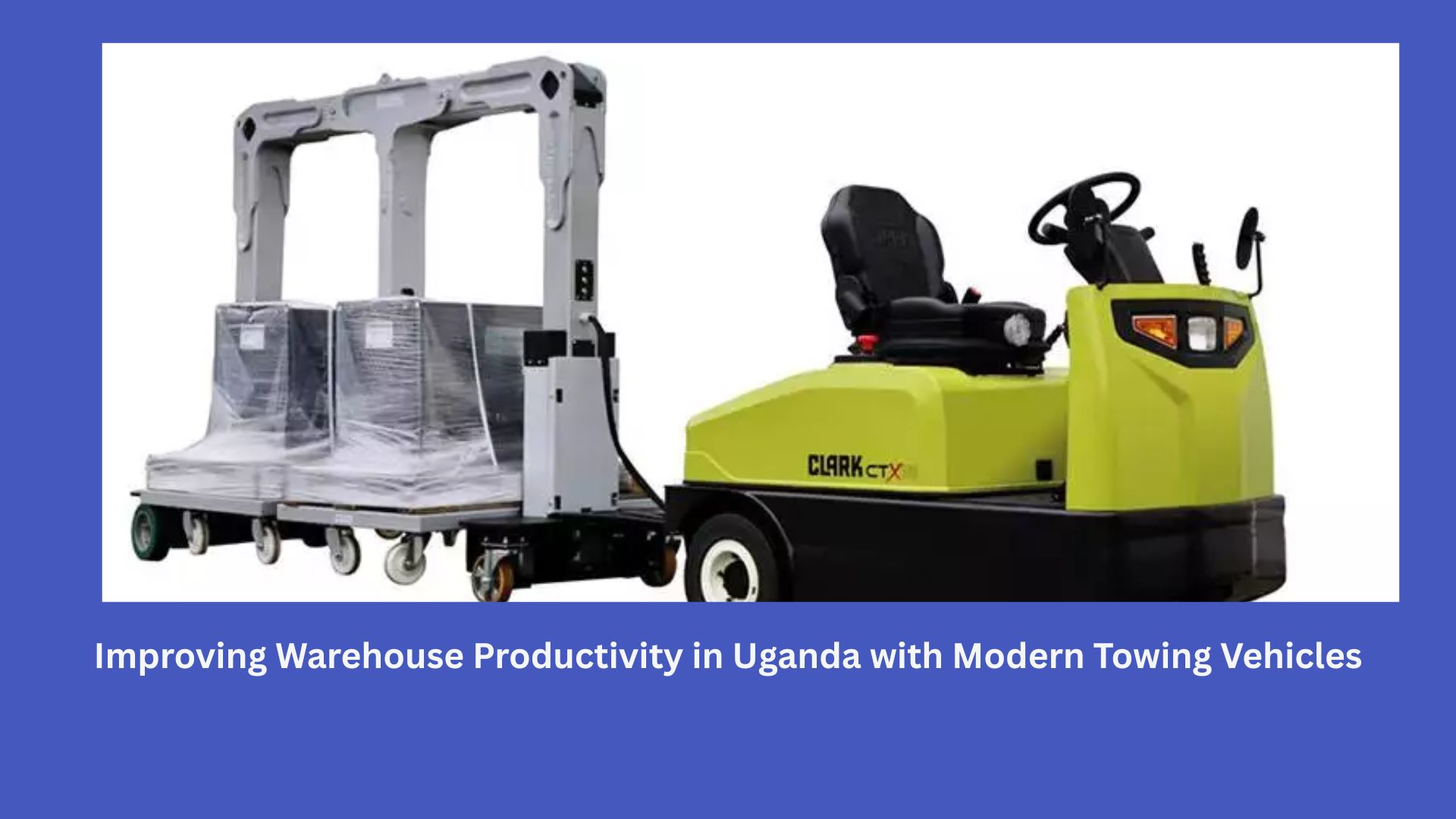
Modern towing vehicles are designed specifically for internal logistics. They are built to pull multiple trailers or carts in a controlled and predictable manner. Unlike forklifts, which lift and stack loads, towing vehicles focus on horizontal movement, making them ideal for repetitive transport tasks across warehouses, factories, and distribution centers.
Tugger trains are a common configuration where a single towing unit pulls several carts, each carrying different materials. This setup supports just-in-time delivery within a facility and reduces unnecessary movement. Electric towing trucks are especially popular due to their low noise levels, minimal emissions, and lower operating costs compared to fuel-powered equipment.
What makes these vehicles “modern” is not just their power source but also their ergonomic design, safety features, and adaptability to different warehouse layouts.
Why Towing Vehicles Are Gaining Traction in Uganda
The growing interest in towing vehicles across Uganda is closely tied to economic and industrial development. As more businesses adopt lean manufacturing and structured warehouse management practices, the need for predictable and efficient material flow becomes more important.
Electric towing solutions align well with local priorities such as energy efficiency and workplace safety. They are also easier to maintain, which matters in environments where downtime can significantly impact daily operations. Warehouses that operate in food processing, pharmaceuticals, and fast-moving consumer goods sectors benefit particularly from cleaner and quieter internal transport systems.
Another driving factor is scalability. Towing systems can start small and expand as operations grow, making them a practical investment for businesses planning gradual upgrades rather than complete overhauls.
Key Productivity Benefits of Towing Vehicles
Faster Internal Transport Cycles
One of the most noticeable improvements after introducing towing vehicles is reduced travel time. By moving multiple loads in one trip, warehouses can significantly cut down on unnecessary back-and-forth movement. This leads to faster replenishment of picking areas and smoother outbound dispatch.
Better Use of Labor
When transport tasks are optimized, workers can focus on higher-value activities such as quality checks, inventory management, and order preparation. This shift not only boosts productivity but also improves job satisfaction by reducing physically demanding, repetitive work.
Improved Safety and Organization
Towing vehicles follow predefined routes, which helps maintain order inside the warehouse. Fewer random movements reduce collision risks and make it easier to enforce safety protocols. Many modern systems also include braking assistance and speed control to further enhance workplace safety.
Comparing Towing Vehicles to Traditional Handling Equipment
Forklifts remain essential for lifting and stacking, but they are not always the most efficient choice for transport-heavy tasks. Towing vehicles complement forklifts by taking over repetitive movement jobs, allowing each piece of equipment to be used for what it does best.
Manual carts, on the other hand, may seem cost-effective initially but often lead to higher labor costs and slower operations over time. Towing vehicles provide consistency and reliability, which are critical in environments where timing matters.
By integrating towing systems into existing operations, warehouses can create a balanced equipment mix that maximizes productivity without unnecessary redundancy.
Applications Across Different Industries
Manufacturing Facilities
In manufacturing environments, towing vehicles support continuous production by delivering components to workstations in a steady flow. This reduces clutter, minimizes work-in-progress inventory, and helps maintain production schedules.
Also Read this: How Bi-Fold Door Systems Support Open-Plan Living in Dubai?
Distribution and Retail Warehouses
For distribution centers handling large order volumes, tugger trains improve picking efficiency and reduce congestion. They are especially useful during peak seasons when speed and accuracy are essential.
Agro-Processing and Export Operations
Uganda’s agro-processing sector benefits from gentle and organized internal transport. Towing vehicles help move packaged goods without excessive handling, preserving product quality while improving throughput.
Choosing the Right Towing Solution
Selecting the right towing system depends on several factors, including warehouse layout, load types, travel distances, and daily operating hours. Electric towing vehicles are generally preferred for indoor use due to their low emissions and quiet operation.
It is also important to consider future expansion. A flexible system that can accommodate additional carts or upgraded towing units will provide better long-term value. Working with experienced towing trucks and tugger trains suppliers in uganda can help businesses assess their needs and select solutions that align with both current and future goals.
Implementation and Training Considerations
Introducing towing vehicles is not just about purchasing equipment. Successful implementation requires planning routes, defining schedules, and training operators. Clear signage and standardized procedures help ensure smooth adoption.
Training is particularly important to maximize safety and efficiency. Operators should understand load limits, coupling procedures, and basic maintenance checks. When employees feel confident using new equipment, productivity gains are realized much faster.
Long-Term Cost and Efficiency Gains
While the upfront investment in towing vehicles may seem significant, the long-term benefits often outweigh the costs. Reduced labor hours, lower maintenance expenses, and fewer workplace injuries contribute to measurable savings over time.
Energy-efficient electric models further reduce operating costs, especially as energy prices fluctuate. For growing warehouses, these savings can be reinvested into expansion, technology upgrades, or workforce development.
Conclusion
Modern towing vehicles are playing an increasingly important role in improving warehouse productivity across Uganda. By streamlining internal transport, reducing labor strain, and enhancing safety, these systems help businesses operate more efficiently in a competitive market. As warehouses continue to scale and modernize, investing in well-planned towing solutions can deliver lasting operational benefits and support sustainable growth.




One Response