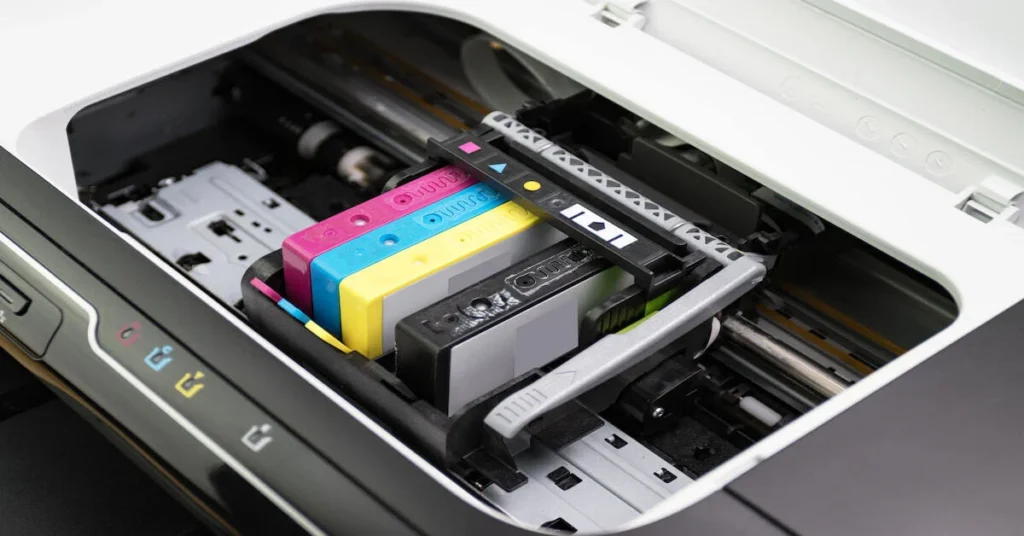
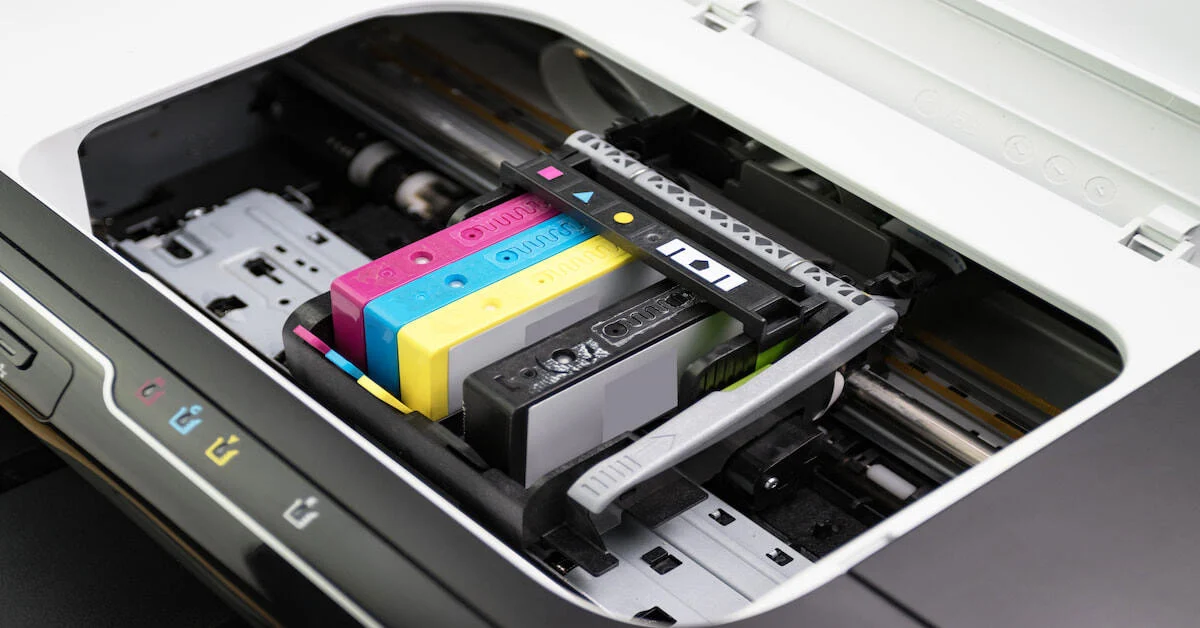
Inkjet printers dominate millions of homes and small offices today. People choose them for vibrant colors, affordable prices, and incredible versatility. Unlike laser printers that rely on toner powder, an inkjet printer sprays tiny droplets of liquid ink onto paper. This simple yet clever method delivers photo-quality results at a fraction of the cost of professional printing.
What Makes Inkjet Technology Special?
Engineers developed inkjet technology in the late 1970s. Companies like Canon, Hewlett-Packard, and Epson turned the idea into practical products by the mid-1980s. Today, modern inkjet printers fire droplets as small as 1 picoliter. That size equals one trillionth of a liter. Such precision creates smooth gradients and sharp details that rival traditional photographs.
Thermal and piezoelectric represent the two main drop-ejection methods. Thermal inkjet, often called bubble-jet, heats ink rapidly. The heat forms a bubble that pushes ink out of the nozzle. Piezoelectric technology uses crystals that change shape when electricity flows through them. This movement squeezes ink droplets with extreme accuracy.
Everyday Advantages of Inkjet Printers
Users love inkjet printers because they handle diverse media beautifully. Glossy photo paper, matte cardstock, fabric sheets, and even CDs work perfectly. Laser printers struggle with thick or textured materials. Moreover, inkjet models start at very low prices. Many excellent machines cost less than $100.
Color reproduction stands out as the biggest strength. Inkjet printers mix cyan, magenta, yellow, and black inks smoothly. They produce millions of shades. Artists, photographers, and marketing teams rely on this capability daily. Additionally, newer models print borderless photos just like lab prints.
Common Myths and Real Limitations
Many people believe inkjet prints fade quickly. Early models did suffer from this problem. However, pigment-based inks and special photo papers now last over 100 years under glass. Another myth claims ink costs more than the printer itself. While original cartridges carry high prices, compatible and refillable options slash expenses dramatically.
Speed remains the clearest drawback. Fast office inkjets reach 20–30 pages per minute in black. Color documents slow down noticeably. Heavy graphics drop speeds even further. Clogging can occur if users print infrequently. Regular maintenance pages prevent most issues.
Latest Innovations Changing the Game
Manufacturers continue to push inkjet boundaries. Tank systems, also called supertank or megatank printers, replace tiny cartridges with large refillable bottles. One set of bottles often prints 7,000–8,000 color pages. This innovation reduces cost per page to pennies.
Business-class inkjet printers now rival laser speed and durability. Models like the Epson WorkForce Pro series deliver 24–34 pages per minute with 50,000-page monthly duty cycles. Companies save money because these machines use far less energy than comparable lasers.
Choosing the Right Inkjet Printer in 2025
Buyers face plenty of excellent options. Home users who print photos occasionally benefit from six-ink photo printers. These machines add light cyan and light magenta for smoother skin tones. Students and families need reliable all-in-one models that scan and copy too.
Small businesses should consider page-wide inkjet technology. Unlike traditional print heads that move left and right, page-wide systems use a fixed bar of thousands of nozzles. Documents emerge at laser-like speeds while color quality stays superb.
Maintenance Tips That Save Money
Owners extend printer life through simple habits. First, print at least once a week. This keeps ink flowing and prevents nozzle clogs. Second, use high-quality paper that matches the printer settings. Cheap paper creates dust that damages print heads.
Many brands offer cleaning cycles through their software. Run these when colors look off or lines appear. Finally, store spare ink in cool, dark places. Heat and light degrade ink quality over time.
Environmental Impact and Recycling
Inkjet printing uses less energy than laser printing. Cartridge recycling programs operate worldwide. Major manufacturers take back empty cartridges free of charge. They reuse plastics and recover precious metals responsibly.
Some companies now make printers from recycled ocean plastic. Water-based inks contain fewer volatile compounds than toner. Users who choose tank systems generate dramatically less waste.
Future of Inkjet Technology
Researchers work on edible ink printing for food decoration. Medical applications include bio-printing tissues with living cells. Industrial inkjets already print circuit boards and solar panels. Clearly, this mature technology still holds enormous potential.
Consumers enjoy better quality, lower costs, and greater reliability than ever before. Inkjet printers combine affordability with stunning results. They meet needs from school projects to professional photography.
The inkjet printer revolutionized personal printing decades ago. Today, continuous improvements keep it relevant and exciting. Whether you print family photos, business reports, or creative projects, inkjet technology delivers impressive performance without breaking the bank.