Japan Cataract Surgery Devices Market Overview
According To Renub Research Japan cataract surgery devices market represents a critical segment of the country’s medical technology landscape, driven by demographic changes, technological sophistication, and a strong healthcare delivery system. Cataract surgery devices include a wide range of tools and equipment used to remove the clouded natural lens of the eye and replace it with an artificial intraocular lens, restoring vision and improving quality of life. With cataracts being one of the most common age-related eye conditions, Japan’s rapidly aging population has created a sustained and growing demand for safe, precise, and effective surgical solutions. The market is characterized by steady growth, supported by innovation, high clinical standards, and increasing awareness of eye health among the population.
Download Free Sample Report:https://www.renub.com/request-sample-page.php?gturl=japan-cataract-surgery-devices-market-p.php
Market Size and Growth Outlook
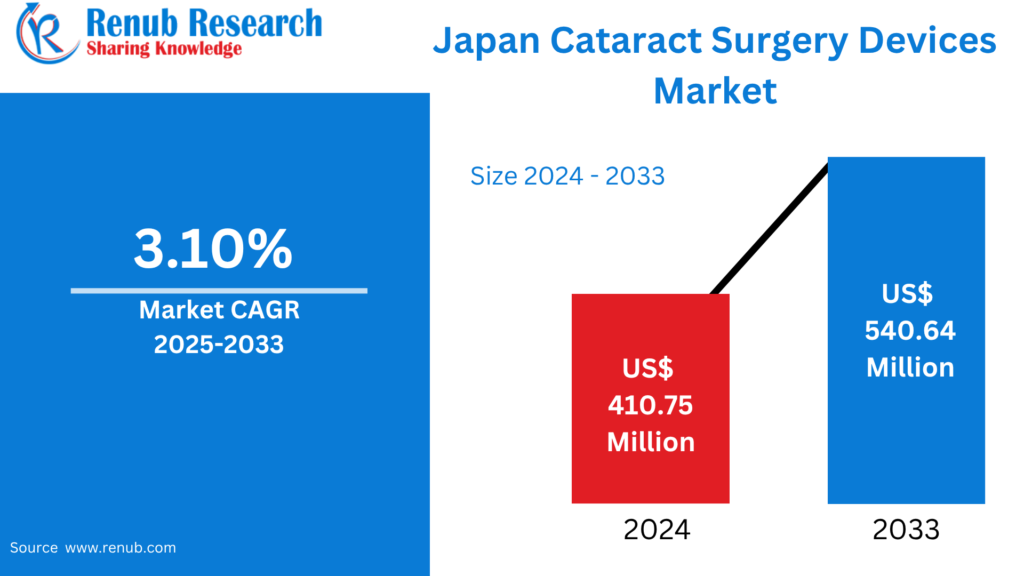
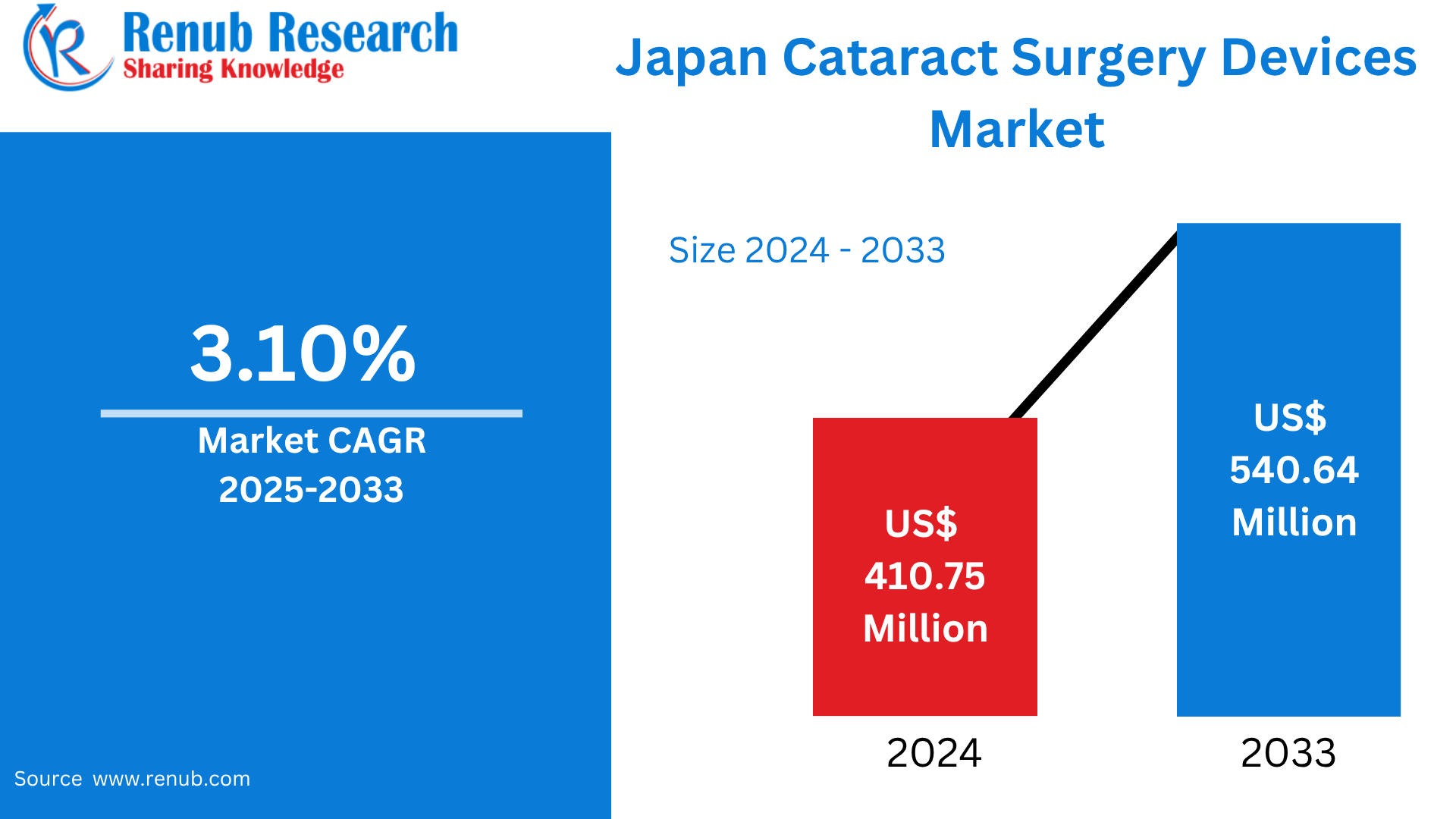
The Japan cataract surgery devices market has demonstrated consistent expansion and is expected to continue on a stable growth trajectory through 2033. Valued at over four hundred million US dollars in 2024, the market is projected to reach more than five hundred million US dollars by 2033, reflecting a moderate but reliable compound annual growth rate. This growth is not driven by volume alone but also by the adoption of higher-value technologies such as premium intraocular lenses, femtosecond laser systems, and advanced phacoemulsification platforms. As surgical outcomes improve and patient expectations rise, the average value per procedure continues to increase, contributing significantly to overall market revenue.
Cataract Surgery Devices Industry Landscape
Cataract surgery devices encompass a diverse set of technologies designed to enhance surgical precision, safety, and patient comfort. Key devices include phacoemulsification systems that use ultrasonic energy to fragment and remove the cataract, femtosecond lasers that enable highly accurate corneal incisions and lens fragmentation, ophthalmic viscoelastic devices that protect ocular tissues during surgery, and a wide range of intraocular lenses tailored to different visual needs. In Japan, the integration of these devices into routine clinical practice reflects the country’s emphasis on technological excellence and evidence-based medicine. Continuous innovation has made cataract surgery one of the most successful and commonly performed surgical procedures nationwide.
Impact of an Aging Population
Japan’s demographic profile plays a central role in shaping the cataract surgery devices market. The country has one of the highest proportions of elderly citizens globally, with a significant share of the population aged 65 and above. Since cataracts primarily develop as a result of aging, the increasing number of elderly individuals directly correlates with rising demand for cataract surgeries. Older patients often present with complex visual needs, prompting surgeons to rely on advanced devices and premium lenses to achieve optimal outcomes. As life expectancy continues to increase, maintaining visual independence has become a public health priority, further reinforcing long-term demand for cataract surgery technologies.
Technological Advancements in Cataract Surgery
Technological progress is a major driver of market growth in Japan. Innovations such as femtosecond laser-assisted cataract surgery have transformed traditional surgical techniques by enabling bladeless, highly precise procedures. These advancements reduce complication rates, enhance consistency, and shorten recovery times. Additionally, the development of premium intraocular lenses, including multifocal and extended depth-of-focus lenses, has allowed patients to achieve better visual performance across different distances. Digital imaging systems, real-time diagnostics, and emerging applications of artificial intelligence have further refined surgical planning and execution, positioning Japan at the forefront of advanced ophthalmic care.
Role of Healthcare Infrastructure
Japan’s robust healthcare infrastructure significantly supports the adoption of advanced cataract surgery devices. The country is home to a well-established network of hospitals, specialized ophthalmic clinics, and academic research centers equipped with modern surgical facilities. Highly trained ophthalmologists and surgeons regularly adopt new techniques and technologies, supported by continuous professional education. A strong regulatory framework ensures that medical devices meet rigorous safety and efficacy standards, fostering trust among healthcare providers and patients. This combination of infrastructure quality, professional expertise, and regulatory oversight creates a favorable environment for sustained market growth.
Government Support and Policy Environment
Government policies and healthcare programs in Japan play an important role in shaping the cataract surgery devices market. Public health initiatives emphasize preventive care, early diagnosis, and timely treatment of age-related conditions, including vision impairment. While the national health insurance system covers standard cataract surgery, certain advanced devices and premium intraocular lenses may require additional out-of-pocket payments. Even so, government encouragement of medical innovation and senior care supports broader adoption of modern surgical technologies. Policy stability and long-term planning contribute to predictable market conditions for manufacturers and healthcare providers alike.
Rising Demand for Minimally Invasive Procedures
Patient preferences in Japan are increasingly aligned with minimally invasive medical procedures, and cataract surgery is no exception. Modern cataract surgery devices enable smaller incisions, reduced surgical trauma, and faster visual recovery. These benefits are particularly important for elderly patients, who may have other health conditions that make rapid recovery essential. Minimally invasive techniques also reduce hospital stays and postoperative complications, aligning with healthcare system goals of efficiency and cost containment. As awareness of these benefits grows, demand for advanced surgical devices continues to rise.
Cost Challenges of Advanced Devices
Despite strong demand, the high cost of advanced cataract surgery devices presents a significant challenge to market expansion. Technologies such as femtosecond laser systems and premium intraocular lenses require substantial capital investment, making them less accessible to smaller hospitals and clinics. In many cases, these advanced options are not fully reimbursed under the national insurance system, shifting the financial burden to patients. This cost barrier can limit adoption outside major urban centers and contribute to disparities in access to state-of-the-art eye care. Balancing innovation with affordability remains a key issue for the market.
Regulatory and Approval Barriers
Japan’s stringent regulatory environment, while essential for patient safety, can slow the introduction of new cataract surgery devices. The approval process for medical devices involves detailed documentation, clinical evidence, and compliance with strict quality standards. These requirements can extend time-to-market and increase development costs for manufacturers. For international companies, navigating local regulations adds another layer of complexity. Although these hurdles help maintain high standards of care, they can also limit competition and delay patient access to the latest technological advancements.
Product Type Segmentation
The Japan cataract surgery devices market is segmented by product type, each contributing uniquely to overall market performance. Intraocular lenses represent a major share due to their essential role in every cataract procedure and the growing popularity of premium lens options. Phacoemulsification systems remain the backbone of cataract surgery, widely used across hospitals and clinics. Femtosecond lasers occupy a high-value niche, driven by demand for precision and advanced outcomes. Ophthalmic viscoelastic devices and other consumables provide steady recurring revenue, as they are required for every procedure and support surgical safety and efficiency.
End-Use Analysis
By end use, hospitals account for a significant portion of the market due to their capacity to handle high surgical volumes and complex cases. Ophthalmic clinics also represent a substantial segment, particularly in urban areas where specialized eye care centers are common. These clinics often adopt advanced technologies to differentiate their services and attract patients seeking premium outcomes. Research institutes, while smaller in market share, play a crucial role in clinical trials, training, and the development of next-generation cataract surgery devices, indirectly supporting overall market growth.
Regional Market Dynamics
Regionally, the cataract surgery devices market in Japan shows variation based on population density, healthcare infrastructure, and economic activity. Eastern and southern regions, which include major metropolitan areas, tend to lead in adoption of advanced technologies due to higher patient volumes and greater financial resources. Northern and western regions also contribute steadily, supported by regional hospitals and clinics catering to aging local populations. While urban areas dominate in terms of value, rural regions present opportunities for growth as access to modern eye care continues to improve.
Competitive Landscape and Key Players
The competitive landscape of the Japan cataract surgery devices market is defined by the presence of global medical device companies and strong domestic players. Competition focuses on product innovation, clinical performance, pricing strategies, and long-term relationships with healthcare providers. Companies invest heavily in research and development to introduce improved devices, enhance surgeon experience, and deliver better patient outcomes. Strategic collaborations, product launches, and incremental technological upgrades are common approaches used to strengthen market position and expand reach.
Future Outlook of the Market
Looking ahead, the Japan cataract surgery devices market is expected to maintain steady growth, supported by demographic trends, continuous technological innovation, and a strong healthcare ecosystem. Advances in digital surgery, artificial intelligence, and personalized intraocular lenses are likely to further enhance surgical precision and patient satisfaction. At the same time, addressing cost and regulatory challenges will be essential to ensure equitable access to advanced care. Overall, the market is well positioned for sustainable expansion, playing a vital role in preserving vision and quality of life for Japan’s aging population.