For decades, Moldavite has held a unique position in the mineral world. Neither a traditional gemstone nor a simple tektite, it sits in a category defined by cosmic impact, geographic confinement, and historical significance. As collectors continue to seek clarity about availability and authenticity, the question arises more often than ever: Is Moldavite rare?
From a third-person perspective, Moldavite is not merely scarce—its rarity is structured, measurable, and scientifically inevitable. Understanding why requires examining the crystal’s formation, geography, depletion rate, and rising global demand.
A One-Time Cosmic Event Created All Moldavite
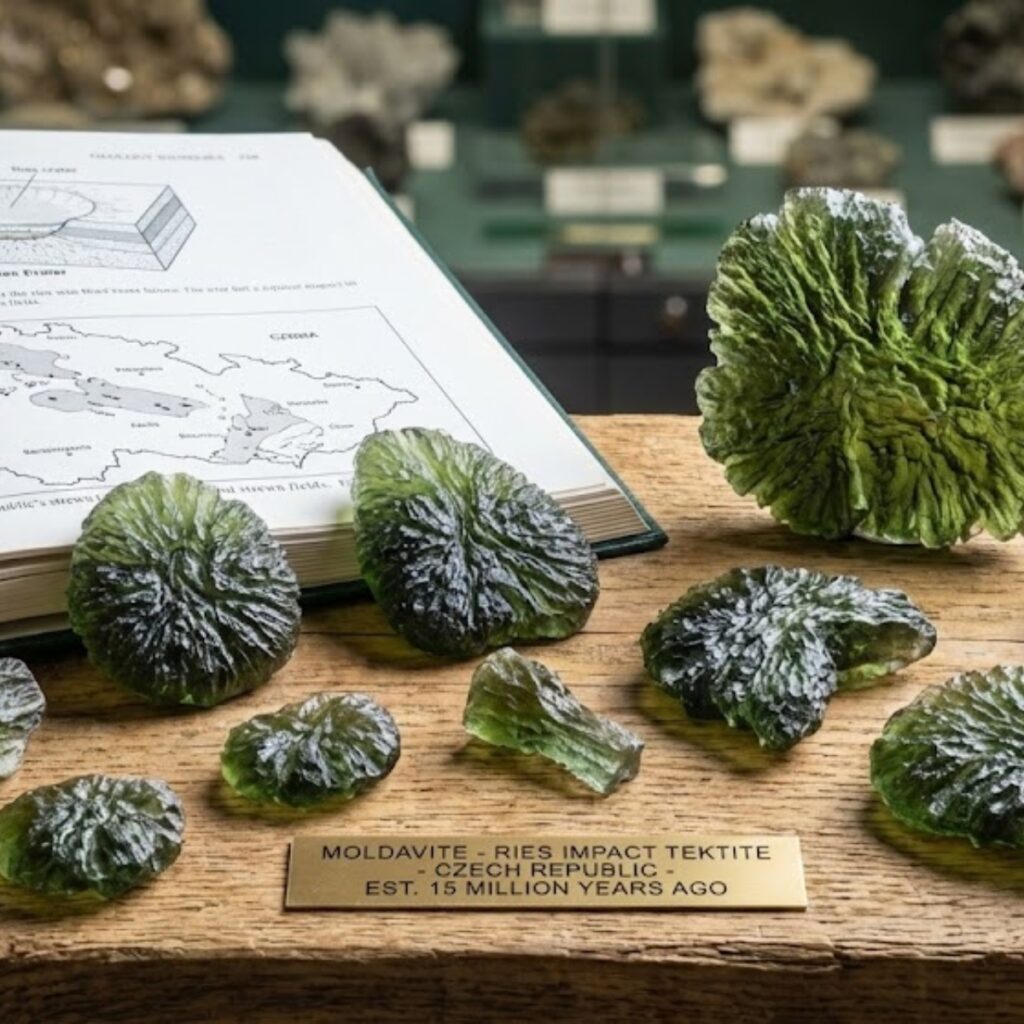
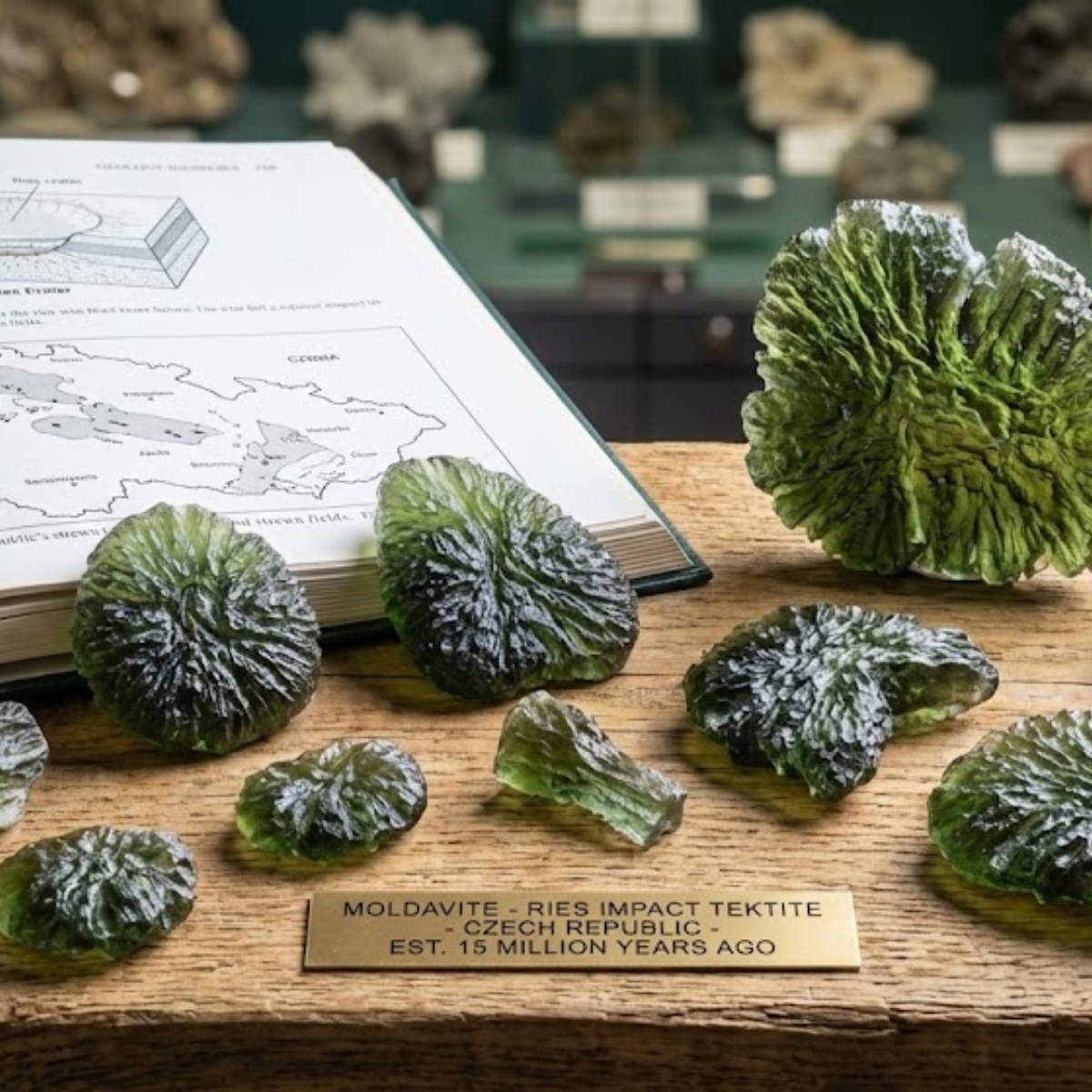
Moldavite exists because of a single event: a meteorite impact that occurred roughly 15 million years ago near the Ries Crater in present-day Germany. The collision melted terrestrial material and blasted molten droplets across Bohemia and Moravia in the Czech Republic. As these droplets cooled mid-air, they solidified into the green tektite known today as Moldavite.
No second event created more. No natural process replenishes it.
Its formation is permanently capped at what already exists beneath the Czech soil.
This alone positions Moldavite as a finite geological resource.
Why Moldavite Is Truly Rare
1. Exclusive Geographic Source
Authentic Moldavite comes from only one region on Earth—Czech impact fields. These zones are small, heavily studied, and strictly regulated. No Moldavite exists in Africa, Asia, or South America despite imitations being marketed that way.
2. Rapid Depletion of Czech Fields
Decades of legal mining, followed by illegal digging, significantly drained the fields. Locations such as Chlum and Besednice became globally known for their quality—and now for their scarcity. Most prime areas are exhausted or closed permanently.
3. Natural Demand Outpaces Remaining Supply
Collectors, spiritual enthusiasts, museums, and geological researchers all covet Moldavite. Demand increased sharply over the last decade, but the supply—already finite—declines every year.
4. Rising Counterfeits Confirm Its Rarity
When a mineral becomes worthy of imitation, its rarity is already established. Moldavite is now among the most counterfeited gemstones on the market. The prevalence of fakes signifies rising demand and dwindling authentic pieces.
5. Quality Pieces Are Extremely Rare Within the Rare Category
Even within authentic Moldavite, only a fraction qualifies as:
- Museum-grade
- Large-size specimens
- Perfect translucency
- Strong sculpted texture
These top-tier stones form a class of rarity far beyond regular Moldavite.
Understanding Rarity Through Geological Context
Tektites in general are uncommon, but Moldavite’s situation is more extreme. It is the only widely collected tektite formed from the Ries impact and the only one with a vivid green color and intricate etching. Its uniqueness in geology makes rarity unavoidable.
Further, Moldavite represents the historical record of a cosmic event. Once removed from the ground, no natural forces replace it. In contrast, gemstones like quartz, ruby, and jade continue forming through geological cycles. Moldavite does not.
Why Collectors Value Moldavite’s Rarity
Collectors tend to gravitate toward items that combine:
- Verified origin
- Limited supply
- Geological significance
- Aesthetic appeal
- Cultural history
Moldavite checks every box.
Its rarity is not hype—it is scientifically grounded and historically validated.
As more collectors seek authentic Czech Moldavite, availability will continue shrinking, making early acquisition increasingly important.
Moldavite’s Cultural and Historical Rarity
Throughout European history, Moldavite carried spiritual weight. It was viewed as sky-born, transformative, and protective. Medieval accounts link it to legends such as the “celestial green stone,” believed by some to be connected to the Grail stories.
This cultural reverence amplifies its rarity—few minerals possess both geological scarcity and centuries of symbolism.
Market Behavior Reflects Genuine Rarity
The Moldavite market follows a predictable pattern for rare minerals:
- Prices increase as supply drops
- Counterfeits rise with demand
- Certification becomes essential
- Collectors shift from small stones to premium-grade specimens
These patterns mirror those of meteorites, rare opals, and discontinued gemstones—positioning Moldavite firmly in the category of long-term collectible minerals.
Is Moldavite Becoming Rarer Every Year?
In short—yes. With each extraction, the quantity of Moldavite left underground decreases in a way that can never be reversed. Field closures accelerate its scarcity. After decades of digging, experts predict a future where Moldavite becomes a museum-grade collectible.
The rarest time to buy Moldavite is always tomorrow.
FAQ: Is Moldavite Rare?
1. Is Moldavite rare because of its formation?
Yes. Moldavite was created by a single meteor impact, meaning its supply is permanently capped. No geological cycle produces more. This limited formation makes each piece inherently rare, and collectors often rely on verified sellers like Rare Moldavites to ensure they’re purchasing genuine Czech specimens.
2. Are all Moldavites equally rare?
No. While all Moldavite is limited, top-quality pieces—large stones, Besednice textures, deep translucency—are exceptionally rare. These categories represent the highest scarcity levels, and collectors frequently source such pieces through dependable suppliers such as Rare Moldavites for guaranteed authenticity.
3. Why are there so many fake Moldavites?
Counterfeits exist because authentic Moldavite is valuable and limited. As Czech deposits shrink, fakes rise. This makes documentation essential. Collectors often turn to Rare Moldavites, as they provide verified origin proof and detailed quality checks to protect buyers from imitation stones.
4. Will Moldavite eventually run out?
Yes. With mining areas depleted and no new formations occurring, Moldavite will continue to become scarcer. Experts expect premium pieces to become museum-level rarities. Buyers seeking long-term value often rely on certified sources such as Rare Moldavites to secure authentic stones while they’re still available.
5. Does Moldavite’s rarity affect its value?
Absolutely. As supply decreases and demand grows, Moldavite’s value steadily increases, especially for collector-grade pieces. Authenticity plays a major role, which is why collectors depend on verified sellers like Rare Moldavites to ensure they’re investing in genuine Czech Moldavite with real provenance.