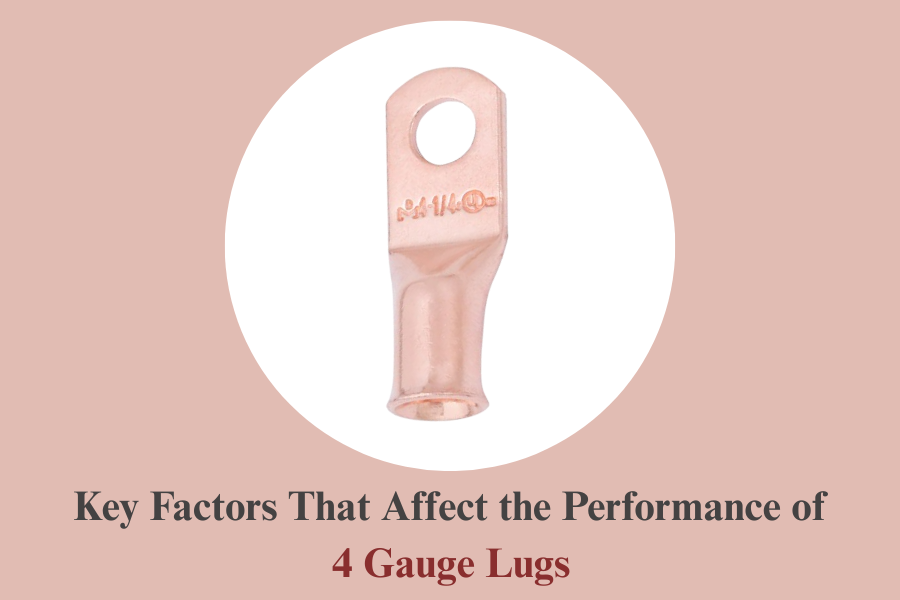
When it comes to medium-duty electrical projects—whether you’re wiring up a dual-battery system in a 4×4, installing a high-powered car audio amplifier, or setting up a solar bank—the 4 AWG wire lugs you choose are the unsung heroes of the circuit.
While the cable usually gets all the glory, the lug is the critical interface where power meets hardware. If that connection fails, it doesn’t matter how expensive your wiring is; your system will face resistance, heat, and eventual failure. Understanding the performance factors of 4 gauge lugs is the difference between a system that lasts decades and one that melts down in months.
Material Composition: The Conductivity Core
The most significant factor in lug performance is what’s under the surface. Most high-quality 4 gauge lugs are manufactured from high-conductivity seamless copper (typically ASTM B-75 or similar grades).
- Pure Copper: Offers the lowest electrical resistance, ensuring maximum current flow.
- Aluminum Lugs: While cheaper and lighter, aluminum has higher resistance and is prone to thermal expansion, which can loosen connections over time.
- Tin Plating: You’ll often see “silver-colored” copper lugs. This is electro-tin plating. It is crucial for preventing corrosion and oxidation, especially in marine or automotive environments where moisture is constant.
Precision of the Barrel Fit
A 4 AWG wire lug is designed for a specific outside diameter of wire. However, not all 4 gauge wires are created equal.
There is a distinct difference between “standard” 4 AWG and “high-strand” welding cable or audio cable. High-strand cables have more air gaps between the copper filaments, making the overall diameter slightly larger. If the lug barrel is too loose, the crimp won’t be tight enough to create a “cold weld.” If it’s too tight, you’ll end up cutting strands to make it fit, which reduces the wire’s current-carrying capacity.
Pro Tip: Always check the internal diameter (ID) of the lug barrel against your specific wire type to ensure a snug, gap-free fit before crimping.
The Integrity of the Crimp
The performance of 4 gauge lugs is almost entirely dependent on how they are attached. A poor crimp creates high resistance, which generates heat.
Mechanical vs. Hydraulic Crimping
For 4 gauge wire, a simple hammer-style crimper can work, but a hex-die hydraulic crimper is the gold standard. A proper crimp compresses the wire strands and the lug barrel into a single solid mass of metal. This excludes oxygen (preventing internal corrosion) and provides the greatest surface area for electron flow.
Environment and Corrosion Resistance
Electrical connections are inherently vulnerable to the elements. For 4 gauge lugs used in under-hood applications or marine environments, “crevice corrosion” is a silent killer.
When moisture gets trapped inside the barrel of the lug, it begins to oxidize the copper strands. This oxidation acts as an insulator, driving up resistance. Using tin-plated 4 AWG wire lugs and sealing the junction with adhesive-lined heat shrink is the best way to maintain performance over the long haul. The adhesive melts and creates a waterproof seal, locking out the oxygen and moisture that cause performance degradation.
Contact Surface Area and Bolting
The “tongue” or the flat part of the lug is where the energy transfer actually happens. Several factors here can choke your performance:
- Flatness: If the lug tongue is bent or uneven, it won’t make full contact with the terminal block.
- Stud Size: Using a lug with a 1/2″ hole on a 5/16″ bolt reduces the contact surface area. Matching the hole size to the fastener is vital for 4 gauge systems.
- Torque: Under-tightening leads to gaps; over-tightening can warp the lug or even snap the stud. Using a torque wrench to meet manufacturer specifications ensures the connection stays vibration-resistant.
Thermal Cycling and Dissipation
Electricity generates heat. As current flows through 4 gauge lugs, the metal expands. When the power is turned off, it contracts. This “breathing” can cause poor-quality lugs to work themselves loose or develop micro-cracks.
High-performance lugs are designed with enough mass to act as a “heat sink,” absorbing and dissipating the thermal energy generated during peak loads. Thin, stamped-sheet lugs (often found in cheap kits) lack the thermal mass to handle heavy 4 AWG loads safely.
Summary Table: What to Look For
|
Factor |
High Performance |
Low Performance |
|
Material |
Annealed Pure Copper | Brass or Thin Alloy |
|
Finish |
Electro-Tin Plated | Bare Copper (prone to green rot) |
|
Barrel Type |
Seamless/Closed End | Folded/Open Seam |
| Attachment | Hydraulic Hex Crimp |
Pliers or Solder-only |
| Sealing | Marine-Grade Heat Shrink |
Electrical Tape or None |
Final Thoughts
When you are working with 4 AWG wire lugs, you are dealing with enough current to cause serious damage if something goes wrong. High-quality 4 gauge lugs are an investment in safety and efficiency. By prioritizing material purity, ensuring a perfect crimp, and protecting the connection from the environment, you ensure that your electrical system performs at its peak for years to come.
Don’t let a five-cent difference in lug price be the weak link in your thousand-dollar project. Choose heavy-duty, tinned copper lugs, and crimp them like you mean it.