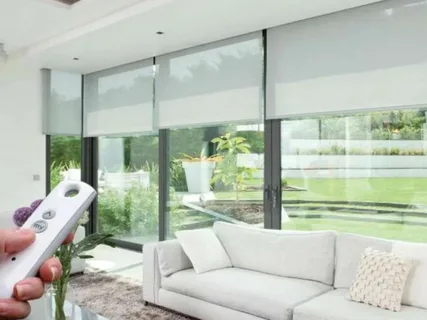
A successful motorized shades installation starts with accurate measuring, proper power planning, and early integration with your control system to avoid alignment, noise, and connectivity problems after the fact. Plan conduit or power drops, confirm shade and motor compatibility, and test presets with real daylight before final handover so the system performs predictably for years.
Motorized shades installation requires precise measurement, choosing the correct motor type for shade weight and fabric, planning power and signal wiring or low-voltage distribution, and integrating motor controllers with your room automation. Commission by saving presets for key sun positions and testing runtime limits to prevent fabric stress and ensure smooth, quiet operation.
Why Good Motorized Shades Installation Matters
A thoughtful motorized shades installation transforms a room’s comfort, glare control, and energy profile, but poor planning shows up immediately as jerky motion, inconsistent limits, or unreliable connectivity. Professional installation reduces callbacks and ensures the mechanical and electrical systems are coordinated. Because shade systems combine mechanical, electrical, and automation disciplines, installers must verify clearances, motor torque ratings, mounting strength, and control pathways before finalizing any work.
Measuring, Mounting, And Mechanical Considerations
Accurate measurement is the backbone of any motorized shades installation. Measure headbox depth, window reveal variations, and sill obstructions at multiple points to account for level and plumb conditions. Choose mounting methods—inside, outside, or fascia-mounted—based on reveal depth and desired sightlines. Verify that mounting surfaces are structurally adequate for the combined weight of shade fabric and the motor, and reinforce framing where necessary. When installing multiple shades on one header, ensure motors and brackets are aligned so fabric hangs consistently across the run.
Power Options And Wiring Strategies
Power planning influences long-term reliability. Hardwired AC motors require dedicated circuits and code-compliant junctions, while low-voltage systems centralize power and allow simpler field changes. For retrofit projects, consider inline power supplies or battery options when wiring access is constrained, but weigh maintenance trade-offs for battery replacement intervals. Run conduit or raceways during construction to future-proof upgrades and route control wiring to a centralized location to simplify commissioning and service.
Motor Selection, Torque, And Fabric Compatibility
Select motors sized for the fabric weight, tube diameter, and anticipated runtime to prevent strain and premature wear. Motor torque must match the combined weight and friction characteristics of the rollout assembly. For larger spans, distributed drive systems or multiple motors may be required to maintain even tension. Coordinate motor selection with the fabric vendor to ensure that opacity, stack height, and solar characteristics do not create unforeseen torque demands that degrade long-term performance.
Control Integration And Signal Protocols
Decide early whether the shades will be controlled locally, via wall stations, or as part of a whole-house automation platform. Protocol choices—such as RF, wired digital control, or networked drivers—affect latency, scalability, and integration complexity. Integrate motor controllers with room scenes so shades move in sync with lighting and AV presets, and plan for sensor inputs like sun position or light levels for automated shading strategies. Document all channel addressing and control mappings to streamline future troubleshooting.
Commissioning, Limits, And Runtime Tuning
Proper commissioning makes the difference between a functional system and one that frustrates users. Set upper and lower limits carefully to protect fabric and maintain consistent appearance. Tune runtimes to remove slack without overdriving the system and verify motor braking behavior to avoid drift. Save commonly used presets—morning, noon, glare, and privacy—and test them under real sun conditions so the automation responds as occupants expect throughout the day.
Maintenance, Diagnostics, And Long-Term Care
Motorized shades require periodic inspection. Check brackets, fasteners, and fabric tension, and verify motor noise and smoothness. Keep spare motor controllers and key hardware on hand for multi-unit installs to reduce downtime. Provide occupants with simple maintenance and troubleshooting guidance, including how to run manual overrides and how to report errors, and schedule firmware or control-system updates during low-use windows to avoid disrupting regular routines.
Final Thoughts On Motorized Shades Installation
A well-executed motorized shades installation unites mechanical precision, correct electrical provisioning, and thoughtful automation to deliver quiet, predictable shading that improves comfort and reduces solar heat gain. Prioritize accurate site surveys, coordinated trades, and disciplined commissioning to achieve a system that looks good and performs reliably for years.
FAQs
What is the best way to power motorized shades in retrofit projects?
In retrofit projects, low-voltage centralized power or high-capacity battery packs are common when running new conduit is impractical; factor in battery replacement intervals or central power accessibility to minimize long-term maintenance complexity.
How do technicians set travel limits and presets on motorized shades?
Technicians set travel limits by moving shades to desired stop positions and storing upper and lower endpoints in the motor controller, then save presets for common scenes; testing under sunlight validates positions for real-world glare control.
How often should motorized shade motors be serviced?
Service intervals depend on usage but typically include annual visual inspections and lubrication checks for heavy-use installations, with motor diagnostics run if irregular noise or position drift appears.
Can motorized shades be integrated with existing smart home platforms?
Yes, motorized shades commonly integrate via RF bridges, wired controllers, or networked drivers; early protocol selection and documented control mappings simplify integration with lighting, HVAC, and AV scenes.
What considerations reduce fabric wear in motorized shades?
Reduce wear by matching motor torque to fabric weight, ensuring smooth tube concentricity, avoiding repetitive full-travel stops under tension, and programming gentle start/stop profiles to limit mechanical shock.
Author: Sofia Bennett — Shading systems specialist focused on installation quality and automation reliability.