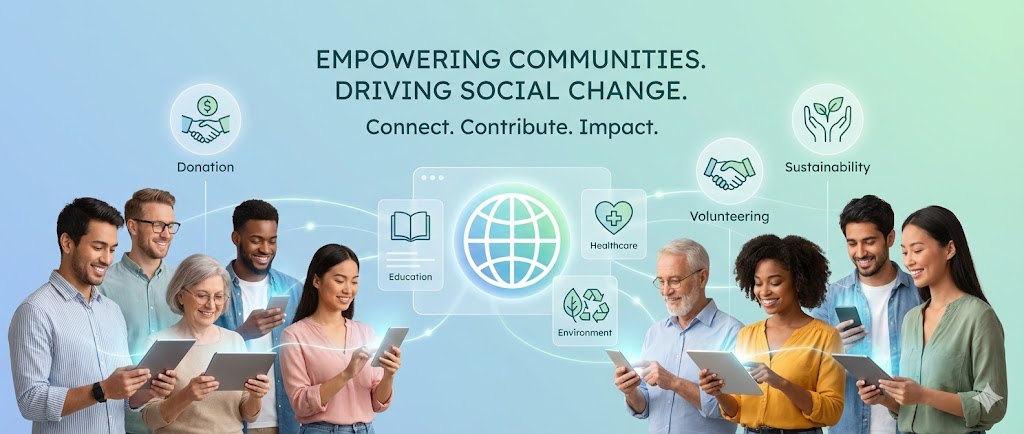
In today’s digitally connected world, technology has become a powerful catalyst for positive change. A Platform for Social Impact enables individuals, organizations, nonprofits, and governments to collaborate, contribute, and address social challenges at scale. By combining innovation with purpose, these platforms help transform good intentions into measurable, long-lasting outcomes.
From education and healthcare to sustainability and community development, social impact platforms are reshaping how societies solve complex problems.
What Is a Platform for Social Impact?
A platform for social impact is a digital solution—web-based or mobile-based—designed to support initiatives that create positive social, environmental, or community outcomes. These platforms connect stakeholders such as donors, volunteers, nonprofits, social enterprises, and beneficiaries in one unified ecosystem.
They enable activities such as:
-
Social fundraising and donations
-
Volunteer coordination
-
Awareness campaigns
-
Impact tracking and reporting
-
Collaboration between organizations
-
Community engagement
The primary goal is to amplify social good using technology.
Why Platforms for Social Impact Are Important
Social challenges today are complex and global in nature. Traditional approaches often lack scale, transparency, or efficiency. Digital platforms bridge these gaps by providing real-time access, data-driven insights, and global reach.
Key reasons why social impact platforms matter:
-
They increase transparency and trust
-
They improve coordination among stakeholders
-
They make participation accessible to everyone
-
They allow real-time monitoring of outcomes
-
They scale social initiatives faster
Technology helps turn fragmented efforts into collective action.
Key Features of a Social Impact Platform
A successful platform for social impact is built around usability, trust, and measurable outcomes.
1. User-Friendly Interface
Simple and intuitive design ensures participation from people of all backgrounds.
2. Fundraising and Donation Management
Secure digital payments, recurring donations, and campaign tracking.
3. Volunteer Management
Tools for volunteer registration, scheduling, and activity tracking.
4. Impact Measurement & Reporting
Dashboards and reports that show progress, outcomes, and real-world impact.
5. Transparency & Accountability
Clear visibility into how funds and resources are used.
6. Community Engagement Tools
Discussion forums, updates, notifications, and storytelling features.
7. Data Security & Compliance
Ensures protection of user data and compliance with regulations.
Types of Platforms for Social Impact
1. Donation & Fundraising Platforms
Enable individuals and organizations to support causes financially.
2. Volunteer Engagement Platforms
Focus on mobilizing people to contribute time and skills.
3. Social Enterprise Platforms
Support businesses that prioritize social and environmental goals.
4. Community Development Platforms
Empower local communities through collaboration and shared resources.
5. Corporate Social Responsibility (CSR) Platforms
Help companies manage and report on their social initiatives.
Technologies Powering Social Impact Platforms
Modern social impact platforms rely on advanced technologies to deliver efficiency and scale:
-
Cloud computing for scalability
-
Artificial Intelligence for insights and personalization
-
Big Data analytics for impact assessment
-
Blockchain for transparency and trust
-
Mobile technology for accessibility
-
API integrations for seamless operations
These technologies ensure platforms are reliable, secure, and future-ready.
Benefits of a Platform for Social Impact
For Individuals
-
Easy participation in social causes
-
Transparency in contributions
-
Ability to track real-world impact
For Nonprofits and NGOs
-
Wider reach and engagement
-
Reduced administrative costs
-
Data-driven decision making
For Corporations
-
Structured CSR initiatives
-
Improved brand trust and reputation
-
Measurable social outcomes
For Society
-
Faster problem-solving
-
Inclusive participation
-
Sustainable and scalable impact
Real-World Applications of Social Impact Platforms
Social impact platforms are used across multiple sectors, including:
-
Education access and digital learning
-
Healthcare and mental health support
-
Environmental conservation
-
Poverty alleviation
-
Disaster relief and emergency response
-
Women empowerment and skill development
These platforms make social innovation more accessible and collaborative.
Challenges in Building a Social Impact Platform
While the potential is immense, challenges include:
-
Ensuring long-term funding
-
Maintaining transparency
-
Engaging users consistently
-
Measuring impact accurately
-
Balancing technology with human empathy
Addressing these challenges requires thoughtful design and continuous improvement.
Future of Platforms for Social Impact
The future of social impact platforms is driven by innovation and collaboration.
Emerging trends include:
-
AI-powered impact predictions
-
Blockchain-based transparent reporting
-
Micro-donations and subscription giving
-
Gamification to increase engagement
-
Global collaboration networks
-
Real-time social impact visualization
As technology evolves, social impact platforms will become more inclusive, intelligent, and influential.
How to Build a Successful Platform for Social Impact
To build an effective platform, organizations should focus on:
-
Clear mission and goals
-
Strong stakeholder collaboration
-
User-centric design
-
Scalable and secure technology
-
Transparent communication
-
Continuous impact evaluation
Partnering with experienced digital platform developers can help bring social impact ideas to life.
Conclusion
A Platform for Social Impact is more than just a digital solution—it is a powerful tool for change. By leveraging technology, data, and community collaboration, these platforms enable individuals and organizations to create meaningful, measurable, and sustainable social outcomes.
In a world facing complex challenges, platforms for social impact offer hope, structure, and scalability—turning compassion into action and ideas into lasting change.