Root Beer Market Size and Forecast 2025–2033
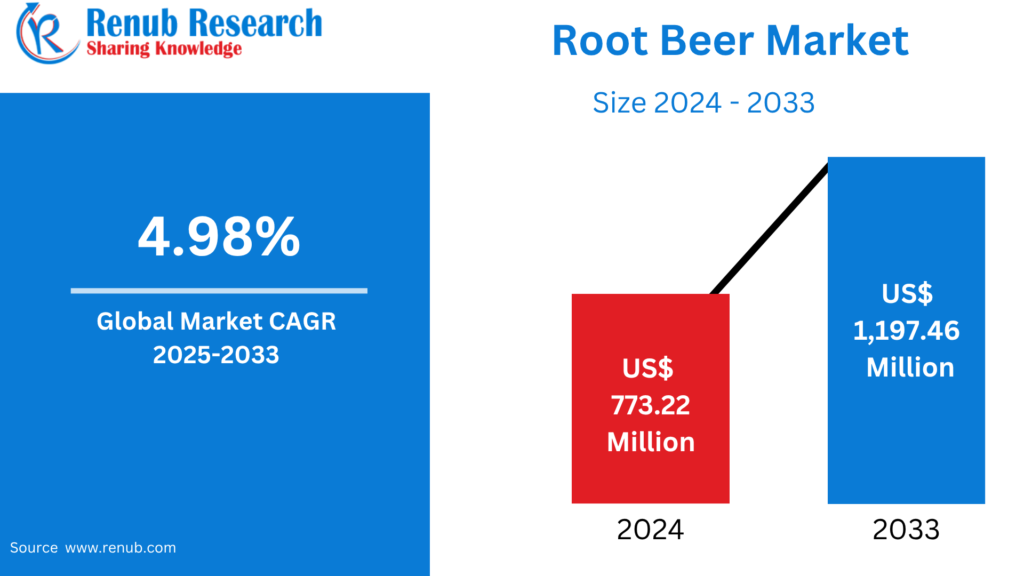
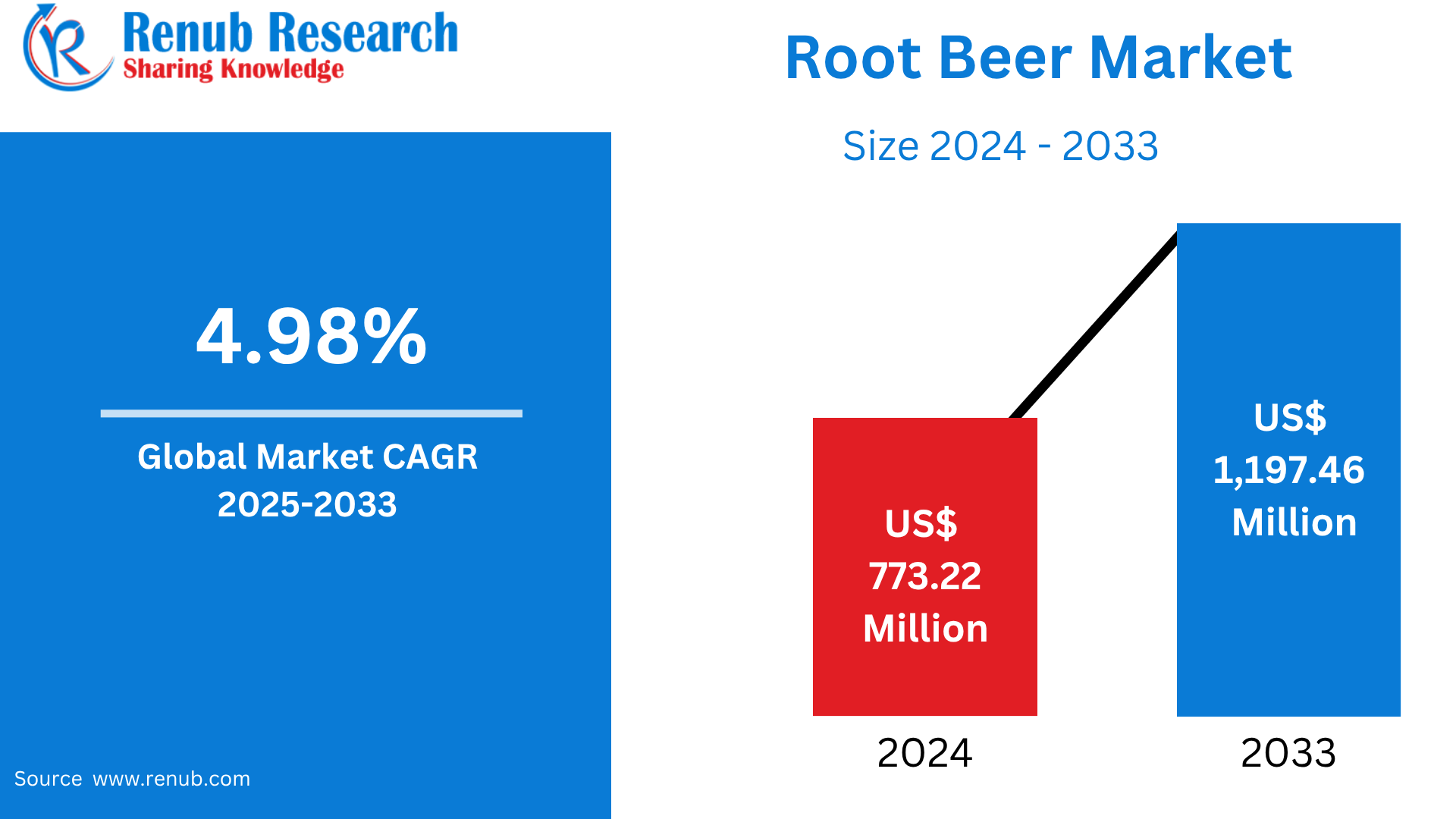
According to Renub Research Global Root Beer Market is projected to reach US$ 1,197.46 million by 2033, growing from US$ 773.22 million in 2024, at a CAGR of 4.98% from 2025 to 2033. This growth is driven by increasing consumer preference for nostalgic beverages, expanding interest in craft and premium soft drinks, rising demand for non-alcoholic refreshment options, and innovation in flavor profiles. Root beer is regaining global traction due to its cultural association, versatility, and alignment with evolving beverage trends. With manufacturers embracing healthier formulations, expanding retail distribution, and strengthening marketing strategies, the root beer market continues to evolve as a competitive segment in the global beverage industry.
Root Beer Industry Overview
Root beer is a sweet, carbonated beverage traditionally flavored using sassafras roots, herbs, spices, and natural extracts. Widely loved in North America, it is known for its unique aromatic flavor and is commonly served chilled or blended with ice cream to create popular root beer floats. Modern variations include sugar-free, low-calorie, organic, and artisanal root beer, appealing to a broader consumer base. With flavors such as vanilla, wintergreen, and cherry becoming more prominent, root beer caters to both nostalgic consumers and new-generation beverage enthusiasts. Its caffeine-free nature makes it suitable for families, while innovative packaging and premium branding strengthen its positioning in the global beverage landscape.
Download Free Sample Report:https://www.renub.com/request-sample-page.php?gturl=root-beer-market-p.php
Market Dynamics Supporting Global Root Beer Growth
The root beer market is experiencing renewed momentum due to increasing consumer interest in non-alcoholic beverages, flavored sodas, and specialty drinks. Growing appreciation for heritage beverages and retro-themed branding enhances emotional connection and purchasing interest. Manufacturers are focusing on premium recipes, natural sweeteners, and healthier alternatives to appeal to health-conscious consumers. The expansion of supermarkets, convenience stores, specialty beverage outlets, and e-commerce platforms has also widened accessibility. Marketing campaigns that emphasize nostalgia, culture, and premium craftsmanship are further boosting brand recognition and consumer loyalty.
Rising Global Demand for Non-Alcoholic Beverages
A major market driver for root beer is the rapidly increasing demand for non-alcoholic beverages. With lifestyle changes and rising health awareness, more consumers are opting for refreshing, flavorful drinks without alcohol content. Root beer naturally fits this demand due to its rich taste, family-friendly nature, and versatility in beverages and desserts. Retailers and food-service chains are expanding non-alcoholic beverage offerings, increasing visibility of root beer worldwide. Its suitability in specialty drinks, floats, and desserts enhances usage occasions, creating additional consumption opportunities. As global preferences shift toward safer, enjoyable, and nostalgic drink experiences, root beer benefits significantly from this transformation.
Flavor Innovation Strengthening Market Expansion
Flavor innovation plays a vital role in sustaining market growth. Brands are constantly introducing new flavors, seasonal editions, and creative blends to retain consumer interest and attract new demographics. The launch of nostalgic dessert-inspired and specialty flavor variants reflects the evolving fusion of tradition and modern taste preferences. Companies are experimenting with vanilla-rich blends, wintergreen-infused varieties, cherry-based profiles, and premium spiced formulations. These initiatives expand product portfolios, stimulate excitement in mature markets, and significantly appeal to younger consumers who seek refreshing beverage experiences. Continuous innovation ensures that root beer remains relevant and competitive in the broader soft drink market.
Growth of Craft and Artisanal Root Beer Variants
The global movement toward craft beverages has significantly influenced root beer demand. Consumers increasingly prefer authentic, small-batch, locally crafted beverages made with natural ingredients. Craft root beer brands emphasize premium quality, unique taste, heritage brewing techniques, and personalized branding, which resonate strongly with millennials and Gen Z consumers. Artisanal root beers often highlight specialty herbs, spices, and natural sweeteners, enhancing authenticity and premium appeal. In addition, collaborations with breweries, dessert brands, and food-service companies create exclusive product experiences. This craft-driven transformation elevates root beer from a traditional soda to a sophisticated beverage category, strengthening consumer loyalty and supporting long-term market expansion.
Major Challenges in the Global Root Beer Market
Despite strong potential, the root beer market faces key challenges. Health awareness continues to pressure beverages with high sugar content, a characteristic often associated with traditional root beer. Consumers shifting toward low-sugar, diet, or naturally sweetened alternatives may reduce demand for classic formulations if innovation is lacking. Another challenge lies in ingredient sourcing and regulatory constraints, particularly concerning traditional sassafras-derived components. Maintaining authentic taste, ensuring regulatory compliance, and meeting consumer health expectations require manufacturers to continuously innovate without compromising flavor quality. Production complexity and premium ingredient costs can also challenge small producers, affecting scalability and pricing. Addressing these barriers is crucial for sustainable market growth.
United States Root Beer Market Outlook
The United States represents the largest and most mature root beer market globally. Root beer holds cultural significance, associated strongly with American tradition and nostalgia. The market includes leading brands such as A&W, Mug, and Barq’s alongside numerous regional and craft producers. Although overall carbonated drink consumption faces health-related competition, opportunities remain strong for sugar-free, organic, and artisanal root beer brands. Distribution is well established through supermarkets, restaurants, convenience stores, and specialty beverage outlets. Marketing efforts that engage younger demographics and emphasize authenticity and heritage are vital in sustaining market presence.
Germany Root Beer Market Overview
In Germany, root beer remains a niche beverage, regarded as a novelty drink rather than a mainstream soft drink. Consumer preference generally leans toward beer, mineral water, and fruit-based sodas. The market largely depends on imports, with specialty stores, international supermarkets, and online platforms playing major roles in product availability. Growing curiosity among younger consumers and international beverage enthusiasts creates scope for gradual expansion. However, high sugar awareness necessitates health-conscious and premium-positioned product strategies to establish distribution and long-term market acceptance.
India Root Beer Market Outlook
In India, the root beer market is still in its early development phase. Awareness is limited, and the beverage is largely consumed in urban cities through premium supermarkets, specialty outlets, themed restaurants, and e-commerce channels. Traditional carbonated drinks dominate consumption, while health-conscious consumers express concern regarding sugar levels. However, rising interest in international flavors, novelty beverages, and craft soft drinks offers growth opportunities. Customizing taste profiles, expanding retail penetration, and targeted marketing campaigns are essential for enhancing market traction in India.
Saudi Arabia Root Beer Market Outlook
Saudi Arabia represents a developing market for root beer, primarily categorized as a specialty or imported beverage. Consumer preference favors flavored sodas and sweet soft drinks, aligning moderately with root beer’s taste profile. Distribution is driven mainly by supermarkets, hypermarkets, premium retail outlets, and online channels. The product primarily appeals to expatriates and younger consumers seeking novelty drink experiences. Regulatory compliance and sugar awareness remain critical considerations. Opportunities exist in urban centers, themed restaurants, and premium beverage categories, particularly when combined with craft branding and nostalgia marketing.
Recent Developments Supporting Market Growth
Recent product innovations and launches continue to refresh consumer interest in root beer. Unique frozen, dessert-inspired, and specialty beverage offerings enhance consumer engagement and broaden consumption contexts. Limited edition releases and creative promotional campaigns significantly strengthen emotional connection with consumers while encouraging repeat purchases. These developments demonstrate the adaptability of root beer beyond traditional soda consumption, integrating it into modern beverage and dessert culture.
Root Beer Market Segmentation and Key Industry Participants
The Global Root Beer Market is segmented by type into alcoholic and non-alcoholic formats, and by form into carbonated and non-carbonated products. Distribution channels include supermarkets, hypermarkets, specialty stores, online platforms, departmental outlets, and other retail channels. Regionally, the market spans North America, Europe, Asia Pacific, Latin America, and the Middle East & Africa, with major countries including the United States, Canada, Germany, France, the United Kingdom, China, Japan, India, Australia, Brazil, Mexico, South Africa, and Saudi Arabia. Key market players include A&W Restaurants Inc., Keurig Dr Pepper Inc., Bundaberg Brewed Drinks Pty Ltd, Crazy Uncle Cocktails, Sprecher Brewing Co., The Berghoff, Whole Foods Market IP, L.P., and other leading beverage innovators, each contributing through strategic expansion, flavor innovation, and premium positioning.