
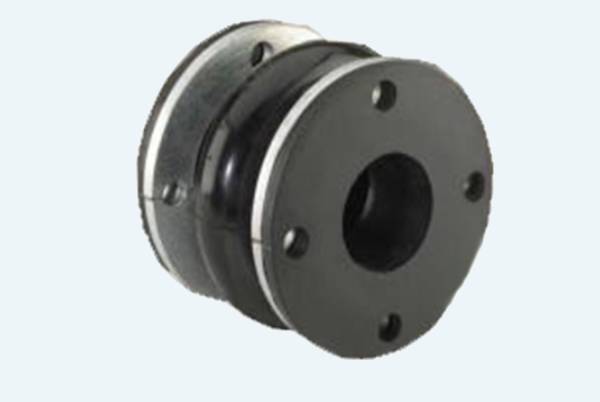
The reliability and longevity of piping systems in industrial and commercial applications are constantly affected by factors like stress, vibration and thermal movement. One way to manage stress in these systems is by means of rubber expansion joints. Rubber expansion joints for pipe are flexible, cost-effective, and reliable products that provide manufacturers with an effective solution for managing the various forces associated with fluid handling Systems across all Industries.
What is a Rubber Expansion Joint?
Rubber expansion joints are flexible connectors made from a combination of elastomers (rubbers) and fabric reinforcement materials. Rubber expansion joints are different from rigid metallic connectors in that they deform (or “stretch”) based on the forces of the connection. By permitting controlled amounts of deformation to occur, rubber expansion joints are designed to be able to absorb multi-directional motion — axial elongation (the lengthening/shortening of the joint), lateral deflection (the bending of the joint), and angular rotation (the twisting of the joint) — all of which would otherwise be transmitted through the entire piping system, along with any connected equipment.
Key Components of Rubber Expansion Joints
A typical rubber expansion joint is made up of the following parts:
- Elastomeric Body: Rubber expansion joints have an elastomeric body usually made from natural or synthetic rubber (such as EPDM, neoprene, or nitrile).
- Reinforcement Layers: These joints have Cord or fabric layers embedded in them.
- Flanges or Ends: Metal or moulded rubber flanges at each end for connection to the pipeline. These are available in various standards (e.g., ANSI, DIN, JIS).
- Protective Covers: In some designs, external coats guard against environmental factors such as abrasion, ozone, or chemical exposure.
The combination of flexible rubber and reinforcing materials enables these joints to withstand internal pressure while maintaining elasticity.
How Rubber Expansion Joints Work?
Rubber expansion joints for pipe rely on the principle of elastic deformation. Instead of transferring movements from thermal expansion, vibration, or equipment movement to components next to them, the rubber body will flex to soak up these movements. For an illustration:
- Thermal Expansion: When the pipe gets heated, it will expand linearly. The stress of linear expansion will be transferred (unless there is flexibility) to adjacent components such as elbows, valves, and/or supports; this could cause these components to fatigue or fail. The rubber expansion joint will absorb much of this movement.
- Vibration Damping: Pumps, compressors and other rotary equipment create vibrations. The rubber joint acts as a shock-absorber that will isolate vibrations from the piping, thereby decreasing noise levels as well as wear.
- Misalignment Compensation: In a large piping system, it is very challenging to install the components in perfect alignment. The rubber expansion joint allows for a small amount of misalignment, which makes the installation of the components easier and also reduces the overall cost of installation.
The Advantages of Using Rubber Expansion Joints
Rubber expansion joints for pipe provides numerous benefits over rigid or metal alternatives:
- Flexibility and Absorption of Movement
Rubber expansion joints are capable of accommodating multi-directional movement (axial, lateral, and angular). Therefore, they are well-suited for use in dynamic systems.
- Vibration Isolation
Rubber expansion joints provide excellent vibration isolation due to their elastomeric properties, substantially reducing the amount of vibration and noise transmitted to equipment and operators.
- Corrosion Resistance
Depending upon the elastomer used, rubber expansion joints are resistant to corrosion, making them appropriate for chemical, waste and industrial applications.
- Ease of Installation
Rubber expansion joints are much lighter than metal expansion joints, making them easier to install. Additionally, because rubber expansion joints tolerate slight misalignment, they are faster to install.
- Cost-Effective
As a general rule, rubber expansion joints are much less expensive than metal versions, providing equivalent performance and lower costs for installation and maintenance.
Maintenance Tips
Rubber expansion joints are not designed for an indefinite service life; The longevity of a rubber expansion joint is determined by how the joint is used (method of operation), how often the joint moves or flexes (i.e. frequency of movement), and how long they are exposed to elements that will degrade the product over time (ozone, heat, chemicals). One should regularly check rubber expansion joints visually for cracks, bulging, or other signs of wear and tear on the rubber portion of the joint. It should also be inspected for any sign of fluid leakage. If there is any sign of leakage, the joint should be replaced immediately.
Advanced Flexible Systems Inc carries decades of expertise in manufacturing expansion joints to meet varied industrial needs. These expansion joints are formulated using high-quality materials to meet critical requirements, including abrasion resistance, weather conditions, etc. We provide custom solutions for high-pressure expansion joints, flexible rubber expansion joints and more. Reach out to our team today for expertly designed expansion joint solutions.




One Response