Second Hand Furniture Market Size, Growth & Forecast 2025–2033
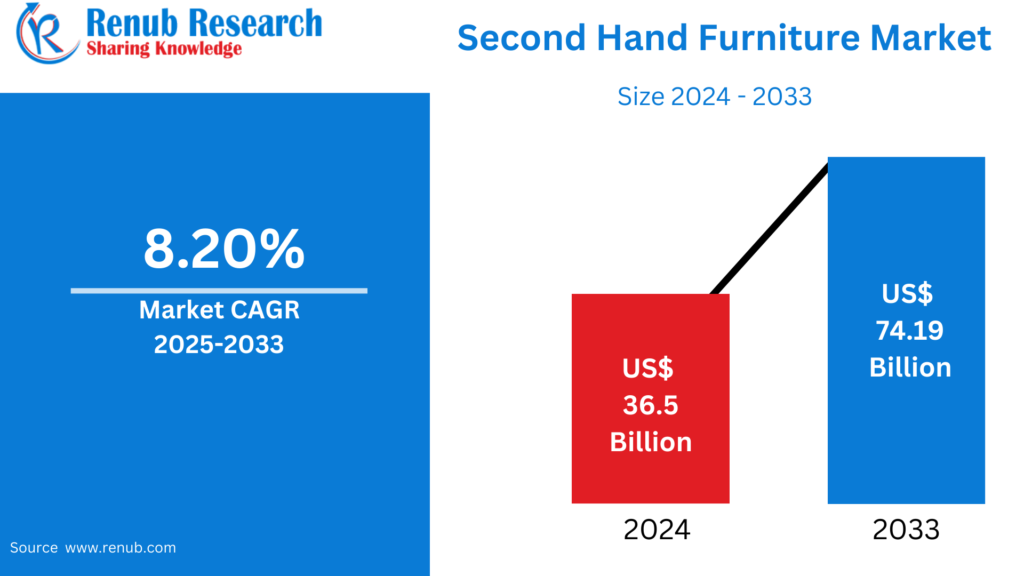
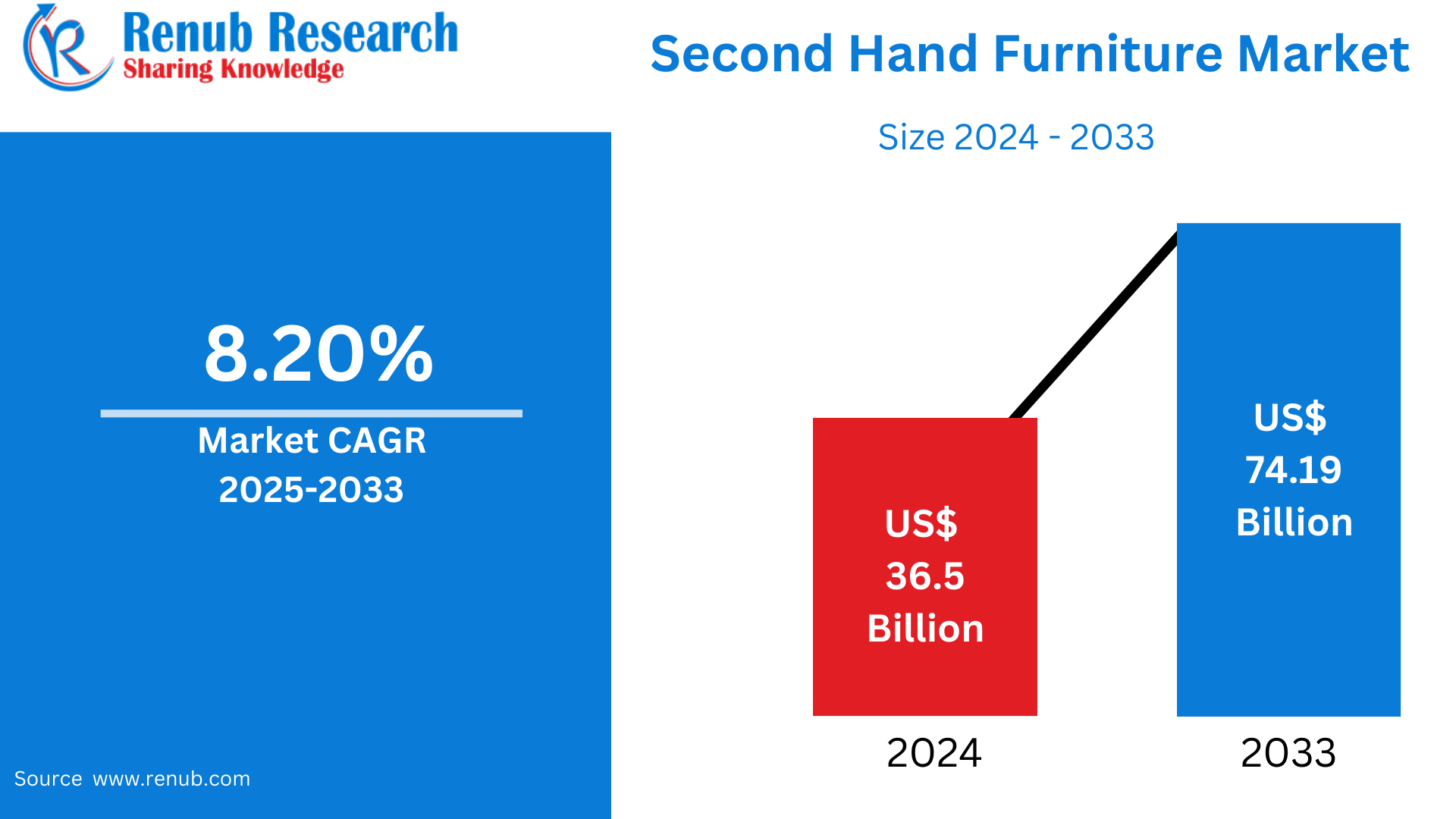
According to Renub Research global second hand furniture market is undergoing strong expansion, supported by changing consumer lifestyles, sustainability awareness, and rising demand for affordable home furnishing solutions. The market is projected to grow from US$ 36.5 billion in 2024 to US$ 74.19 billion by 2033, registering a robust CAGR of 8.20% during 2025–2033. This growth highlights the increasing acceptance of pre-owned furniture as a practical, eco-friendly, and design-conscious alternative to new furniture across residential and commercial applications.
Second hand furniture includes previously owned products resold through thrift stores, consignment shops, specialty resale outlets, and online marketplaces. These products range from lightly used modern furniture to vintage and antique pieces. The sector aligns closely with the principles of the circular economy, enabling reuse, reducing waste, and extending product lifecycles while offering cost advantages to consumers.
Request a free sample copy of the report:https://www.renub.com/request-sample-page.php?gturl=second-hand-furniture-market-p.php
Global Second Hand Furniture Industry Overview
The global second hand furniture industry has transformed significantly over the past decade, evolving from informal local resale markets into organized, digitally enabled platforms. Rising urbanization, shrinking living spaces, and increasing relocation for work or education have increased demand for flexible and temporary furnishing solutions. Second hand furniture offers an ideal solution by providing quality products at significantly lower prices than new items.
Environmental consciousness is another key pillar supporting market expansion. Consumers are increasingly aware of the environmental impact associated with new furniture production, including deforestation, carbon emissions, and landfill waste. Purchasing used furniture helps reduce raw material consumption and supports sustainable living practices. As a result, second hand furniture is no longer viewed as a compromise but as a responsible and fashionable choice.
The rapid growth of online resale platforms has further boosted market accessibility. Digital marketplaces allow buyers and sellers to connect easily, compare prices, view detailed product images, and arrange logistics. This has increased trust and transparency, particularly among younger, tech-savvy consumers.
Growth Drivers for the Second Hand Furniture Market
Affordability is one of the strongest drivers fueling the second hand furniture market. Used furniture typically costs a fraction of new furniture, making it attractive during periods of economic uncertainty or inflation. Consumers can access premium-quality or branded furniture at reduced prices, improving value for money.
Urbanization plays a crucial role in market growth, especially in densely populated cities where smaller apartments and frequent relocations are common. Urban consumers often prefer cost-effective and flexible furnishing solutions rather than investing heavily in new furniture that may not suit future living arrangements.
Online marketplaces have revolutionized the second hand furniture ecosystem. Platforms such as Facebook Marketplace, Craigslist, and specialized resale apps offer extensive product variety and convenience. The ability to browse, negotiate, and arrange delivery digitally has made used furniture more appealing, particularly to millennials and Gen Z consumers.
Corporate sustainability initiatives also contribute to market growth. For example, IKEA launched its Buy Back & Resell program to encourage customers to return used furniture for store credit. Such initiatives legitimize the second hand market and reinforce consumer confidence in reused products.
Challenges in the Second Hand Furniture Market
One of the primary challenges facing the second hand furniture market is the lack of warranty or guarantee. Unlike new furniture, second hand products are usually sold “as-is,” which increases buyer uncertainty regarding durability, hidden defects, and long-term usability. This concern is particularly significant for online purchases, where physical inspection is limited.
Another major challenge involves regulatory and compliance issues related to authenticity, pricing, and quality standards. Without standardized valuation or certification systems, buyers may struggle to assess whether items are fairly priced or genuine. The absence of uniform industry regulations can weaken trust between buyers and sellers and hinder market transparency.
Logistics and refurbishment costs also pose challenges, especially for bulky furniture items. Transportation, storage, and minor repairs can increase overall costs for sellers and platforms, potentially reducing profit margins.
United States Second Hand Furniture Market
The second hand furniture market in the United States is expanding rapidly, driven by affordability, sustainability awareness, and changing consumer preferences. Millennials and Gen Z dominate the market, accounting for a significant share of home furnishing purchases. These generations prioritize unique designs, personalization, and environmentally responsible consumption.
The rise of digital resale platforms has significantly increased accessibility. Companies offering nationwide delivery and end-to-end resale services have strengthened consumer trust and expanded market reach. As eco-conscious and budget-friendly lifestyles continue to gain traction, the U.S. second hand furniture market is expected to maintain strong growth momentum.
India Second Hand Furniture Market
India’s second hand furniture market is experiencing accelerated growth due to rising urban migration, frequent relocations, and growing awareness of sustainable living. Young professionals and students increasingly prefer pre-owned furniture for short-term housing needs, rental accommodations, and co-living spaces.
Online platforms such as OLX, Quikr, and Amazon Renewed have simplified the buying and selling process, while traditional markets like Chor Bazaar and Ravivari Market remain popular. The combination of affordability, convenience, and sustainability continues to drive market expansion across major Indian cities.
United Kingdom Second Hand Furniture Market
The UK second hand furniture market is growing steadily, supported by strong environmental awareness and rising living costs. Consumers are increasingly choosing pre-owned furniture to reduce waste and save money without compromising on style or quality. Younger age groups, particularly those aged 24–34, are leading adoption.
Resale initiatives by major retailers and the popularity of curated online platforms have improved market structure and accessibility. High urban housing costs and smaller living spaces further reinforce demand for second hand furniture across the United Kingdom.
United Arab Emirates Second Hand Furniture Market
In the United Arab Emirates, the second hand furniture market is expanding due to a highly mobile population, especially expatriates. Many residents opt for used furniture to furnish homes cost-effectively during temporary stays. Online platforms such as Dubizzle and curated marketplaces like Decosouq have strengthened market transparency and accessibility.
Traditional markets in Sharjah and Dubai continue to attract price-sensitive buyers. The growing emphasis on sustainability and reuse reflects a broader shift toward circular economic practices in the UAE.
Second Hand Furniture Market Segmentation Analysis
By product, the market includes beds, tables and desks, sofas and couches, chairs and stools, cabinets and shelves, and others. Sofas, beds, and storage furniture represent significant demand due to their high replacement frequency.
By material, the market is segmented into wood, metal, plastic, glass, and others. Wooden furniture dominates due to durability, resale value, and aesthetic appeal.
By application, the market is divided into residential and commercial segments. Residential applications account for the largest share, driven by urban households, renters, and young professionals.
Competitive Landscape and Key Players
The global second hand furniture market is moderately fragmented, with a mix of organized resale platforms and independent retailers. Key players include Steelcase Inc., Pottery Barn, Beverly Hills Chairs, Rework Office Furniture, Second Hand Office Furniture Co., Thrift Super Store, and Almost Perfect Furniture.
These companies focus on refurbishment, pricing transparency, online visibility, and sustainable sourcing to strengthen their competitive positions.
Future Outlook of the Second Hand Furniture Market
The future of the second hand furniture market is highly promising, supported by sustainability trends, digital transformation, and evolving consumer preferences. As affordability and environmental responsibility become central purchasing criteria, second hand furniture will continue to gain mainstream acceptance. Improvements in online platforms, logistics, and quality assurance are expected to further enhance consumer trust, positioning the market for sustained growth through 2033.
Top of Form
Bottom of Form