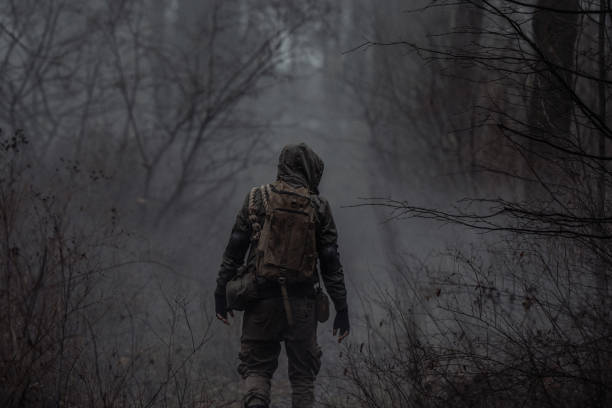
Repressive states are environments where power is maintained through fear, surveillance, and punishment. In such systems, dissent is discouraged, expression is closely monitored, and conformity is enforced through both visible and invisible mechanisms. Citizens often live under constant pressure, fully aware that deviation from accepted norms may result in severe personal consequences. Fear, in this context, is not temporary or incidental. Instead, it becomes a governing force that shapes daily life, relationships, and self-perception.
Living under repression alters how individuals understand safety, truth, and responsibility. Ordinary actions, such as speaking openly or forming independent opinions, may carry disproportionate risks. As a result, people learn to regulate themselves long before authority intervenes. This internal regulation reinforces the system of control and ensures its endurance. Understanding this environment is essential for redefining courage in a meaningful way.
However, courage within repressive states cannot be measured by traditional standards. Public protest or open defiance may invite immediate punishment, endangering lives and families. Therefore, survival itself becomes a complex moral and psychological challenge. Understanding courage in these conditions requires examining how individuals endure, adapt, and preserve dignity under extreme constraint. Courage must be redefined beyond visible heroism and dramatic resistance.
Fear as a Tool of Control
Fear functions as the central mechanism of control in repressive states. Governments often rely on extensive surveillance, censorship, and unpredictable punishment to maintain authority. These methods create uncertainty, which is often more effective than constant enforcement. Citizens are conditioned to self-censor, avoiding speech, actions, or associations that could attract unwanted attention. Over time, fear becomes internalized, reducing the need for overt displays of power.
This constant threat reshapes both behavior and identity. People begin to anticipate danger even in neutral situations. Trust erodes, and social interactions become cautious and limited. Psychological research shows that prolonged exposure to fear weakens interpersonal bonds and increases isolation. Individuals may withdraw emotionally, focusing narrowly on personal survival rather than collective well-being.
Moreover, fear discourages collective action. When people doubt others’ intentions, cooperation becomes risky. Repressive systems exploit this fragmentation, ensuring that resistance remains isolated and ineffective. Within such contexts, survival strategies often replace overt resistance. These strategies may include silence, compliance, or strategic withdrawal, all of which serve as protective mechanisms rather than signs of passivity.
Scholars and writers analyzing life under repression emphasize this dynamic. Reflections found in works discussing Andrea D. Woolhead Author of Beyond the Fear explore how individuals navigate internal fear while maintaining moral clarity. These discussions highlight that courage often manifests quietly, through endurance, ethical consistency, and psychological resilience rather than dramatic acts. Such perspectives help redefine bravery in restrictive environments.
Redefining Courage Beyond Heroism
Traditional definitions of courage emphasize bold action, confrontation, and visible defiance. While such acts may be celebrated in free societies, they rarely apply in repressive states. Public resistance may result in imprisonment, violence, or long-term social exclusion. In many cases, these consequences extend beyond the individual, affecting families and entire communities.
Therefore, courage must be understood differently. In repressive contexts, choosing to survive without surrendering one’s humanity becomes an act of bravery. Survival is not passive; it requires constant ethical negotiation and emotional regulation. Individuals must decide when to speak, when to remain silent, and how to protect their inner values without exposing themselves to unnecessary risk.
Every day, courage appears in subtle decisions. These decisions include protecting one’s family, preserving truth privately, or refusing to internalize propaganda. Silence, often criticized by external observers, can function as a deliberate survival strategy. Adaptation does not necessarily indicate weakness. Instead, it reflects situational intelligence and moral restraint shaped by lived reality.
By redefining courage, we acknowledge the complexity of life under repression. People navigate ethical dilemmas daily, balancing safety with integrity. Small acts of autonomy accumulate, sustaining identity beneath imposed conformity. Courage, therefore, resides in persistence rather than spectacle.
Quiet Resistance and Moral Strength
Quiet resistance represents one of the most powerful expressions of courage in repressive states. It operates beneath visibility and often remains unnoticed by authorities. Unlike public protest, quiet resistance focuses on preservation rather than confrontation. Examples include maintaining cultural traditions, educating children truthfully, or safeguarding forbidden memories and narratives.
These actions protect identity and continuity across generations. While they may appear insignificant individually, their collective impact is profound. They ensure that imposed narratives do not fully erase historical memory or personal meaning. Quiet resistance preserves the moral foundations necessary for future change.
Community bonds strengthen this form of resistance. Trust is built carefully, often through shared experiences and subtle signals. Solidarity may take the form of mutual aid, shared silence, or emotional support. Such connections counter isolation and reaffirm shared humanity. Although these acts are small, they sustain hope and moral coherence.
Moral strength also emerges through internal resistance. Individuals may comply outwardly while rejecting imposed narratives internally. This separation protects psychological autonomy and prevents total ideological domination. Philosophers studying oppression emphasize that internal freedom often precedes external change. Quiet resistance preserves the possibility of transformation, even when immediate action is impossible.
Cost and Limits of Courage
Despite its necessity, courage in repressive states carries high costs. Individuals may experience chronic stress, trauma, or moral injury. Living under constant threat affects mental health, often leading to anxiety, emotional exhaustion, or feelings of alienation. These consequences should not be minimized or romanticized.
Moreover, courage has limits. Not every situation allows resistance, even quietly. Sometimes survival requires compromise, which can generate guilt or shame. Ethical decisions become context-dependent rather than absolute. What appears morally ambiguous from the outside may represent the safest available option from within.
Recognizing these limits prevents unfair judgment. External observers often underestimate the risks involved in everyday decisions under repression. True understanding requires empathy and contextual awareness. Courage should not be demanded indiscriminately, especially from those whose lives are directly at stake.
In many cases, choosing life itself becomes the bravest decision available. Protecting one’s family, maintaining mental health, or simply enduring another day can require immense strength. Survival does not negate courage; it often embodies it.
Conclusion
Survival beyond fear reframes courage as endurance rather than defiance. In repressive states, bravery manifests through persistence, integrity, and quiet resistance. Individuals navigate fear daily, balancing safety with moral responsibility. Their courage is measured not by visibility but by consistency over time.
By redefining courage, we honor those who endure without surrendering identity or dignity. Their lives demonstrate that resistance does not always roar. Sometimes, it survives silently. Ultimately, courage in repressive states lies in preserving humanity under conditions designed to erase it.