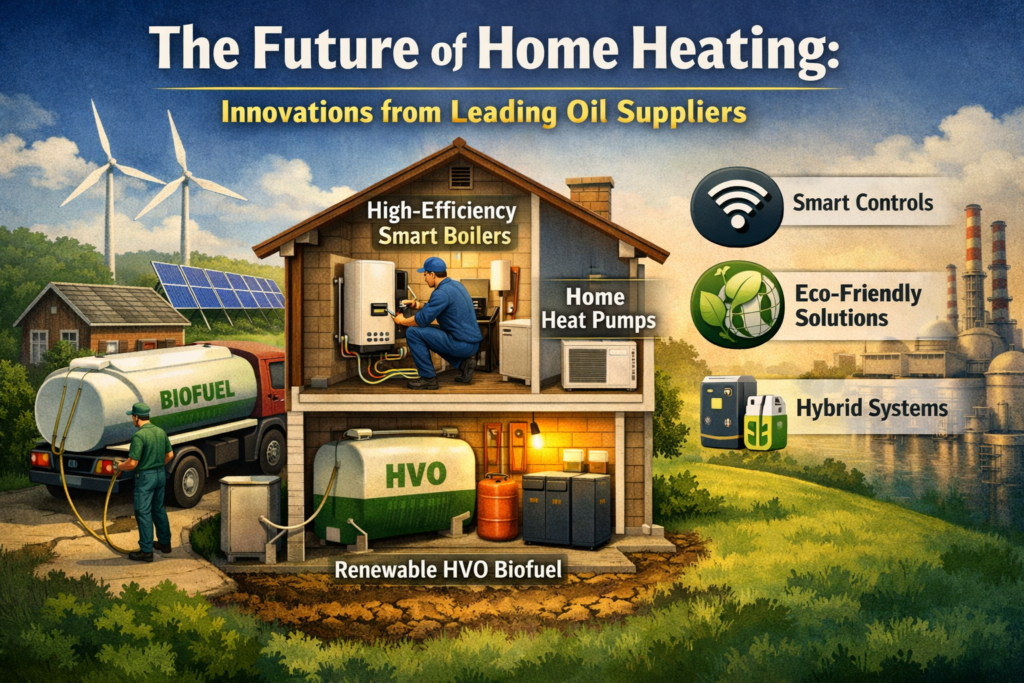
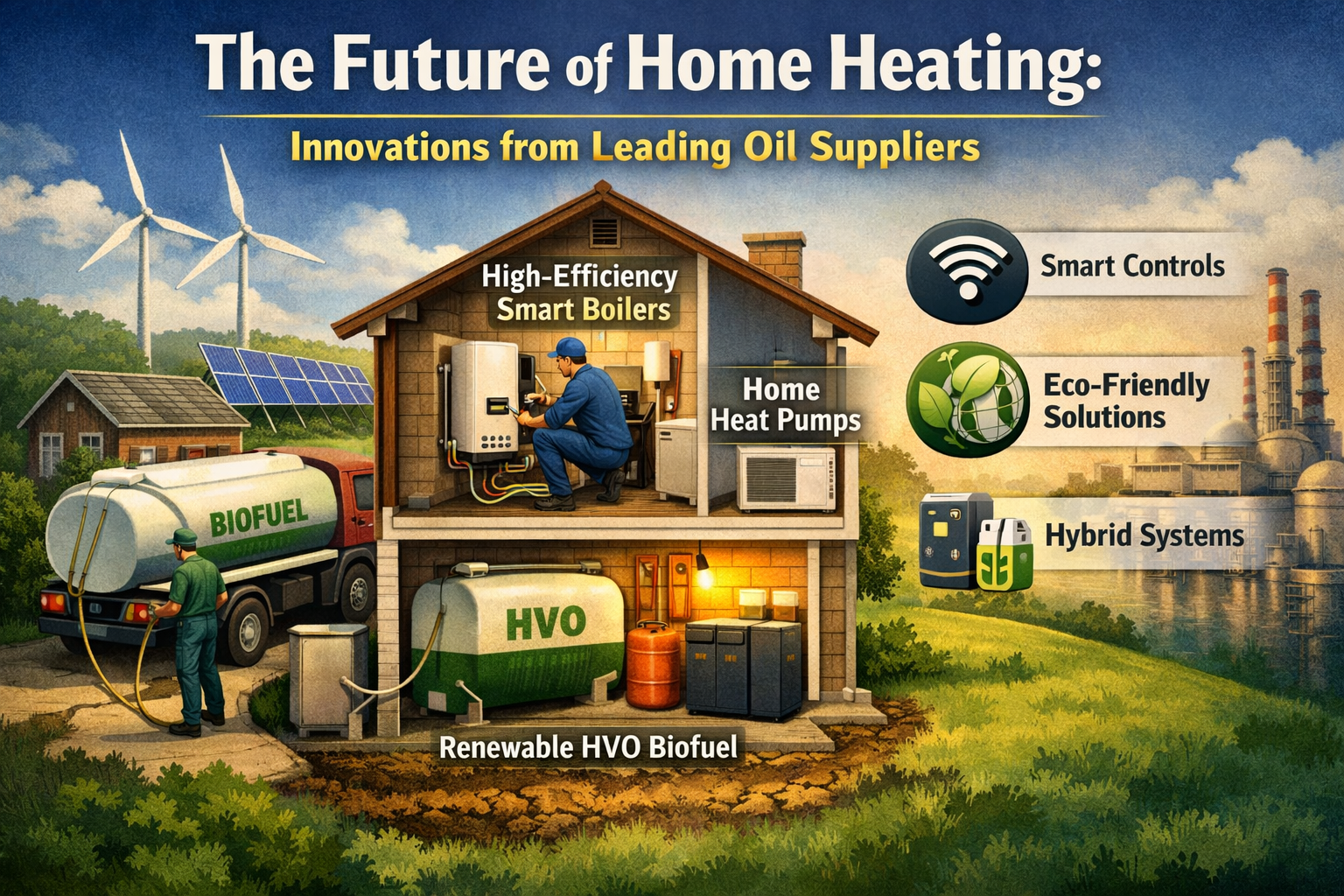
The home heating process is going through various innovations and technical upgrades. The greener and more effective home heating trends and heating oil solutions of today are being pioneered by various domestic oil suppliers. They are taking this action to lessen their carbon footprint without sacrificing the level of performance.
The launch of low-sulphur and low-carbon domestic fuel as well as biofuel blends shows how committed the industry is to implementing green technology into residential heating practices.
Furthermore, the application of intelligent technology in heating systems has been seen, enabling accurate evaluation and confirmation of oil consumption. This improves comfort as well as energy savings.
In this blog post, we will discuss the future of home heating oil with the innovations of various leading oil suppliers.
The Current Progressive Changes In Home Heating
Progressive changes in home heating are added with the adoption of low-sulphur heating oil, blends of bio-heat, and smart technology for optimisation of the use of fuel. The service providers and suppliers are also adding and using chemical additives for efficiency and working with carbon offset programmes.
Technological Advancements: Technological improvements in home heating include the use of improved sensors, IoT-enabled systems for work optimisation, assessment and monitoring, and other techniques by heating oil suppliers. All of these technologies serve to improve user convenience while improving the energy efficiency of home heating.
Renewable Energy Integration: The integration of renewable energy in home heating is added with the use of geothermal systems and solar panels by the domestic oil supplier. These all methods reduce the dependency on fossil fuels and decrease CO2 emissions. They also promote the sustainable use of energy.
Energy Efficiency: In the heating process of domestic fuel, the energy efficiency focuses on highly efficient boilers, well-insulated homes, and the use of smart thermostats. These innovations reduce the consumption of energy and the cost of heating. This also reduces the impact on the environment.
Environmental Regulations: Reducing CO2 emissions from home heating is required by several environmental regulations and standards, which also encourage the use of renewable fuels by domestic oil suppliers.
Economic Factors: In the technical upgrades of heating by domestic fuel the economic factors are aligned with the cost of fuel, maintenance and installation expenses, and energy efficiency in savings.
Societal Trends: As per the social trends consumers are increasingly preferring fuels that are eco-friendly and use of the smart thermostats from heating oil suppliers. They are also driven by the desire to reduce the cost of energy and increase the awareness of the environment.
R&D works: Various research and development works and innovations by the various domestic oil suppliers have their focus on the creation of cost-effective and progressive technologies for home heating trends like renewable energy systems.
Government Policies and Incentives: Various government regulations and incentives are implemented to encourage the use of renewable energy sources, energy-efficient technologies, and emission reduction. Additionally, they receive several grants and tax breaks.
How To Future-proof Your Home Heating
To future-proof your home heating you have to invest in energy-efficient systems like heat pumps, insulate thoroughly, add renewable sources like solar panels, and stay updated about emerging technologies.
Heat Pumps: New heat pump technologies are connected to inverter-driven compressors and are done by the domestic oil supplier. These compressors give better efficiency.
Hybrid systems: Heat pumps are integrated with new hybrid home heating systems, which also include boilers and furnaces. Intelligent algorithms and sophisticated controls guarantee increased energy efficiency and smooth functioning.
Green heating: Geothermal heat pumps and solar thermal panels are incorporated into green heating systems. These heating systems are also powered by hydrogen and biomass. All of these technologies are added to home heating trends to improve energy efficiency and lower carbon dioxide emissions.
Oil boilers: Technology upgrades in oil boilers are added with improved levels of energy efficiency. This is done through condensing technology and advanced levels of combustion control systems by the domestic oil supplier.
Hydrogen boilers: Upgrades in the hydrogen boilers are added with advanced designs of burners. This is done at an efficient level of production of hydrogen and enhanced features of safety.
Innovations From Leading Oil Suppliers
Various leading domestic oil suppliers have innovated the use of advanced carbon capture technology, bio-fuels, and improved the level of process of refining.
Evolution of heating systems: Heating systems are added with various stoves, fireplaces, boilers, radiators, and many forced air systems. New technologies like hybrid systems and hydrogen boilers innovated by the domestic oil supplier,also work on enhancing sustainability and efficiency for having a green future.
Progress in heat pump technology: In the process of home heating trends the heat pump technology is added with many progresses like cold climate performance, Eco-friendly refrigerants, and smart connectivity.
Efficient boiler innovations: Condensing technology adds even more efficient advances to boiler technology. This technology offers increased efficiency and precise control when used in conjunction with smart thermostats. They utilise cutting-edge combustion techniques as well. This is an initiative taken by the heating oil supplier.
Renewable options for heating: Renewable heating options are added with geothermal heat pumps, biomass boilers, and hydrogen boilers. These all technologies use sustainable sources and resources and work on reducing the co2 emissions.
Low-carbon heating solutions: Additions of geothermal or ambient air heat pumps to low-carbon heating solutions have been prepared to be used in domestic fuel. They also work with burning biomass and sustainable fuels.
Smart heating technologies: Thermostats that can be programmed and controlled remotely using smartphone apps are aspects of smart heating systems into home heating trends. They are also linked to integration with smart home systems and learning algorithms.
Technologies In Oil Boilers
Technologies like “condensing technologies” are introduced to the oil boiler system to increase efficiency. They also contribute to the improved combustion process that lowers emissions. This is further enhanced by the use of smart thermostats for ideal temperature control by the domestic oil supplier.
Space saving: For the oil boiler space-saving technologies are added with the wall-mounted and consolidated designs. They also have integration of hot water storage and modular systems which can be fixed in smaller spaces.
Reduction in condensation: To reduce the condensation in the oil boilers various advanced technologies are used by the heating oil supplier. They are improved level of design of heat exchanger, meticulous control on combustion, and enhancement of the flue gas management.
Cost saving: The process of the cost-saving technologies for the oil boilers is aligned with condensing technology for a high level of efficient fuel and the use of smart thermostats. It also works with an advanced level of combustion control to reduce the ingestion of fuel within the home heating trends.
Uniform heating: Uniform heating systems in the oil boiler technology can be achieved by the advanced level of circulation pumps and zoned heating systems.
Environmental concerns: Environmental concerns in the technology of oil boilers are addressed by the progress of low-carbon boilers and efficient process of combustion.
Innovations in heat pump technology
The innovations in heat pump technology are added with inverter-driven compressors. This is for the enhancement of the efficiency of the work of the heat pump. There is also variable-speed technology that gives a perfect level of control of temperature.
Advanced Refrigerants: The advanced refrigerants in the technology of heat pumps are added with Low Global Warming Potential or GWP like R-290 and R-32 as propane. This reduces the negative impact on the environment and this is a step taken by the various domestic oil suppliers.
Improved Efficiency: Improved efficiency in the technology of heat pumps can be achieved by the best level of cooling and heating process. This can be done by an enhanced level of design of coil and better level of insulation.
Enhanced Performance in Cold Climates: The innovations of the heating pump technology work for its enhanced performance in the cold climate in the home heating trends. This happens due to the use of their advanced defrost technology, improved heat exchange, and low-temperature compressors.
Integration with Renewable Energy: Heat pumps are added with renewable energy by the use of electricity from solar PV panels and wind turbines. It is done to power the compressor.
Dual-Source and Hybrid Systems: The hybrid and dual-source systems of heat pumps work with innovative approaches and optimise the efficiency of cooling and heating. These systems combine and add two sources of energy Geo-thermal and air-source.
Smart Controls and Connectivity: Smart control and connectivity in the technology of heat pump work for remote monitoring and scheduling.The user can modify their work via smart home heating trends and mobile apps. This is a perfect initiative taken by any heating oil supplier.
Noise Reduction Technologies: The noise reduction technologies in the home heating system have the focus on the reduction of the levels of operational sound. This is done by the advanced design of the compressor, low-noise operations, and insulated cabinets.
Improved Installation and Maintenance: The technical improvements in the heat pump technology work for an improved level of machine installation. They also work for the better maintenance of the machine.
Thermal Energy Storage: The heat pump technique incorporates thermal energy storage in addition to storing surplus heat and cold. This is produced by thermal masses like phase-change materials and water tanks during off-peak hours for domestic fuel.
Enhanced Air Quality: Enhanced air quality in the technology of heat pumps can be achieved by the filtration system that works for capturing the dust, allergens, and pollutants from the air inside the room.
How To Speed Up The Switch To Low-carbon Home Heating
For speeding up the switch to low-carbon home heating is done through policy support, awareness among the public, financial assistance, and development in infrastructure with various research and development works.
Regulations and policies: The regulations and policies can be added to the compulsory issues like from new buildings to the use of low-carbon heating systems of domestic fuel. These policies also work for getting the funds for R&D works for advanced efficiency.
Technical advancement and innovations: Technological developments include things like increased heat pump efficiency, more affordable solar thermal systems, and biomass boiler innovations by domestic oil suppliers.
Mechanisms of economy and finances: To help the shift to low-carbon home heating the mechanisms are added with the offer of loans with low-interest levels and subsidies for the cost of installation. This is also added to the tax incentives for the use of systems of renewable energy.
Educational awareness: The campaigns for educational awareness for homeowners have the aim of teaching them about the use of low-carbon heating through the initiatives of heating oil suppliers.
Transformation of the market: The shift of the market in the low-carbon home heating trends is added to the increase in the affordability and availability of various technologies. These are like the solar thermal system and heat pumps.
Social and environmental considerations: The concerns for the social and environmental issues are aligned with the reduction of air pollution and bringing improvement in public health by the use of low-carbon heating.
Wrapping Up
In summary, it can be stated that the top oil suppliers are preparing and making creative steps that will shape the future of home heating. By increasing efficiency, lowering emissions, and integrating with renewable energy sources, these suppliers are all striving to provide more sustainable heating solutions into home heating trends. The future of home heating is being shaped by industry alliances and policymakers. They are also prepared and shaped by consumers’ shifting demand towards greener choices and emerging technologies.