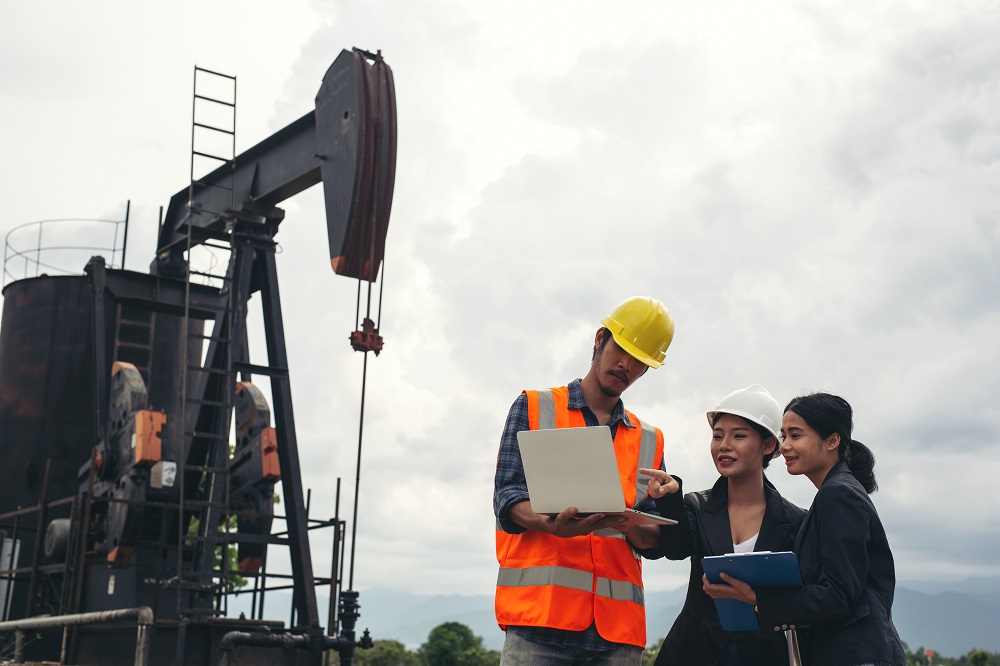
In the global industrial landscape, few sectors are as demanding, dangerous, or technologically advanced as the energy industry. While the public often focuses on the fluctuations in gas prices or the geopolitical movements of energy-producing nations, there is a massive, behind-the-scenes force that makes the entire system possible: Construction for Oil and Gas Companies.
This isn’t typical building. It is a specialized niche within the construction world where tolerances are measured in microns, safety protocols are written in blood, and the projects are often located in the most inhospitable environments on Earth—from the frozen tundras of the Arctic to the high-pressure depths of the Gulf of Mexico.
In 2026, the scope of this work has expanded. It now encompasses not only the extraction and transport of fossil fuels but also the construction of the “bridge infrastructure” required for the energy transition, such as carbon capture facilities and hydrogen hubs.
1. Upstream Construction: Building at the Source
The upstream sector, or “Exploration and Production” (E&P), is where the journey begins. The scope of construction here is centered on creating the facilities necessary to extract raw resources from the earth.
Well Pad and Drill Site Preparation
Before a single drop of oil is pumped, a Construction for Oil and Gas Companies specialist must transform raw land into a high-functioning industrial site. This involves massive earthmoving, soil stabilization, and the construction of “all-weather” access roads that can support 100-ton service rigs. In regions like the Permian Basin, this also includes the construction of vast water recycling pits and high-capacity storage tanks.
Offshore Platforms and Subsea Infrastructure
Perhaps the most incredible feat of engineering in this sector is offshore construction. This includes the fabrication and installation of:
-
Fixed Platforms: Massive steel or concrete structures anchored to the seabed.
-
FPSOs (Floating Production Storage and Offloading): Converting massive tankers into mobile processing plants.
-
Subsea Manifolds: Complex “plumbing” systems installed on the ocean floor to regulate the flow of oil from multiple wells.
2. Midstream Construction: The Arteries of Energy
Once the resource is out of the ground, it must be moved. The midstream sector is the “logistics” arm of the industry, and its construction needs are dominated by linear projects and storage.
Pipelines and Gathering Systems
Pipeline construction is a feat of coordination. It requires clearing “Right of Ways” (ROW) across thousands of miles, trenching through diverse geologies, and the precision welding of high-pressure steel. In 2026, the scope has shifted toward “multi-product” lines and the repurposing of old pipes for CO2 transport—a key component of modern carbon capture and storage (CCS) initiatives.
Compression and Pumping Stations
Resources don’t move through pipes on their own. Construction firms must build massive compression stations (for gas) and pumping stations (for oil) at strategic intervals. these facilities are incredibly complex, requiring sophisticated electrical systems and automated control centers that allow companies to monitor flow rates from thousands of miles away.
3. Downstream Construction: The Industrial Alchemists
The downstream sector is where the raw product is turned into something usable, such as gasoline, jet fuel, or plastics. This is the “heavy industrial” side of Construction for Oil and Gas Companies.
Refinery Expansions and Turnarounds
Building a refinery is like building a small, highly flammable city. The scope involves massive structural steel frameworks, “columns” that stand hundreds of feet tall, and miles of intricate piping. A major part of the construction scope in this sector is the “Turnaround”—a scheduled event where a facility is shut down, stripped, repaired, and rebuilt in a matter of weeks. It is one of the most logistically intense construction events in any industry.
Petrochemical Plants
With the global demand for plastics and specialized chemicals rising, the construction of petrochemical plants has become a primary focus. These projects often utilize Modular Construction. Entire sections of the plant are built in a shipyard or factory, shipped via barge, and “plugged in” at the site to save time and reduce on-site labor risks.
4. The 2026 Shift: Green Infrastructure and CCS
The scope of work for energy construction firms is no longer limited to “black gold.” As the world pushes toward Net-Zero, Construction for Oil and Gas Companies has evolved to include:
-
Carbon Capture and Sequestration (CCS): Building the “scrubbers” that catch CO2 at the source and the injection wells that pump it back underground.
-
Hydrogen Hubs: Constructing facilities that can produce “Blue Hydrogen” (from natural gas with CCS) or “Green Hydrogen” (from water and renewables).
-
LNG (Liquefied Natural Gas) Export Terminals: Massive cryogenic facilities that cool gas to -260°F so it can be shipped globally. These are some of the most expensive and complex construction projects currently on the planet.
5. Why Energy Construction is Different: The “Holy Trinity”
When a firm takes on a contract for an oil giant like ExxonMobil, Chevron, or Shell, they are held to a standard that far exceeds commercial building.
A. Safety (HSE)
In a refinery or on a rig, a single spark can be catastrophic. Construction firms must adhere to “Zero-Harm” policies. Every worker is trained in blast-resistant modulars, “Hot Work” permits, and specialized PPE. If a contractor’s safety rating drops, they are immediately blacklisted from the industry.
B. Precision and Metallurgy
Because oil and gas are often corrosive or under extreme pressure, the metallurgy required is highly specialized. Welders in this field aren’t just joining metal; they are creating seals that must withstand thousands of pounds of pressure for decades without a single leak. Every weld is X-rayed and documented.
C. Remote Logistics
Often, the scope of the project includes building the infrastructure just to get to the project. This might mean building a temporary airstrip in the jungle or a deep-water pier in a remote coastal area. The “construction” starts long before the actual energy asset is built.
Conclusion
The scope of Construction for Oil and Gas Companies is as vast as the energy needs of our planet. It is an industry of superlatives—the deepest wells, the longest pipelines, and the most complex refineries.
As we move deeper into 2026, the industry is proving its resilience. It is no longer just about “drilling and filling.” It is about engineering a complex, multi-fuel future. The firms that succeed in this space are those that can combine the “brute force” of heavy civil earthmoving with the “surgical precision” of high-tech industrial engineering.
Whether it is a pipeline in Texas, a refinery in Singapore, or a carbon capture plant in the North Sea, these construction projects are the literal foundations of the global economy.