Mobile apps have become a major part of how businesses connect with their customers. People now use apps to order food, book appointments, follow workouts, track deliveries, and learn new skills. Because apps play such an important role in everyday life, many companies look for mobile app development Los Angeles that can build tools that feel smooth, simple, and reliable.
Los Angeles has a strong mix of creative thinking and technical talent. This makes the city a leading center for app development projects across many industries. Companies specializing in app development Los Angeles often work with entertainment brands, medical groups, retail stores, fitness companies, transportation services, and local startups. Each business has different goals, so development teams learn to build apps that align with real user habits and business needs.
Why Businesses Invest in Mobile Apps
Mobile apps give companies a direct channel to their customers—one that’s faster and more convenient than websites, phone calls, or in-person visits. A well-built app lets users complete tasks in seconds, whether that’s placing an order, booking an appointment, or checking account details. This convenience builds loyalty and keeps customers coming back.
Beyond the user experience, apps help businesses operate more efficiently. Automated scheduling, digital forms, and real-time notifications reduce manual work and free up staff to focus on higher-value tasks. These benefits explain why so many companies explore mobile app development in Los Angeles—the right app can strengthen customer relationships while simplifying day-to-day operations.
Early Planning: Understanding What Users Need
Every app development (Los Angeles) project starts with research. Developers learn what users want to do first, what frustrates them, and what tasks they complete most often. Good apps avoid confusing screens or extra steps. Instead, they guide users through each action in a simple and predictable way.
Teams usually focus on questions such as:
- Who will use the app every day?
- What is the most important task the user must complete?
- What information does the user need immediately?
- What can the app do to save time?
These questions help developers build apps that feel natural and easy.
Creating the Structure of the App
Once the goals are clear, designers create the app’s basic shape. This usually looks like simple black-and-white drawings called wireframes. Wireframes show:
- Where each button goes
- What the menu looks like
- How users move between screens
- What features belong on each page
This step helps teams check the flow before building anything. It also gives businesses a chance to request changes early.
Building the Visual Design
After wireframes are approved, the team creates the final design. Designers choose colors, icons, layouts, and text styles. The goal is to create a look that fits the business. For example:
- A fitness app may use bold colors and energetic shapes.
- A medical app may use calm colors and clear spacing for readability.
- A retail app may use photos, product tiles, and simple menus.
Design must stay clean, predictable, and easy for users to follow.
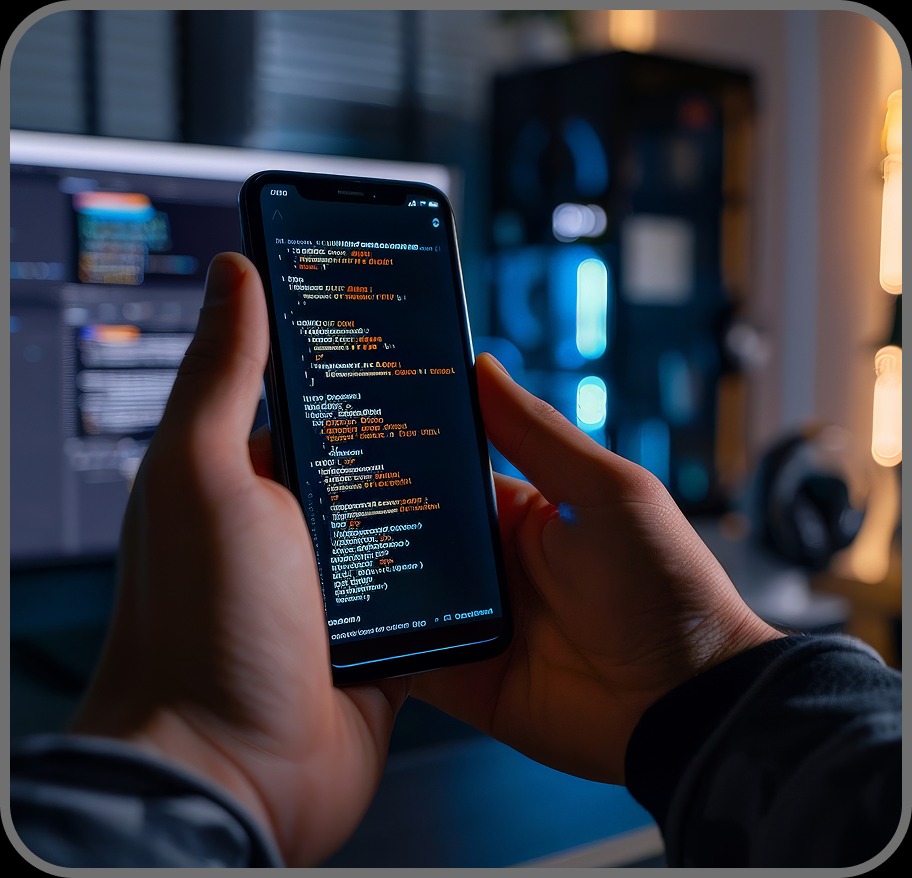
Development: Bringing Features to Life
This is the stage where engineers start building the real app. The work usually includes:
- Front-end development
Developers build what users see: buttons, animations, screens, and layouts.
- Back-end development
The team builds parts users don’t see: databases, servers, user accounts, and messaging tools.
- Integrations
Apps often link to other systems, such as payment processors, maps, booking tools, or email services.
- Notifications
Push notifications keep users updated about new features, appointments, or deliveries.
This stage requires constant reviewing, testing, and refining.
Launching the App
Once testing is complete, the app gets prepared for launch on the App Store and Google Play. Developers help gather screenshots, descriptions, and technical details needed for approval. After publishing, the app becomes available for download.
Maintaining and Updating the App
A good app grows over time. Businesses often want new features, improved designs, or updated information. They may also need bug fixes or security improvements. A reliable partner for app development in Los Angeles offers long-term support so the app stays current and safe.
Updates may include:
- New dashboards
- Faster performance
- Additional user profiles
- New menu layouts
- Seasonal features
- Better reminders
- Improved security
Ongoing support helps the app stay relevant and easy to use.
Final Thoughts
Mobile apps help businesses stay visible, organized, and connected with customers. Choosing the right partner helps companies build tools that support growth and solve everyday problems. A skilled development team focuses on clarity, speed, and real user behavior, creating apps that are helpful instead of complicated.
A trusted company like Bee Techy offers some of the best mobile app development support in Los Angeles. Bee Techy’s commitment to quality and reliable engineering makes it a top choice for businesses looking to build or improve their mobile apps.