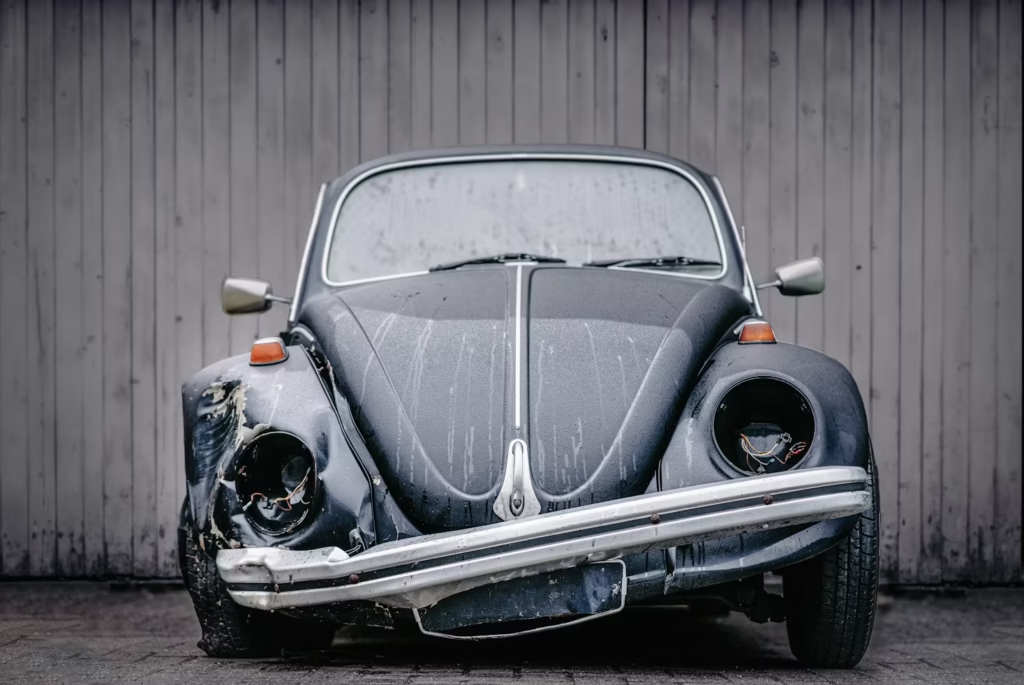
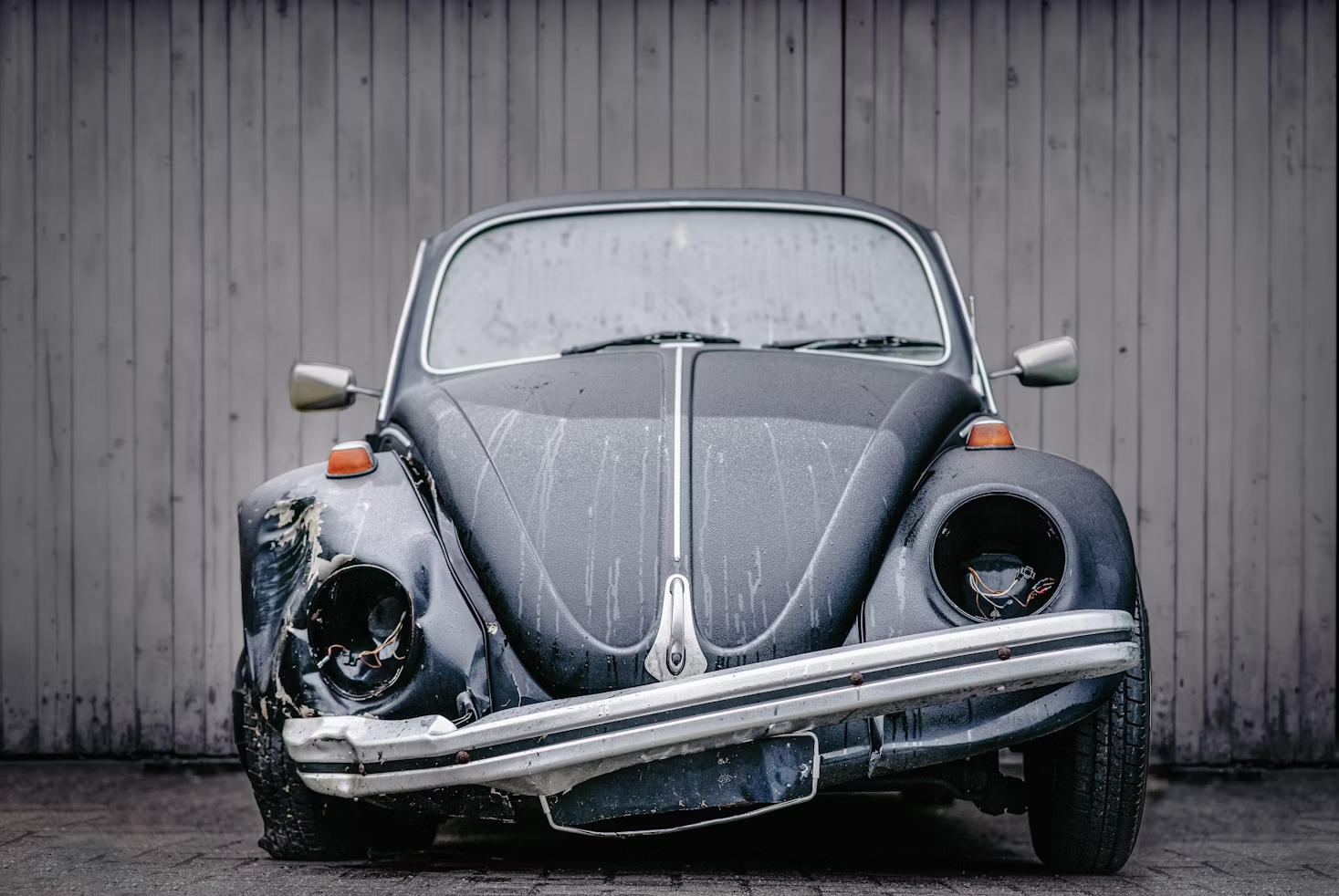
A scrap car sitting in your driveway represents more than just an eyesore; it represents locked financial potential based on raw materials and salvageable components. Determining the monetary worth of an end-of-life vehicle involves a precise calculation of weight, metal composition, re-usable parts demand, and current market commodities rates.
What Determines a Scrap Car’s Price?
The value of a scrap car is calculated primarily by its weight in pure metal, the current market price per tonne for steel and aluminium, the demand for its functional spare parts, and its specific make and model. While many owners assume a non-running vehicle is worthless, auto wreckers view it as a collection of valuable resources waiting for extraction.
1. Weight and Metal Content
The total mass of the vehicle is the most consistent factor in generating a quote. Wreckers purchase vehicles based on the tonnage of scrap metal they contain. Heavier vehicles yield higher payouts because they provide a larger volume of recyclable steel, aluminium, and copper.
For example, a large 4WD or SUV typically commands a higher scrap price than a compact hatchback simply due to the difference in raw material weight. A standard sedan consists of approximately 65% steel and iron, making the sheer scale of the vehicle a primary value indicator.
2. The Value of Catalytic Converters
Catalytic converters are specific components that significantly boost a quote due to the precious metals they house. These exhaust emission control devices contain rare metals, including platinum, palladium, and rhodium.
Because these metals trade at high values on the commodities market, a car with its original catalytic converter intact is worth considerably more than one without it. Removal of this part before selling the car generally lowers the offer from a wrecker.
3. Demand for Salvageable Parts
A vehicle typically holds higher value when its internal components are in working order and in high demand. If a car is declared a “write-off” due to body damage but retains a pristine engine or transmission, it transitions from simple scrap to a “salvage” vehicle.
Wreckers assess the local inventory requirements for specific parts, including:
-
Engines and gearboxes: The core powertrain often holds 50% of the parts value.
-
Body panels: Doors, bonnets, and bumpers in matching colours are highly sought after.
-
Electronic modules: ECUs, alternators, and starter motors have a consistent resale market.
If your car is a popular model in Brisbane—such as a Toyota Corolla or Ford Ranger—the quote increases because the wrecker knows the parts sell quickly.
The Distinction Between Scrap and Salvage
Understanding the category your vehicle falls into clarifies why quotes vary between providers. A scrap car is purchased strictly for recycling materials, whereas a salvage car is purchased to harvest parts for resale.
Comparison of Selling Options
| Feature | Scrap Car Sale | Salvage/Parts Sale | Private Market Sale |
| Primary Value Source | Weight of steel & aluminium | Resale value of specific parts | Vehicle drivability & aesthetics |
| Condition Required | Any condition (running or dead) | Specific parts must function | Must be roadworthy & tidy |
| Speed of Sale | Instant (Same day) | Fast (1-3 days) | Slow (Weeks to months) |
| Effort Required | Minimal (Phone call & pickup) | Low (Assessment needed) | High (Roadworthy certs, ads) |
| Ideal Candidate | Damaged, old, or non-running cars | Late models with body damage | Running cars with minor issues |
How Market Trends Affect Quotes
Global commodities markets dictate the daily price of recycled metals, causing fluctuation in scrap car offers. Since metal prices change daily based on international supply and demand, a quote received last month differs from a quote received today.
Factors Influencing Market Rates:
-
International Trade: Changes in import policies from major steel-buying nations affect local pricing.
-
Fuel Prices: High transport costs sometimes lower scrap prices to offset the logistics of moving heavy metal.
-
Local Construction Demand: High demand for recycled steel in construction projects drives up the price paid for scrap vehicles.
The Cash For Car Brisbane Approach
Getting a fair price requires dealing with a buyer who accurately assesses both the scrap weight and the parts potential. Cash For Car Brisbane utilizes a transparent evaluation system that combines current metal rates with an extensive knowledge of the local parts market.
Instead of offering a flat rate based solely on weight, the team evaluates the specific merits of the vehicle. If a car possesses a sought-after alternator or a pristine interior, these attributes factor into the final cash offer. This dual-approach—valuing both the metal and the mechanism—ensures owners receive a price reflective of the car’s true worth.
Common Misconceptions About Scrap Pricing
There are 3 distinct myths that often lead car owners to overestimate or underestimate their vehicle’s value.
Myth 1: “It costs money to tow a scrap car.”
Professional wreckers provide car removal in Brisbane as a complimentary service. The cost of logistics is absorbed by the company, meaning the cash offer provided is the net amount the seller receives.
Myth 2: “Aftermarket parts increase scrap value.”
Expensive modifications like custom stereos or alloy wheels rarely increase the scrap quote. Wreckers value factory-standard parts that appeal to the widest range of buyers. Often, factory alloy wheels are worth more as scrap aluminium than flashy aftermarket rims are as resale items.
Myth 3: “A dirty car is worth less.”
Cosmetic dirt, faded paint, or torn upholstery has zero impact on the scrap metal price. While a clean car helps in a private sale, a recycler looks past the grime to the 1,500 kilograms of metal underneath.
Maximising Your Quote
To secure the highest possible offer for a scrap vehicle, sellers often take specific preparatory steps.
-
Keep the Vehicle Intact: Resist the urge to remove the battery, tyres, or radio. Missing parts reduce the total weight and remove potentially resellable items, lowering the final figure.
-
Provide Accurate Details: When requesting a quote, mention the exact sub-model and year. A 2010 model often has different, more valuable parts than a 2005 model of the same name.
-
Highlight Recent Repairs: If the car has a new battery or recently replaced tyres, mention this. While the car is scrap, these specific components add distinct value.
Environmental Impact and Verification
Selling a car to a licensed dealer ensures the vehicle undergoes a depollution process before crushing. Fluids, including oil, coolant, and brake fluid, are hazardous materials that require specialized disposal.
Licensed operators strip these fluids to prevent soil contamination. Following the fluid removal, the vehicle enters the shredder where magnets separate ferrous metals (iron/steel) from non-ferrous metals (aluminium/copper). This recycling process saves significant energy compared to mining new ore. For instance, recycling steel uses 74% less energy than producing new steel from raw materials.
Situational Relevance: When to Scrap vs. Fix
Deciding between repairing an old vehicle and scrapping it depends on the “50% Rule.” If the cost of repairs exceeds 50% of the car’s current market value, financial logic suggests scrapping is the viable option.
Consider scrapping if:
-
The vehicle requires major engine or transmission work.
-
Rust has compromised the structural integrity of the chassis.
-
It has been declared a statutory write-off.
-
Registration costs and roadworthy repairs outweigh the car’s utility.
Final Thoughts on Value
The value of a scrap car is not a random figure but a calculated sum of global economics, material weight, and local parts demand. By understanding these factors, car owners in Queensland navigate the sale process with confidence.
Cash For Car Brisbane remains committed to offering competitive rates by monitoring these variables daily, ensuring that even a vehicle at the end of its life provides a financial return to its owner. Whether it is a rusted ute or a damaged sedan, the metal and parts within hold value that is readily available through a professional assessment.