According to a report, the use of Internet of Medical Things (IoMT) is projected to reach 50 billion by 2030. At the same time, 83% of US healthcare institutions have adopted a Bring Your Own Device (BYOD) policy. Indeed, it is welcoming for the healthcare industry in many ways as it creates convenience. At the same time, the increasing use of connected medical devices is also increasing security risks for hospitals and clinics. Cybercriminals are always seeking weak endpoints to execute their attacks. To support this growth and maintain a balance between innovation and security, healthcare organizations must implement strong endpoint protection.
What is Endpoint Protection?
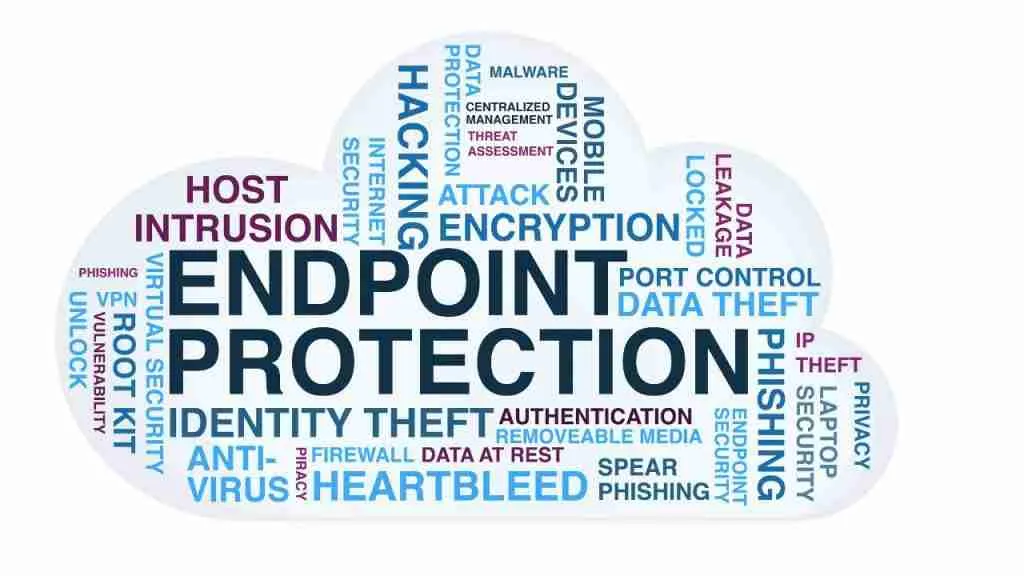
Each device connected to an organization’s network is called an endpoint. All devices, from laptops, mobiles, tablets, to servers, pose a cybersecurity risk. Because each device can serve as a potential gateway for cybercriminals to access data. Endpoint Protection is a cybersecurity solution that aims to protect all devices that are connected to a network. It is the modern evolution of antivirus software.
Why is Endpoint Protection Essential for Healthcare Organizations?
As cyber attacks have become more sophisticated, Defense techniques have had to evolve as well. Now, healthcare businesses can no longer rely solely on antivirus software. Healthcare organizations need to work with a more detective mindset to strengthen their security. Protecting healthcare devices is not just an IT concern. It is a fundamental business risk with real financial consequences.
Traditional antivirus software works like a guard dog that only recognizes bad guys from a photo album. Whereas modern Endpoint security in healthcare not only identifies known criminals but also alerts to suspicious activities. It helps healthcare professionals prevent crime before it occurs.
How IoMT Devices Are Easy Targets
The Internet of Medical Things (IoMT) that healthcare organizations use often lacks essential security features. Moreover, to ensure continuous care and deliver real-time patient data, these devices stay online for most of the time. Staying online for longer helps hackers steal data. Continuous device communication and data transfer give hackers more chances to find and exploit weaknesses. Here are a few more vulnerabilities that make IoMT easy targets for cyber criminals:
- Devices using outdated operating systems that do not receive security patches are vulnerable to attacks.
- Setting up easy-to-guess passwords makes the IoMT devices more vulnerable to cyberattacks.
- Lacking security controls such as encryption, authentication, and access controls heightens the risk of device breaches.
- The IoMT devices, which need manufacturer support for updating, leave security gaps for cybercriminals’
The medical devices, such as heart monitors, infusion pumps, and wearable trackers, contain sensitive patient health data. Compromising these devices can endanger data security and patients’ safety.
Being Secured or Being the Next Data Breach Headline
No healthcare organization wants to make headlines due to a data breach. Therefore, reliable and efficient healthcare cybersecurity solutions are essential for them to stay in a safe zone. Proactive endpoint protection draws a line between secure operations and costly cyber incidents. According to a report, 70% of data breaches start on endpoints. Traditional antivirus solutions fail to detect most modern cyber threats.
Why are old security tools not enough?
Traditional antivirus tools are not strong enough to fight against modern security threats. They can only detect viruses that have been circulating for years. However, they cannot detect new malware, fileless attacks, zero-day exploits, or sophisticated ransomware. The following major reasons explain why old security tools do not support modern healthcare working models:
- Legacy tools only detect threats which is in their database. The new threat type goes unnoticed.
- Traditional security tools are unable to block ransomware that starts from endpoints.
- Old security and anti-virus tools can not protect remote IoMT devices.
- Traditional antivirus tools do not provide behavioral analysis.
How Modern Endpoint Protection Secures Healthcare Data?
As one of the key parts of modern cybersecurity solutions, endpoint protection stops malware and ransomware. The advanced security solution uses Artificial Intelligence (AI) to detect unknown threats in real time. Moreover, the technology automatically isolates infected files.
Endpoint Protection allows IT professionals to manage updates, policies, and patches from a single console. Such ransomware protection for healthcare ensures that all vulnerabilities are fixed before they cause damage. Modern solutions protect medical data with the following key capabilities:
Cloud-Based Protection
Implementing modern medical data security measures offer protection from anywhere. It eliminates the need for hospitals and clinics to develop an on-site infrastructure. Centralized data allows IT teams to monitor and manage all their devices through a single cloud dashboard. Moreover, a small program runs on each device to protect data and save devices from slowing down.
Unified Endpoint Management (UEM)
The unified endpoint management also simplifies security management. IT professionals continuously monitor activities on all connected devices. It allows them to instantly track the suspicious activities. At the same time, they ensure that all devices follow the same rules so there are no weaker spots for hackers.
Secure Systems for Sensitive Work
Healthcare systems use secure systems like Virtual Desktop Infrastructure (VDI)/ Desktop-as-a-Service (DaaS) for highly sensitive data. It creates virtual desktops for healthcare professionals to access applications, files, and operating systems. It eliminates the need to store sensitive information on their local devices. Such read-only systems prevent malware or ransomware from installation. Moreover, implementing Multi-Factor Authentication (MFA) adds an additional security layer. It ensures that only authorized personnel get access to data.
Endpoint security best practices
A single click, and each device and every connection can pose a serious threat to healthcare organizations. They cannot rely on basic antivirus tools. Modern endpoint protection requires automated solutions, visibility control, and real-time responses. Therefore, patient care protocols must develop a comprehensive security strategy to defend each device connected to their network. The following best practices provide a solid foundation to strengthen their endpoint security:
- Count devices connected to your network.
- Fix weaknesses with regular updates and security patches.
- Ensure safe use of VPNs with MFA to prevent hackers from spying on your data.
- Implement a zero-trust policy; the system must verify identity before giving access.
- Establish a clear BYOD policy to manage the use of personal devices within your organization.
- Ensure data encryption.
- Use Endpoint Detection and Response (EDR) tools to keep a continuous watch on all devices.
- Be prepared with a plan in case of a security breach.
- Reduce attack vectors while minimizing the use of unnecessary tools and applications.
Prevention Saves and Detection Catches
Organizations must protect patient data in healthcare with the understanding that cyberattacks can occur at any time. However, the real test begins after an attack. Effective security measures focus on quickly identifying and containing them before they cause significant damage.
Modern Endpoint security solutions combine prevention and detection. They use antivirus software’s and firewalls, and implement other advanced security strategies to block attacks at their earliest stages.
Even the best security defenses fail sometimes. If such a situation occurs, early virus detection or identification of unusual activities helps healthcare providers in reducing damage. Moreover, healthcare providers must prioritize 24/7/365 continuous monitoring of systems to detect suspicious activities in real time.
Detecting threats is essential to preventing future threats to the healthcare organization. Every breach offers a lesson that helps cybersecurity professionals take essential actions. Here are a few prevention and detection steps that hospitals and clinics must follow to contain damage and build stronger defenses.
- Immediately disconnect compromised devices.
- Thoroughly investigate the breach to identify root causes and prevent future incidents.
- Notify all stakeholders.
- Ensure implementation of all security patches on time.
- Use safe and verified backups to rebuild systems.
Deploy Next-Generation Antivirus (NGAV), an advanced AI-driven security solution. It actively detects new and known cyber threats while analyzing behavior patterns. NGAV blocks attacks in real time and helps in identifying the root cause.
How Endpoint Protection Helps Healthcare Professionals
Healthcare has the highest data breach costs, reaching $10.93 million per incident. Hospitals and clinics handle sensitive patient data, financial details, and medical device information, making them major targets for hackers. With more connected devices and remote access, cyber risks are increasing. Protecting every endpoint in the network is now essential to keep healthcare data secure. Here’s why strong security measures matter for healthcare professionals:
- Protecting highly sensitive patient information and reducing the risk of identity theft and fraud.
- Maintaining continuity of healthcare operations and saving patients from treatment delays.
- Strengthening patient trust and enhancing the credibility of healthcare organizations.
- Helps healthcare organizations comply with strict U.S. regulations, such as HIPAA, to collect, store, and share patient data securely.
- Investing in essential security measures saves medical practices from expensive regulatory and legal fines. Moreover, endpoint protection costs less than recovering from an attack.
How to choose the right Endpoint Protection Platform?
A truly modern platform brings prevention, detection, and response together. Healthcare organizations need AI-powered prevention, deep detection for threat hunting, and automated responses. All must be managed from a single cloud-based console, with a single lightweight agent. That must not slow down your systems. Deployment of prevention tools also matters a lot. Old ways and in-house servers do not cut it anymore.
Consider Smarter Cyber Defense
With a distributed workforce, cloud-native platforms are the standard now. They are built to offer the flexibility and scalability that modern healthcare organizations need. Policies must stay flexible and update instantly for both remote and on-site employees.
It is excellent to have EDR tools, but who investigates threats for your organization? Healthcare organizations need access to a skilled 24/7/365 Security Operations Center (SOC). Instead of building your own team, you can partner with a vendor that has an elite team of threat hunters and analysts who monitor your system around the clock. This approach is known as cybersecurity-as-a-service (CaaS).
- Understand the unique needs of your organization.
- Continually evaluate platforms with a Proof of Concept (POC).
- Plan for a new workflow with new security systems.
- Prepare end users for new systems with practical training.
- Work with the vendor and plan the implementation process.
Conclusion
Rapid transformation in healthcare highlights the significant importance of robust Cybersecurity for hospitals and clinics. Healthcare organizations must develop strong data protection practices to stay compliant and safeguard patient information. Advanced security strategies enable healthcare practices to ensure secure access and protect patient data. The advanced tools provide complete visibility over the organization’s connected devices and full control. Outsourcing managed security lets experts monitor and protect your systems 24/7/365. It reduces risk, saves operational cost, ensures compliance, and frees your staff to focus on patient care.
CyRx360 offers Cybersecurity-as-a-Service (CaaS) to help healthcare organizations stay protected around the clock. Our expert team monitors, detects, and responds to threats in real time. Helping healthcare organizations to focus on patient care with confidence. With us, your data stays secure, compliant, and in trusted hands.