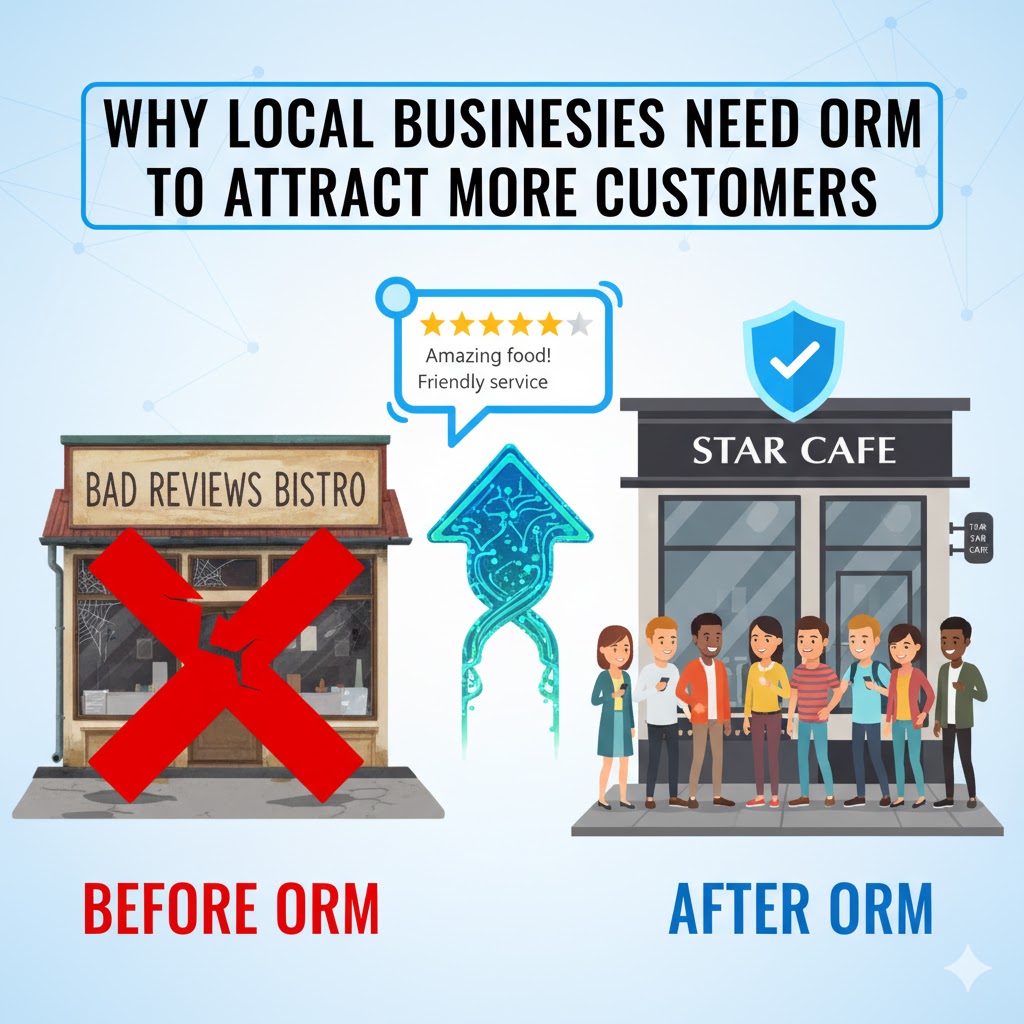
In today’s hyper-connected world, a customer’s first interaction with a local business rarely happens face-to-face—it happens online. Before stepping into a store, restaurant, office, or service provider, people search for reviews, check ratings, look at photos, browse social media, and compare businesses. This shift in consumer behavior has made professional Online Reputation Management services an essential component of business success—especially for local businesses that depend heavily on community trust, proximity-based searches, and word-of-mouth.
A local business’s reputation can attract new customers—or push them away. Statistics consistently show that more than 90% of consumers read online reviews before choosing a local service or making a purchase. Even more striking, nearly 88% of consumers trust online reviews as much as personal recommendations. When a single negative comment can go viral and a 4-star rating can bring significantly more business than a 3-star one, the power of ORM becomes undeniable.
This article explores in depth why local businesses need ORM to attract more customers, how it influences buying decisions, the cost of a damaged reputation, and the strategies local brands can use to strengthen and protect their image.
1. Understanding Online Reputation Management (ORM)
1.1 What Is ORM?
Online Reputation Management refers to all the combined efforts a business uses to shape, protect, and maintain how it appears to customers online. It includes:
-
Monitoring online reviews
-
Managing social media presence
-
Responding to customer feedback
-
Ensuring accurate business information across directories
-
Optimizing search results related to the business
-
Handling crises, negative reviews, or misinformation
-
Delivering helpful, positive content
ORM is not about hiding the truth or manipulating customers—it’s about presenting your brand accurately, professionally, and proactively.
1.2 Why It’s More Critical for Local Businesses Than Large Brands
Large companies often have an established brand history, wide customer bases, PR teams, and marketing budgets to manage their image. But local businesses rely heavily on community trust and online opinions.
Local customers want proof before they buy—and reviews are the proof.
For example:
A customer chooses a local plumber. Will they pick the one with 4.7 stars and 320 reviews, or the one with 2.8 stars and 15 reviews?
The answer is obvious. ORM ensures your business is aligned with what customers expect and highlights your strengths to stand out in local search results.
2. How ORM Directly Impacts Customer Attraction
2.1 Customers Trust What They See Online
Most customers begin with a quick Google search. They check Google Maps, Yelp, Facebook, Instagram, TripAdvisor, or industry-specific directories.
If they see:
-
Poor ratings
-
Outdated information
-
Angry customer comments
-
Low-quality photos
-
No response from the business
they instantly assume the business is unreliable. ORM helps local businesses turn these digital first impressions into conversions.
2.2 Positive Reviews Increase Customer Footfall
Strong ORM encourages positive reviews, which boost:
-
Local SEO rankings
-
Click-through rates
-
Calls to the business
-
Website visits
-
In-store visits
For example, moving from a 3-star rating to a 4-star rating can increase revenue by up to 20–30%. ORM helps businesses generate a steady stream of positive customer feedback that builds trust.
2.3 Negative Reviews Push Potential Customers to Competitors
Even a single negative review can cost a local business dozens of potential customers.
A customer looks at two nearby restaurants:
-
Restaurant A: 4.5 stars, 200 reviews
-
Restaurant B: 3.1 stars, 150 reviews
The majority will choose Restaurant A—even if Restaurant B actually has better food. ORM helps reduce the impact of negative reviews, respond professionally, and restore customer trust.
2.4 ORM Helps Businesses Rank Higher in Local Searches
Search engines like Google use reviews as ranking signals. The better your reputation, the higher you appear in:
-
Google Maps
-
Local Pack listings
-
Organic search results
Since most people choose from the top three listings in Google’s Local Pack, ORM becomes essential for visibility and customer acquisition.
3. The Cost of a Poor Online Reputation for Local Businesses
3.1 Loss of Revenue
A few negative reviews can significantly decrease customers choosing your business over competitors. Local businesses often operate on thin margins, where losing even 5–10% of customers can be damaging.
3.2 Damage to Trust and Credibility
Customers expect transparency and professionalism. Poor reviews or ignored feedback can signal:
-
Lack of care
-
Poor customer service
-
Unreliable business practices
-
Inconsistency
Trust, once broken, is extremely hard to restore.
3.3 Viral Negative Content
A single viral comment, a video, or a tweet can spread rapidly. Without ORM, a business might not even realize a crisis is unfolding until the damage is significant.
3.4 Reduced Employee Attraction and Retention
Reputation doesn’t only influence customers—potential employees check reviews too. Poor online reputation affects hiring, workplace culture, and employee morale.
4. ORM Helps Local Businesses Build Strong Customer Relationships
4.1 Encourages Two-Way Communication
Customers feel valued when businesses respond to reviews—positive or negative. This strengthens relationships and increases customer loyalty.
4.2 Shows Transparency and Commitment
Responding to reviews and feedback demonstrates professionalism and a willingness to improve.
Customers today care about how businesses handle complaints, not just the existence of complaints.
4.3 Increases Repeat Business
Satisfied customers become repeat customers—and often bring friends with them. Good ORM keeps your business top-of-mind and visible.
5. ORM Improves Local SEO and Online Visibility
5.1 Reviews Are a Core Ranking Factor
Google uses review count, quality, and freshness to determine ranking. The more positive reviews your business has, the better it performs in:
-
Google Maps
-
Local search
-
Voice searches (“Hey Google, find a plumber near me”)
-
Featured snippets
ORM ensures reviews remain consistent, positive, and frequent.
5.2 Consistent NAP Information Builds Credibility
ORM ensures that your:
-
Name
-
Address
-
Phone number
-
Website
-
Hours
-
Services
are accurate everywhere online. This consistency boosts SEO and prevents customer confusion.
5.3 Reputation Signals Are Key for Voice Search
Voice assistants like Siri, Alexa, and Google Assistant often rely heavily on ratings and reviews. ORM increases your chances of being recommended.
6. ORM Helps Build a Strong Local Brand Image
6.1 Creates a Positive First Impression
People form opinions in seconds. ORM ensures your online image reflects the best of your business.
6.2 Highlights Your Strengths
ORM helps showcase:
-
Success stories
-
Customer feedback
-
Awards
-
Testimonials
-
Case studies
-
Photos and videos
This positive content builds a powerful brand story.
6.3 Shows Community Involvement
Local customers love supporting businesses that contribute to the community. ORM helps document and promote:
-
Events
-
Sponsorships
-
Charity involvement
-
Local partnerships
This strengthens loyalty.
7. ORM Helps Manage Crises Before They Become Disasters
7.1 Quick Response Reduces Impact
Bad experiences happen to every business. The difference comes in how businesses respond. ORM enables immediate damage control by addressing concerns before they escalate.
7.2 Prevents Misunderstandings
Sometimes negative reviews are based on mistaken identity, incorrect information, or miscommunication. ORM helps clarify the situation quickly.
7.3 Turns Negative Experiences into Positive Outcomes
A professional, empathetic response can convert an unhappy customer into a loyal one.
8. Essential ORM Strategies for Local Businesses
8.1 Monitor All Review Platforms
Local businesses must actively monitor platforms like:
-
Google Business Profile
-
Yelp
-
Facebook
-
TripAdvisor
-
Angie’s List
-
Foursquare
-
Trustpilot
-
Niche directories (Healthgrades, Zomato, Avvo, etc.)
8.2 Respond to Reviews Professionally and Promptly
A good ORM strategy includes:
-
Thanking customers for positive feedback
-
Addressing negative reviews with solutions
-
Staying calm and professional
-
Offering a private channel for resolution
8.3 Encourage Satisfied Customers to Leave Reviews
This can be done through:
-
Follow-up emails
-
In-store signs
-
QR codes
-
Receipts
-
SMS reminders
8.4 Publish High-Quality Local Content
Blogs, photos, videos, and updates show customers your business is active and trustworthy.
8.5 Optimize Your Google Business Profile
This is essential for local visibility. ORM ensures:
-
Updated business info
-
Fresh posts
-
Positive reviews
-
Professional photos
-
Q&A section management
8.6 Address Customer Complaints Internally
ORM isn’t only about the online world—it often reveals internal weaknesses. Fixing these improves the overall customer experience.
9. Future Trends: Why ORM Will Become Even More Important
9.1 Increasing Reliance on AI and Algorithms
AI is already influencing ranking, customer sentiment analysis, and review visibility. Businesses with strong reputations will win more algorithmic trust.
9.2 Growing Importance of Video Reviews
Customers increasingly rely on short video testimonials, which can go viral—positively or negatively.
9.3 Rising Competition in Local Markets
More small businesses are entering the market every year. ORM gives your business the competitive edge needed to stand out.
9.4 Social Commerce Growth
Reviews on platforms like Instagram and TikTok will influence purchasing decisions more than ever.
Conclusion
Local businesses thrive on trust, credibility, and community reputation. In an online-first world, ORM is the most powerful tool for:
-
Attracting new customers
-
Increasing visibility
-
Improving search rankings
-
Building loyalty
-
Managing crises
-
Strengthening brand image
A strong online reputation is not built overnight—but with consistent monitoring, strategic content, and professional engagement, local businesses can dramatically increase footfall, customer trust, and long-term success.
Investing in ORM is not just about protecting your image—it’s about fueling growth and ensuring a sustainable future for your business.