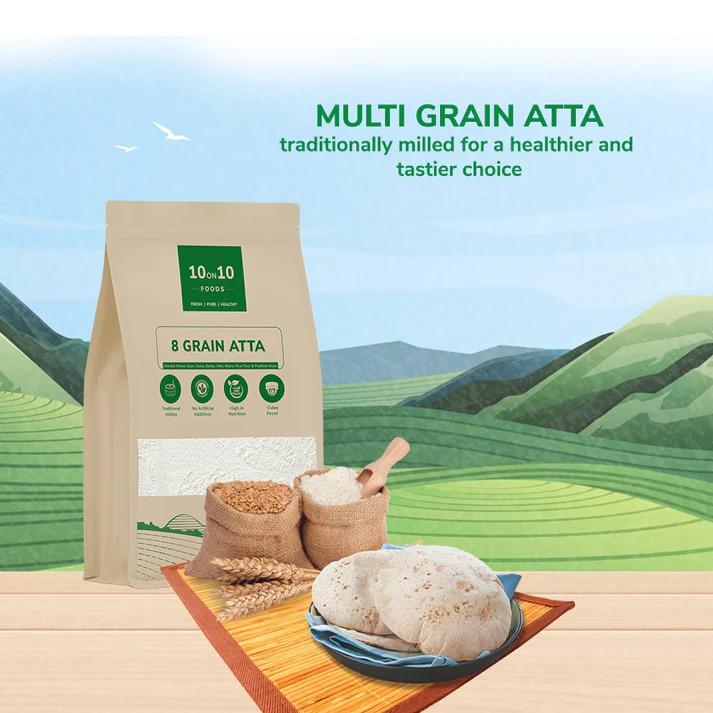
For decades, wheat flour has been the backbone of Indian kitchens. From soft rotis to hearty parathas, it has played a central role in daily meals. But as lifestyles evolve and health awareness grows, many families are looking beyond plain wheat flour. One option gaining steady popularity is Multigrain Atta—a blend designed to offer more than just carbohydrates.
In this blog, we will explore why multigrain atta is considered a smarter choice than regular wheat flour, how it supports overall wellness, and why brands like 10on10foods.com are bringing thoughtfully crafted options to modern homes.
Understanding the Difference Between Regular Wheat Atta and Multigrain Atta
Regular wheat atta is typically made by grinding whole wheat grains. It provides energy, some fiber, and essential nutrients. However, it relies on a single grain, which limits the diversity of nutrients you consume.
Multigrain Atta, on the other hand, combines wheat with other grains and pulses such as jowar, bajra, ragi, oats, maize, barley, or legumes. Each grain contributes unique nutritional properties, creating a more balanced flour.
In simple terms, wheat atta focuses on one grain, while multigrain atta brings together the strengths of many.
Nutritional Diversity: The Biggest Advantage
One of the strongest reasons people choose multigrain atta is its wider nutritional profile.
Different grains offer different benefits:
-
Millets like jowar and bajra are rich in minerals.
-
Ragi contributes calcium.
-
Oats and barley are known for soluble fiber.
-
Pulses add plant-based protein.
When these grains are blended, Multigrain Atta provides a broader range of nutrients than regular wheat alone. This diversity helps support better daily nutrition without changing eating habits drastically.
Better Fiber Content for Digestive Health
Fiber plays a crucial role in digestion and gut health. While whole wheat atta does contain fiber, multigrain atta often contains a higher and more varied fiber composition.
The combination of soluble and insoluble fiber from multiple grains helps:
-
Improve digestion
-
Support regular bowel movements
-
Promote a feeling of fullness
This makes multigrain atta particularly useful for people who want to manage portion sizes or avoid frequent snacking.
Supports Balanced Energy Release
Regular wheat flour mainly provides carbohydrates that can be digested relatively quickly. Multigrain atta, due to its mix of grains and pulses, often digests more slowly.
This gradual digestion helps:
-
Maintain steady energy levels
-
Reduce sudden hunger pangs
-
Support long working hours without fatigue
For people with active lifestyles or long office days, Multigrain Atta can be a practical everyday choice.
Helpful for Weight Management
Weight management is not about avoiding food but choosing the right kind. Multigrain atta can be a supportive option because it is:
-
More filling due to higher fiber
-
Rich in complex carbohydrates
-
Balanced with protein from pulses
When meals keep you fuller for longer, you are less likely to overeat. Replacing regular wheat with multigrain atta can be a small but meaningful step toward healthier eating habits.
Suitable for Modern Dietary Needs
Today’s diets are more conscious than ever. People are looking for foods that align with fitness goals, digestive comfort, and long-term wellness.
Multigrain Atta fits well into modern dietary preferences because:
-
It offers variety without complexity
-
It works for traditional Indian recipes
-
It supports plant-based nutrition
Brands like 10on10foods.com focus on crafting multigrain atta blends that retain taste while improving nutritional value, making the switch easier for families.
Taste and Texture: A Common Misconception
One concern people often have is taste. Many assume multigrain rotis will be hard or less flavorful. In reality, when made with a balanced blend, multigrain atta produces soft, tasty rotis with a slightly nutty flavor.
The key lies in the proportion of grains and proper milling. Quality-focused brands ensure that the texture remains familiar while the nutrition improves.
Comparing Daily Use: Multigrain Atta vs Regular Wheat
When choosing flour for daily meals, consistency matters. Multigrain atta is designed for regular use, just like wheat atta.
Here is how it fits into daily cooking:
-
Works well for rotis, parathas, and chapatis
-
Can be used for puris and pancakes with minor adjustments
-
Suitable for both lunch and dinner
Once the kitchen adapts, multigrain atta becomes a natural replacement rather than an occasional health food.
Why More Families Are Switching Today
The shift toward multigrain atta is not a trend but a response to lifestyle changes. Longer working hours, sedentary routines, and rising health awareness have encouraged families to rethink staples.
Multigrain Atta offers a practical solution:
-
No drastic diet change
-
Familiar cooking methods
-
Improved nutritional intake
This balance makes it appealing across age groups, from children to older adults.
Choosing the Right Multigrain Atta
Not all multigrain atta products are the same. When selecting one, it is important to check:
-
The list of grains used
-
The absence of unnecessary additives
-
Trusted sourcing and milling practices
Products available at 10on10foods.com are designed to combine traditional grains with modern quality standards, helping consumers make informed choices.
FAQs About Multigrain Atta
What is Multigrain Atta made of?
Multigrain Atta is typically made from a combination of wheat, millets, grains, and sometimes pulses. The exact mix depends on the brand and formulation.
Is Multigrain Atta better than wheat for daily use?
Yes, Multigrain Atta can be better for daily use because it provides a wider range of nutrients and fiber compared to regular wheat flour.
Does Multigrain Atta help in digestion?
The higher fiber content from multiple grains supports smoother digestion and helps maintain gut health.
Can children and elderly people eat Multigrain Atta?
Yes, Multigrain Atta is suitable for all age groups when consumed as part of a balanced diet.
Does Multigrain Atta taste different?
It has a slightly richer, nutty taste, but when prepared well, rotis remain soft and enjoyable.
Final Thoughts
Switching from regular wheat flour to Multigrain Atta is a simple yet impactful change. It enhances nutritional diversity, supports digestion, and fits seamlessly into everyday Indian cooking.
As more households prioritize long-term wellness, multigrain atta stands out as a smart staple. With thoughtfully prepared options from trusted platforms like 10on10foods.com, making healthier choices no longer means compromising on taste or tradition.