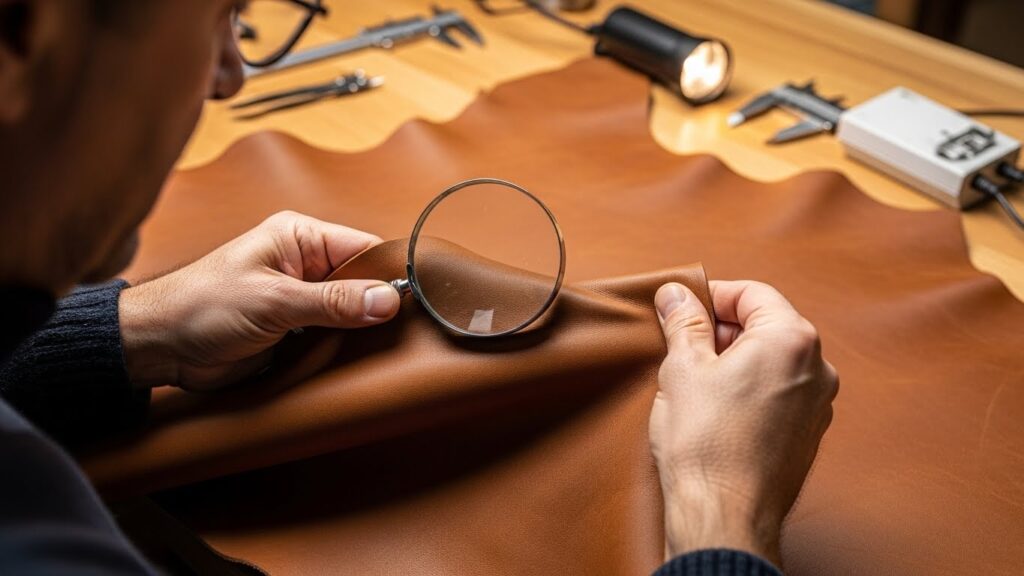
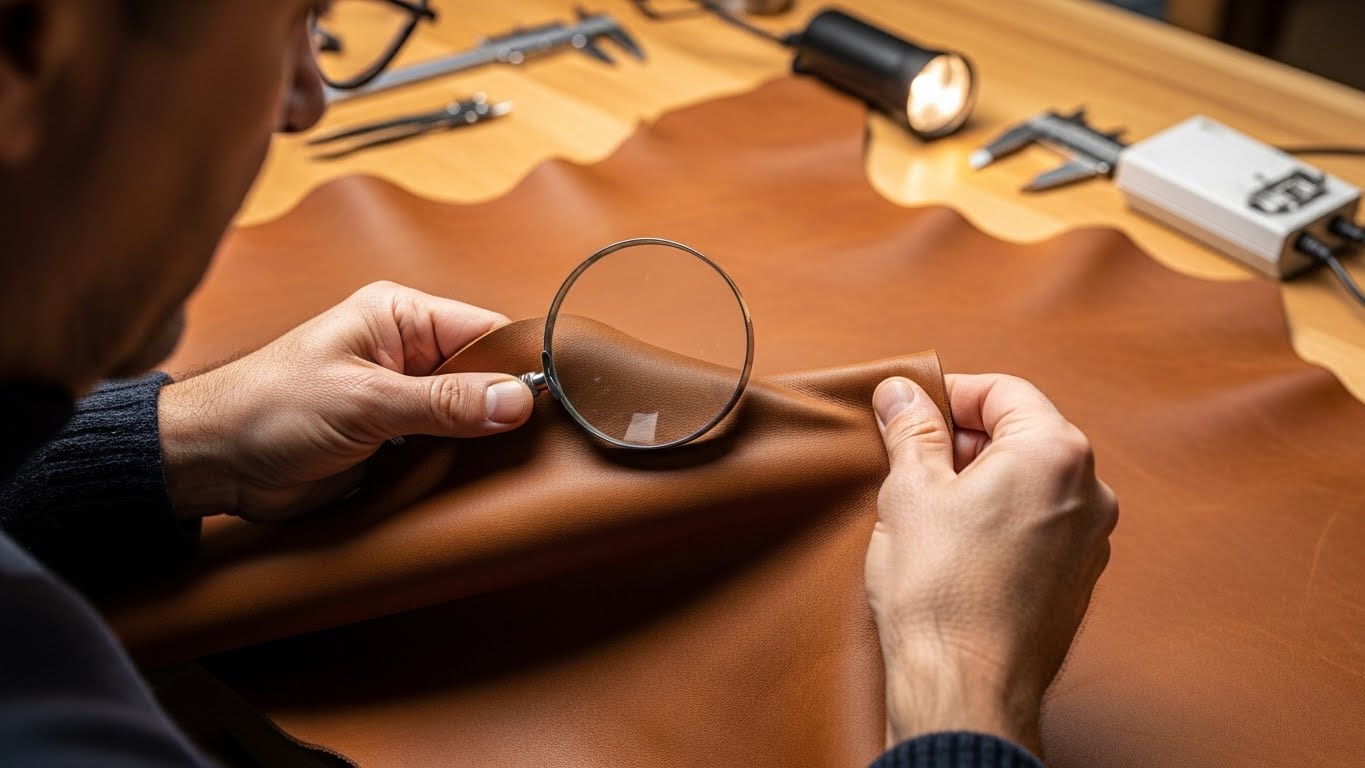
Leather is a material that represents durability, luxury, and timeless craftsmanship. From high-end fashion accessories and footwear to furniture and automotive interiors, premium leather products are valued for their strength, appearance, and long lifespan. However, what many buyers and consumers don’t see is that exceptional leather quality doesn’t happen by chance. It is the result of a strict, disciplined, and well-structured quality control system embedded throughout the entire leather production process.
In today’s competitive global market, quality control is not just a manufacturing step, it is the backbone of premium leather production. Without it, consistency fails, defects multiply, and trust with international buyers is lost. This article explores why quality control is essential in leather manufacturing and how it defines premium standards from raw hide selection to finished leather export.
Understanding Quality Control in Leather Manufacturing
Quality control in leather production refers to the continuous monitoring, inspection, and testing of materials at every stage of the tanning and finishing process. Unlike mass-produced synthetic materials, leather is a natural product, meaning every hide is unique. Variations in texture, thickness, grain, and strength must be carefully managed to ensure uniform quality in the final output.
Effective quality control ensures that:
- Leather meets international standards
- Defects are identified early
- Consistency is maintained across batches
- Buyers receive reliable and predictable quality
Premium leather manufacturers treat quality control not as a final checkpoint, but as a process-driven culture that begins before production even starts.
Raw Hide Selection: The First Quality Filter
The foundation of premium leather lies in the quality of raw hides, as no level of advanced processing can fully compensate for poor input material. This is why strict quality inspection begins at the sourcing stage. Quality control teams carefully examine raw hides for visible scars, cuts, and branding marks, as well as signs of insect damage or disease that can weaken the leather structure. They also assess thickness consistency to ensure uniform strength and durability and check the preservation quality during transport to prevent decay or contamination. Only hides that meet predefined quality standards are approved for premium leather production. This early filtration process minimizes material waste, reduces overall processing costs, and ensures that only suitable hides move forward into the tanning cycle, laying a strong foundation for high-quality finished leather.
Controlled Tanning: Precision Matters
The tanning process transforms raw hides into durable, flexible leather. Whether using vegetable tanning or chrome tanning methods, quality control plays a critical role in maintaining consistency.
Key quality checks during tanning include:
- Monitoring chemical concentration levels
- Controlling temperature and pH balance
- Ensuring uniform penetration of tanning agents
- Preventing over- or under-tanning
Even minor deviations can result in leather that is brittle, overly stiff, or prone to discoloration. Premium tanneries maintain precise control systems and experienced technicians to ensure each batch meets exact specifications.
Finishing Processes and Surface Perfection
Leather finishing defines the final look, feel, and performance of the product. This stage includes dyeing, embossing, coating, and polishing each requiring close inspection.
Quality control during finishing focuses on:
- Color consistency across hides
- Evenness of surface texture
- Resistance to cracking or peeling
- Proper adhesion of finishes
Premium leather must not only look good but also perform well over time. Testing for flexibility, abrasion resistance, and color fastness ensures that the leather will age gracefully and retain its value.
Testing for Strength, Durability, and Performance
True premium leather is judged not only by its appearance but also by how well it performs in real-world use, which is why technical testing is an essential part of the quality control process. Manufacturers conduct tensile strength testing to measure how much force the leather can withstand, along with tear resistance analysis to ensure durability under stress. Shrinkage temperature evaluation is performed to assess heat resistance and structural stability, while water absorption and breathability tests confirm comfort and long-term performance. These tests help manufacturers comply with international quality standards and give buyers confidence that the leather is suitable for demanding applications such as footwear, upholstery, and luxury goods.
Consistency: The Key to Global Trust
For international buyers and brands, consistency is non-negotiable. A single shipment of substandard leather can damage long-term business relationships.
Strong quality control systems ensure:
- Uniform thickness across batches
- Repeatable color tones
- Predictable performance characteristics
- Reduced rejection rates
This consistency builds trust and allows manufacturers like Akram Tannery to maintain long-standing relationships with global clients who depend on reliable supply chains.

Quality Control and Sustainability Go Hand in Hand
Modern leather buyers are increasingly conscious of environmental and ethical practices, making sustainability an essential part of premium leather manufacturing. Quality control plays a vital role in achieving this by closely monitoring every stage of production. Through strict oversight, chemical waste is reduced, water usage is optimized, and defective leather is minimized before it reaches advanced processing stages. Quality control systems also ensure that eco-friendly tanning methods are consistently applied and maintained. By reducing reprocessing and material loss, efficient quality control saves energy and resources while ensuring compliance with environmental regulations. This strong alignment between quality and sustainability has become a defining feature of modern premium leather production.
Skilled Workforce and Human Expertise
While technology supports inspection and testing, human expertise remains irreplaceable in leather quality assessment. Skilled technicians can detect subtle imperfections that machines may miss, such as grain inconsistencies or tactile irregularities.
Training and experience enable quality teams to:
- Make judgment-based decisions
- Adapt standards to different leather types
- Ensure aesthetic and functional excellence
Quality Control as a Competitive Advantage
In a crowded global market, quality control is a powerful differentiator. Manufacturers that invest in rigorous inspection systems position themselves as premium suppliers rather than commodity producers.
Strong quality control results in:
- Higher buyer confidence
- Reduced returns and complaints
- Stronger brand reputation
- Long-term business growth
The Role of Quality Control in Leather Exports
Export markets demand strict compliance with international standards. From Europe to North America and the Middle East, buyers expect leather to meet defined technical and ethical benchmarks.
Quality control ensures:
- Compliance with import regulations
- Documentation accuracy
- Consistent shipment quality
- Reduced risk of rejection at port
Final Thought
Premium leather is defined by more than appearance. It reflects durability, consistency, sustainability, and trust. At the core of all these qualities lies one fundamental element quality control.
From selecting the right raw hides to delivering finished leather that meets global standards, quality control shapes every stage of production. It safeguards craftsmanship, protects brand reputation, and ensures that leather products deliver long-term value.
In the world of premium leather manufacturing, quality control is not a cost, it is an investment. An investment in excellence, credibility, and a future built on trust.