How Does Smooth Drywall Finishing Improve the Final Paint Look? | Newsglo
How Does Smooth Drywall Finishing Improve the Final Paint Look? - Newsglo

Self with How Does Smooth Drywall Finishing Improve the Final Paint Look? | Newsglo

Drywall finishing is one of the most important steps in construction and renovation, yet it is often overlooked. The smoothness and precision of drywall finishing directly affect how paint, wallpaper, or decorative textures appear. Uneven or rough surfaces can create visible bumps, streaks, or shadows, even after a high-quality paint job. Whether in residential spaces or large commercial projects, professional drywall finishing ensures a clean, polished look that enhances the aesthetic of every room.

Even minor imperfections can become noticeable once walls are painted or exposed to lighting. Professional drywall finishing services not only fix cracks, seams, and holes but also create a level surface that makes the entire space look more refined and cohesive.

1. Why Smooth Walls Make a Difference

Paint is only as good as the surface beneath it. Uneven drywall reflects light inconsistently, causing shadows and highlights that make walls appear blotchy or textured unintentionally. Smooth drywall finishing corrects minor flaws, providing a uniform base for paint.

When surfaces are level, the color looks richer, more consistent, and true to the intended shade. Homeowners and business owners alike notice the difference in quality, as rooms feel brighter, more inviting, and professionally completed.

2. Better Adhesion and Longevity of Paint

Proper drywall finishing helps paint adhere better to walls and ceilings. Sanded, primed, and smooth surfaces prevent peeling, cracking, or bubbling. Over time, poorly finished drywall can cause paint to wear unevenly, leading to frequent touch-ups and higher maintenance costs.

By investing in professional finishing, property owners ensure that their paint lasts longer, maintains its vibrancy, and reduces the need for repeated repainting.

  1. Seamless Look for Seams and Corners

One of the most noticeable outcomes of quality drywall finishing is the seamless integration of joints, corners, and edges. Without professional attention, seams between drywall sheets may remain visible even after painting.

Skilled professionals tape, mud, and sand these areas to create an invisible transition. This results in a clean, polished appearance that enhances both residential interiors and commercial spaces.

Whether it’s a single room or an entire office, seamless finishing provides a cohesive look that elevates the overall design.

4. Commercial Drywall Installation Benefits

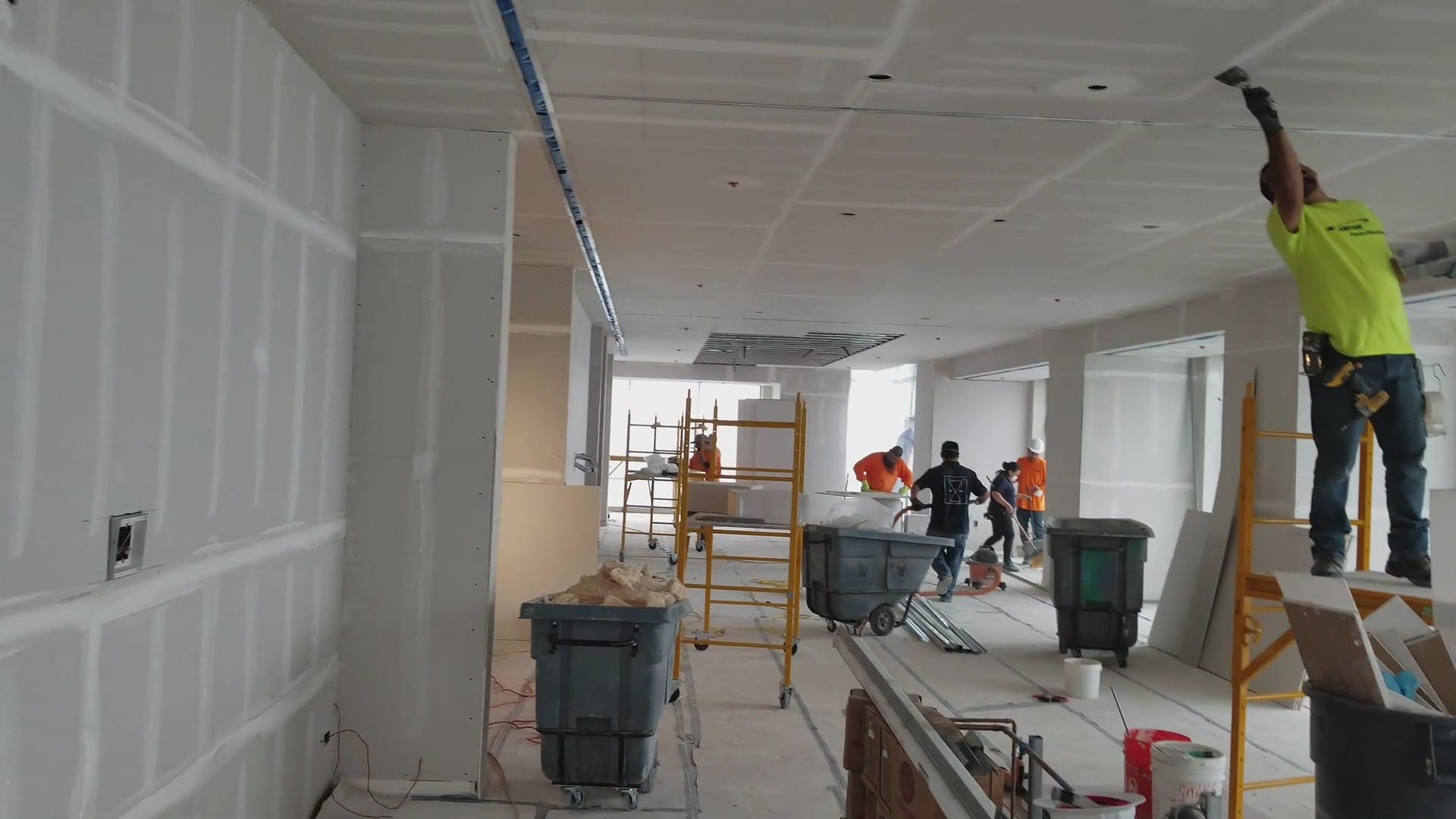
In larger spaces, such as offices, schools, or retail locations, proper drywall finishing is critical. Professional commercial drywall installation ensures that every wall and ceiling is level, properly taped, and ready for paint or other finishes.

Commercial projects often involve tight deadlines, high-traffic areas, and complex layouts. Smooth finishing guarantees that paint, textures, and lighting all look uniform, providing a professional impression for employees, clients, and visitors.

  1. Reduced Time and Cost for Painting

Smooth drywall surfaces simplify the painting process. Painters spend less time sanding or correcting uneven walls, which saves both labor and materials. Additionally, fewer coats of paint may be needed to achieve full coverage when the wall surface is properly prepared.

This efficiency makes professional drywall finishing a worthwhile investment, reducing long-term costs and ensuring a faster, more accurate painting job.

6. Improved Durability and Protection

Drywall finishing does more than improve appearance; it also strengthens the surface. Properly applied joint compounds, sanding, and priming protect drywall from minor dents, cracks, and wear.

In busy households or commercial spaces, walls endure daily contact, bumps, and impacts. Smooth, finished drywall resists damage better than unfinished surfaces, preserving both aesthetics and structural integrity over time.

7. Enhances Interior Lighting and Design

Smooth drywall reflects light evenly, which can improve the brightness and perception of a room. Uneven walls can cast shadows or highlight imperfections, making interiors look less polished.

By ensuring walls are level and smooth, drywall finishing contributes to better lighting effects, creating a welcoming and professional atmosphere in both homes and commercial spaces.

8. Affordable Drywall Repair and Finishing

For homeowners or businesses seeking budget-friendly options, affordable drywall repair near me can provide both patching and finishing services without compromising quality. Small repairs, like fixing holes, cracks, or water damage, are completed seamlessly, leaving walls ready for paint.

Even for larger spaces, professional contractors can tailor solutions that meet both quality standards and budget requirements, ensuring a polished, durable finish without overspending.

Final Words

Smooth drywall finishing is essential for achieving professional, long-lasting paint results. From residential rooms to commercial offices, properly finished walls provide a flawless canvas that enhances color, lighting, and overall aesthetics.

Investing in professional drywall services, whether for repair, new installation, or finishing, ensures walls are level, seams are invisible, and surfaces are durable. Homeowners and business owners alike notice the difference immediately in appearance and long-term maintenance. For cost-conscious projects, affordable drywall repair near me provides quality finishing that meets budget needs without compromising results.

In the end, smooth drywall finishing is more than a cosmetic upgrade; it is an investment in durability, efficiency, and visual appeal that transforms any space into a polished, professional environment.

FAQs

  1. Why is drywall finishing important before painting?
    Proper finishing creates a smooth, level surface that ensures paint adheres correctly and looks uniform, preventing streaks or uneven color.
  2. What is the difference between residential and commercial drywall finishing?
    Commercial finishing often involves larger spaces, stricter deadlines, and more complex layouts, requiring advanced tools and techniques for seamless results.
  3. Can drywall finishing fix previous damage?
    Yes. Professional finishing covers holes, cracks, seams, and minor imperfections, preparing the surface for a flawless paint application.
  4. How do I find affordable drywall finishing services near me?
    Search for affordable drywall repair near me and check reviews, portfolios, and pricing to find contractors offering quality finishing at a reasonable cost.


Leave a Reply

Your email address will not be published. Required fields are marked *

Related Post

How Private Label Food Products Support Hotels, Airlines, and Catering in the UAE - Newsglo
12FEB
0
Melasma treatment in Islamabad Doctor Tips - Newsglo
12FEB
0
Google ads agency India
12FEB
0
North America Gas Chromatography Market Size and Forecast The North America Gas Chromatography Market is projected to grow from US$ 1.6 billion in 2024 to US$ 2.64 billion by 2033, expanding at a CAGR of 5.75% from 2025 to 2033. Market growth is primarily driven by stricter environmental and food safety regulations, increasing pharmaceutical and biotechnology research, and rising demand for analytical testing in petrochemical, environmental, and forensic applications. The growing adoption of advanced GC systems, consumables, and laboratory modernization initiatives further strengthens regional expansion. Download Free Sample Report: https://www.renub.com/request-sample-page.php?gturl=north-america-gas-chromatography-market-p.php North America Gas Chromatography Industry Overview Gas chromatography (GC) is an analytical technique used to separate and analyze compounds that can vaporize without decomposition. It employs an inert carrier gas (mobile phase) and a stationary phase within a coated column to separate mixtures based on volatility and interaction with column materials. GC plays a critical role in pharmaceutical development, environmental monitoring, petrochemical analysis, food and beverage quality control, and forensic investigations. The technique delivers highly accurate qualitative and quantitative data, including trace-level detection. Its sensitivity, reproducibility, and reliability make it essential for regulatory compliance, research innovation, and industrial quality assurance. Across North America, regulatory bodies overseeing food safety, water quality, air emissions, and pharmaceutical purity standards require robust analytical testing. This regulatory environment significantly increases demand for GC systems and GC-MS (gas chromatography–mass spectrometry) platforms. The region benefits from a strong presence of global analytical instrument manufacturers, advanced laboratory infrastructure, and high R&D expenditure, particularly in the United States and Canada. ________________________________________ Growth Drivers for the North America Gas Chromatography Market Expansion of Pharmaceutical, Biotechnology, and Food-Safety Applications North America hosts a highly developed pharmaceutical and biotechnology ecosystem. GC is extensively used for residual solvent analysis, impurity profiling, metabolite separation, and chemical fingerprinting in drug development and quality control. As drug pipelines grow more complex, laboratories increasingly rely on advanced GC and GC-MS systems to meet stringent regulatory standards. Simultaneously, consumer awareness of food contamination and agricultural safety drives demand for contaminant testing using GC instruments. The convergence of pharmaceutical, biotech, and food safety applications substantially increases instrument adoption and consumables usage across the region. ________________________________________ Technological Innovation, Automation, and Integrated GC Solutions Technological advancements are reshaping the GC landscape. Modern systems offer enhanced sensitivity, faster run times, automatic diagnostics, remote monitoring, and integration with Laboratory Information Management Systems (LIMS). Cloud connectivity, predictive maintenance capabilities, and hybrid GC-MS configurations expand analytical capacity while improving operational efficiency. Automation reduces downtime and enhances throughput, which is essential for laboratories processing large sample volumes. As laboratories modernize and transition toward smart analytical infrastructures, demand for next-generation GC platforms continues to rise. ________________________________________ Environmental Sustainability and Regulatory Compliance Environmental monitoring is a major growth driver. The U.S. and Canada enforce strict regulations governing emissions, water safety, and chemical waste management. GC systems are widely used to monitor volatile organic compounds (VOCs), greenhouse gases, and environmental pollutants. Government initiatives promoting green chemistry and sustainable industrial processes encourage upgrades to more precise and automated GC technologies. As sustainability becomes central to industrial policy, analytical infrastructure investments continue to accelerate. ________________________________________ Challenges in the North America Gas Chromatography Market High Cost and Operational Complexity Advanced GC systems, particularly GC-MS platforms designed for ultra-low detection limits, require significant capital investment. Ongoing costs related to consumables, carrier gases (helium or hydrogen), calibration, and maintenance add to operational expenses. Smaller laboratories may face financial constraints, delaying upgrades or limiting expansion capacity. Additionally, skilled chromatographers are required to manage complex systems, increasing labor costs. ________________________________________ Regulatory and Analytical Complexity Testing requirements continue to evolve, particularly in areas such as PFAS detection, microplastics analysis, and ultra-trace impurity profiling. Laboratories must handle multi-matrix sample preparation and rigorous method validation procedures. Regulatory harmonization between U.S. and Canadian standards remains complex, adding compliance challenges for laboratories operating across borders. These complexities increase both costs and time-to-implementation for new GC technologies. ________________________________________ United States Gas Chromatography Market The United States represents the largest share of the North American GC market. Extensive pharmaceutical, biotechnology, petrochemical, environmental monitoring, and forensic infrastructures drive demand. Strict regulatory oversight mandates high-quality testing standards, ensuring sustained GC system adoption. The U.S. leads in drug discovery, metabolomics research, and industrial process monitoring, requiring advanced GC-MS instrumentation. However, high system costs, workforce skill requirements, and continuous technological upgrades present ongoing challenges. ________________________________________ Canada Gas Chromatography Market Canada’s GC market benefits from strong academic institutions, government-funded laboratories, and demand across energy, environmental, and biotechnology sectors. Environmental monitoring—particularly air, soil, and water analysis—remains a significant application area. While smaller in overall size compared to the U.S., Canada often demonstrates higher relative growth rates due to modernization initiatives and increased analytical budgets. Regional regulatory requirements and bilingual compliance standards require flexible and sophisticated GC systems. ________________________________________ Recent Developments in the North America Gas Chromatography Market • August 2025: Agilent Technologies introduced the Agilent J&W 5Q GC/MS Columns, offering ultra-inert and low-bleed performance for trace-level analytical applications. • June 2025: Agilent launched the 7010D Triple Quadrupole GC/MS System, featuring enhanced sensitivity and compliance-ready data management tools. • April 2025: Thermo Fisher Scientific announced a US$ 2 billion investment to expand U.S. manufacturing and R&D operations, including advancements in life-science instrumentation and GC technologies. • March 2025: Cytiva and Pall Corporation pledged US$ 1.5 billion to expand chromatography resin production across multiple facilities in the U.S. and UK. • March 2022: Thermo Fisher Scientific introduced next-generation GC and GC-MS instruments with improved automation and simplified user interfaces. ________________________________________ North America Gas Chromatography Market Segmentation By Instrument Type • Systems • Detectors • Auto-samplers • Fraction Collectors • Micro & Portable GC • Other Instruments Accessories & Consumables • Columns • Column Accessories • Pressure Regulators • Gas Generators • Fittings & Tubing • Others By Detector Type • Flame Ionization Detector (FID) • Thermal Conductivity Detector (TCD) • Electron Capture Detector (ECD) • Mass Spectrometry Detector (GC-MS) • Others By End User • Pharmaceutical & Biotechnology Companies • Oil & Gas / Petrochemical Industry • Environmental & Waste-water Agencies • Food & Beverage Industry • Academic & Government Research Institutes • Others ________________________________________ Geographic Coverage United States • California • Texas • New York • Florida • Illinois • Pennsylvania • Ohio • Georgia • New Jersey • Washington Canada • Alberta • British Columbia • Manitoba • New Brunswick ________________________________________ Key Players Analysis The report evaluates companies from five perspectives: Company Overview, Key Persons, Recent Developments & Strategies, SWOT Analysis, and Sales Analysis. Leading companies include: • Agilent Technologies Inc. • Bio-Rad Laboratories Inc. • Chromatotec • Merck KGaA • PerkinElmer Inc. • Phenomenex Inc. (Danaher Corporation) • Restek Corporation • Shimadzu Corporation • Thermo Fisher Scientific Inc. • Waters Corporation ________________________________________ Final Thoughts The North America gas chromatography market is poised for steady growth through 2033, driven by regulatory compliance requirements, pharmaceutical innovation, environmental monitoring priorities, and technological modernization. As laboratories upgrade infrastructure and industries pursue sustainability goals, demand for advanced GC systems, consumables, and integrated analytical platforms will continue to expand. With projected revenues reaching US$ 2.64 billion by 2033, gas chromatography will remain a cornerstone analytical technology across pharmaceuticals, environmental science, petrochemicals, and food safety industries in North America.
12FEB
0
Days
Hours
Minutes
Seconds

Ctaegory

Tags