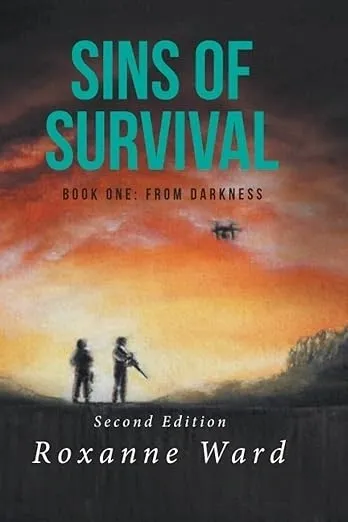
Dystopian fiction often leans on spectacle. Explosions. Tyrants. Ruined skylines. Roxanne Ward, author of the From Darkness series, prefers realism in her approach. Her work is shaped less by cinematic excess and more by lived experience — years spent teaching young minds, serving in the military, and studying how people behave when rules change, and pressure rises. The result is a dystopian vision that feels unsettling not because it is extreme, but because it’s possible.
Ward’s path to fiction began long before she published a novel. She traced her parents’ footsteps and worked as a teacher with a master’s degree specializing in observing how people learn, adapt, and rationalize. Classrooms are ecosystems of hierarchy, stress, curiosity, and resistance. Those dynamics translate seamlessly into the worlds she builds on the page. Her stories reflect an educator’s eye for cause and effect and a deep understanding of how authority shapes behavior.
The world Ward creates does not collapse overnight, though a catastrophic event triggers it. Warnings are ignored. Systems fail slowly. Rules bend before they break. That pacing mirrors real institutional decline, not the panicked fantasy of devastation. In her dystopian settings, survival does not employ outrageous, impulsive heroics. It demands patience, silence, and uncomfortable choices as civilization unravels. These are lessons learned not from imagination alone, but from years spent watching how strict structure breeds herd behavior, corrupting morality and eroding humanity.
Military experience adds another layer to Ward’s realism. Having served in the Air Force Reserve and living on base with her active-duty husband, she understands command hierarchies, discipline, and the psychological toll of following orders in morally complex situations. Her depictions of enforcers and security forces avoid caricature. They reflect realistic soldiers navigating orders, fear, and loyalty with courage.
This grounding gives her dystopia weight. Violence is not stylized. Power is not abstract. Control is logistical, calculated, and without mercy. That focus makes her work feel less like escapism and more like an examination with a warning.
The influence of the classroom remains visible in how Ward handles ideas. She does not lecture the reader. Instead, she presents ethical dilemmas and lets them unfold. Her characters are not positioned as moral authorities. They are participants in broken systems, forced to make decisions with incomplete information and limited freedom. That ambiguity mirrors real life far more than traditional good-versus-evil storytelling.
Another defining feature of Ward’s dystopian vision is restraint. She does not rely on exaggerated technology or implausible science. Her speculative elements are rooted in existing systems and innovative theories. Infrastructure matters. Supply chains matter. Education, healthcare, and governance matter. When those systems fracture, the ripple effects drive the story forward.
This realism extends to relationships. Ward’s characters form bonds not because the plot demands it, but because humans seek connection under stress. Trust becomes a risk. Loyalty becomes conditional. Love becomes complicated by power imbalances and constant surveillance. These dynamics are handled with the same measured approach as her worldbuilding, reinforcing the sense that everything in her stories is interconnected.
What ultimately sets Ward apart is her refusal to simplify survival. In her work, endurance is not inherently noble. It can make the kind selfish. It can make the meek destructive. It can make the innocent immoral. There is no win, just sacrifice. Her dystopia asks readers to consider not whether humanity survives, but what kind of humanity survives. Yet this tale does not depict the end of times. Every page is infused with the antidote to misery—hope.
Roxanne Ward’s fiction stands at the intersection of education, service, and storytelling. The classroom taught her how people think. The military showed her how systems operate under pressure. Her writing brings those insights together to create dystopian worlds that feel less imagined and more remembered. In doing so, she offers readers something rare in the genre: a future that feels disturbingly familiar.
Learn more about Ward’s work here.